
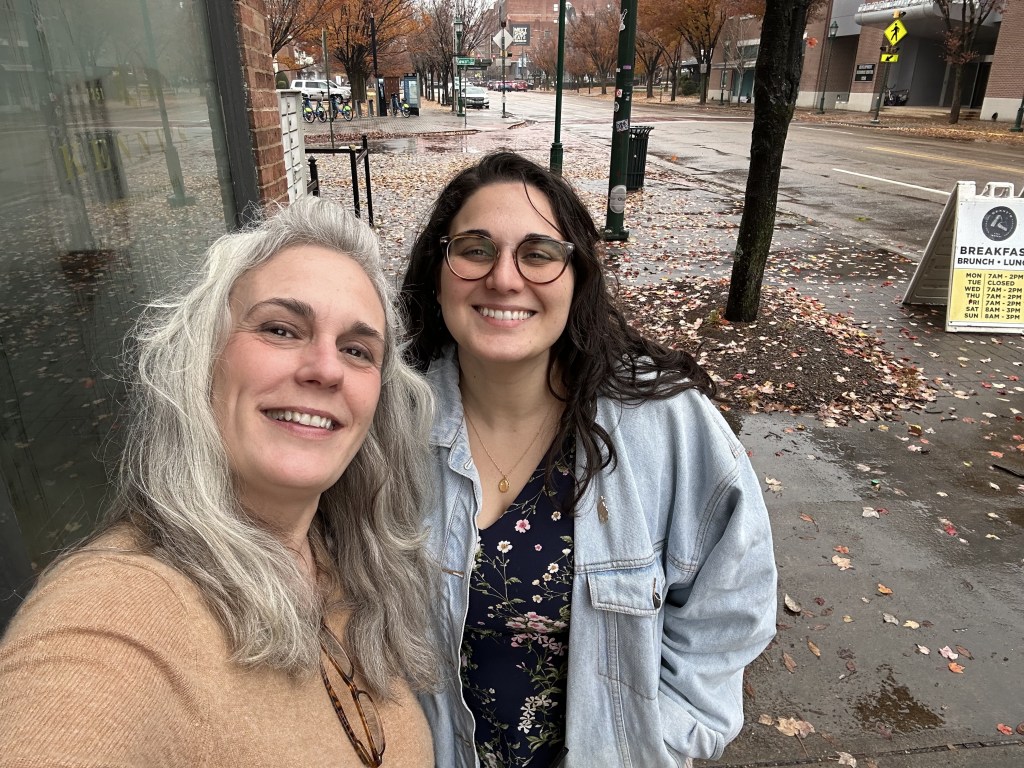
Who: Xaris
Church: Lookout Mountain Presbyterian Church
Lunch: Kenny’s
Topics: The Wealth Dilemma
I pretty aware of my blindspots, biases, and where I’m most likely to get stuck… my strongholds. (Whether I’m actively working on them is an entirely different matter, but I am acutely aware of them.) This self-awareness also informs how I approach projects like this one. I value transparency from the outset because it sets the tone for genuine, productive conversations. For instance, one of my deeply held perspectives—which some might find provocative—is that the concept of “rich people” in a church feels inherently contradictory. To me, it seems misaligned with the core values of humility, generosity, and service that the church is supposed to embody.
I will also say that when I talk about “rich people,” I recognize that wealth is relative and means different things to different people. For example, I might look at someone living in a million-dollar community and see them as rich, but someone from a community with fewer resources might look at my life and think the same about me.
Perspective is important.
This relativity makes conversations about wealth and, dare I say it, privilege, complex, especially in contexts like the church, where ideals like humility, generosity, and stewardship are central. My goal isn’t to define who is “rich” but to acknowledge the tension that arises when wealth—however it’s perceived—enters spaces meant to prioritize community, equity, and service. It’s a conversation worth having because it challenges all of us to reflect on how we view and use what we have.
It’s also worth stating that I don’t say this to judge individuals but to highlight a tension that I wrestle with and feel compelled to name. Acknowledging this openly is part of my commitment to being forthright, even when my thoughts might challenge the status quo.
Okay… back to the task at hand.
First, let me introduce you to Xaris. She is truly a delightful human being and an accomplished musician. I crossed paths with her years ago when she was working for East Lake Expression Engine, but have stayed connected over the years. When I found out that she attended Lookout Mountain Presbyterian Church, I reached out to see if I could tag along one week and she graciously said yes.
Arguably one of the wealthiest churches, in one of the wealthiest communities in the Chattanooga, I made a conscious effort to approach the experience with an open mind. It’s easy to let stereotypes or personal beliefs take the lead in shaping how we see places like this—a church in an affluent area can evoke thoughts about exclusivity and materialism, or a disconnect from the struggles of less privileged communities. But I reminded myself that wealth doesn’t necessarily define the character of a congregation or the authenticity of their faith.
Instead of jumping to conclusions, I focused on observing, listening, and understanding what this church values and how they use their resources. Do they embody generosity and service? Are they engaging with and uplifting their broader community? These are the questions I brought with me, determined to let the answers speak louder than any assumptions I may have had.
As an aside, I also want to say this: the sanctuary was absolutely stunning—one of the most beautiful modern interpretations of a classic cathedral that I’ve ever encountered. It felt like stepping into a space where history and modernity were in conversation, each enhancing the other. The design seemed intentional, not just about aesthetic beauty, but about creating a space that invites both reflection and community. It carried a sense of timelessness while still feeling accessible and relevant to today. It was the kind of place where you couldn’t help but pause and take it all in, appreciating the craftsmanship, the symbolism, and the vision it took to bring such a space to life. (Okay… I’m done.)
At the end of the service they had everyone sit down to hear an update… about their capital campaign. I’m pretty sure I rolled my eyes at the mention, but as soon as they announced the $17 million price tag my jaw dropped. For context, here’s a quick snapshot of our family’s history with capital campaigns: A little over 10 years ago, we moved to Rhode Island for six months to help plant a church, and it was an incredibly transformative experience for our family. It shaped our understanding of what the church could be—a catalyst for meaningful community impact.
When we returned to our home church after those six months, they were at a crossroads having to decide whether to invest $2 million in a renovation and expansion project or use that same money to plant up to 10 churches in other communities in Maine. We were fierce advocates for the church plants, believing deeply in the mission of extending the church’s reach to where it was needed most. However, the leadership chose the expansion.
That $2 million price tag eventually ballooned to over $12 million, funding an indoor soccer field, a three-story slide, and a state-of-the-art theater with flashing lights and all the bells and whistles… because nothing says “Hope of the World” like a entertainment complex. (Yes, I’m being snarky.) While I understand the intention to create an inviting, family-friendly space, it was hard to reconcile that choice with the immense opportunity to plant seeds of faith in multiple communities. That experience left an indelible mark on how I view decisions like these, which is why my reaction to this $17 million campaign wasn’t exactly subtle.
But I want to shift the focus here. My personal conviction is that investing this kind of money into a building feels deeply incongruent with the heart of the gospel, especially when we’re surrounded by pressing needs like homelessness and a growing food insecurity crisis in our community. To me, the gospel is about loving our neighbors, serving the least of these, and living out a message of compassion, generosity, and justice. When I see such immense resources poured into physical structures, I can’t help but question whether it aligns with the mission we’re called to as the body of Christ. (Again… I’m looking solely at the capital campaign for the building renovations and expansion, not at the totality of their work in their community and beyond.)
The church’s $17 million capital campaign is undoubtedly a significant undertaking, but what stands out to me—and deserves recognition—is the fact that their pastors, deacons, and elders have pledged to personally cover 35% of the cost. Whether or not I agree with the idea of spending $17 million (I don’t, but we’ll set that aside for now), this level of commitment from leadership is worth noting.
It’s not often that you see leaders willing to invest so deeply and tangibly in the very vision they’re asking their congregation to support. Covering 35% of such a massive total means they’re not just asking others to step up; they’re leading by example, putting their own resources on the line to demonstrate their belief in this campaign. This also reframes the conversation about generosity and stewardship within the church. Leadership taking such a significant financial stake challenges the congregation to consider their own role in supporting the mission—hopefully not out of obligation but as part of a shared commitment to something bigger than themselves. It’s a reminder that when leaders lead by example, they inspire others to do the same, fostering a culture of collective responsibility and shared vision.
But I also want to highlight something said during the service that really stuck with me: “Why is the Bible so hard on rich people?” That’s a bold question to pose, especially in a church situated in one of the wealthiest communities in the area, arguably in the whole state of Tennessee. It’s not the kind of message you might expect to hear in a place where wealth is likely a reality for many in the congregation.
This question is deeply rooted in scripture. Time and again, the Bible warns about the dangers of wealth—not because money is inherently evil, but because of its power to distract, corrupt, and create barriers between us and God. Passages like the story of the rich young ruler, or the parable of the rich man and Lazarus, challenge us to think about how wealth can breed complacency, self-reliance, and a false sense of security.
The question also forces us to wrestle with what it means to live faithfully while holding material wealth. Are we using our resources to serve others, uplift the marginalized, and embody Christ’s love? Or are we clinging to wealth as a measure of success or comfort?
What I appreciated most about this bold moment was its potential to stir up honest reflection within a community that may not often confront this tension. It wasn’t about shame or condemnation but about opening the door to deeper conversations about stewardship, generosity, and living out the gospel in ways that transcend personal comfort.
In a world where wealth can often insulate us from the struggles of others, this question challenges each of us to take an honest look at our hearts and priorities—regardless of whether we see ourselves as rich. Wealth, whether great or modest, has the potential to create distance—shielding us from discomfort, the needs of others, and the transformative work of empathy and solidarity. This isn’t just about money; it’s about how we steward our lives, our resources, and our influence.
I believe there’s a profound opportunity here to reimagine what it means to be the church. It’s not just about the physical structures we build but the relational and spiritual bridges we create. It’s about redirecting our focus outward—to those who are hurting, overlooked, or in need of hope, healing, and help. This requires us to embody the gospel in ways that prioritize connection over convenience, service over self-interest, and community over individual gain.
My conversation with Xaris offered a unique space to reflect on and embrace the paradox of wealth and faith. Together, we held space for the tension—the recognition that wealth can both empower and entangle, that it carries the potential to bless others but also to burden us spiritually. We discussed the challenge of living generously without losing sight of humility and the ongoing struggle to align our resources with our values.
This paradox is at the heart of what it means to navigate a life of faith in a material world. It’s not about rejecting wealth outright, but about reorienting our relationship with it—acknowledging its influence while keeping it in submission to God’s purpose. Something my kids have CONSTANTLY heard from me: The Lord doesn’t really care about the 10% you’re supposedly required to give to the church. He cares about the entire 100% and how you use your resources (financial and personal) to help others. In that conversation, we found room for honesty, for questions, and for the kind of reflection that inspires action. It reminded me that the church’s true calling isn’t confined to buildings or budgets but is realized in the way we love, serve, and uplift those who need it most.
CHALLENGE: How would your relationship with wealth—whether you have much or little—look different if you truly believed that everything you have belongs to God? How might this belief change the way you give, spend, save, and invest? If someone looked at your bank statements or your calendar, what would they say you value most? And how do those priorities reflect the heart of Christ?
 Searching for Jesus in A̶m̶e̶r̶i̶c̶a̶ Chattanooga