Week 3: A Third Alternative

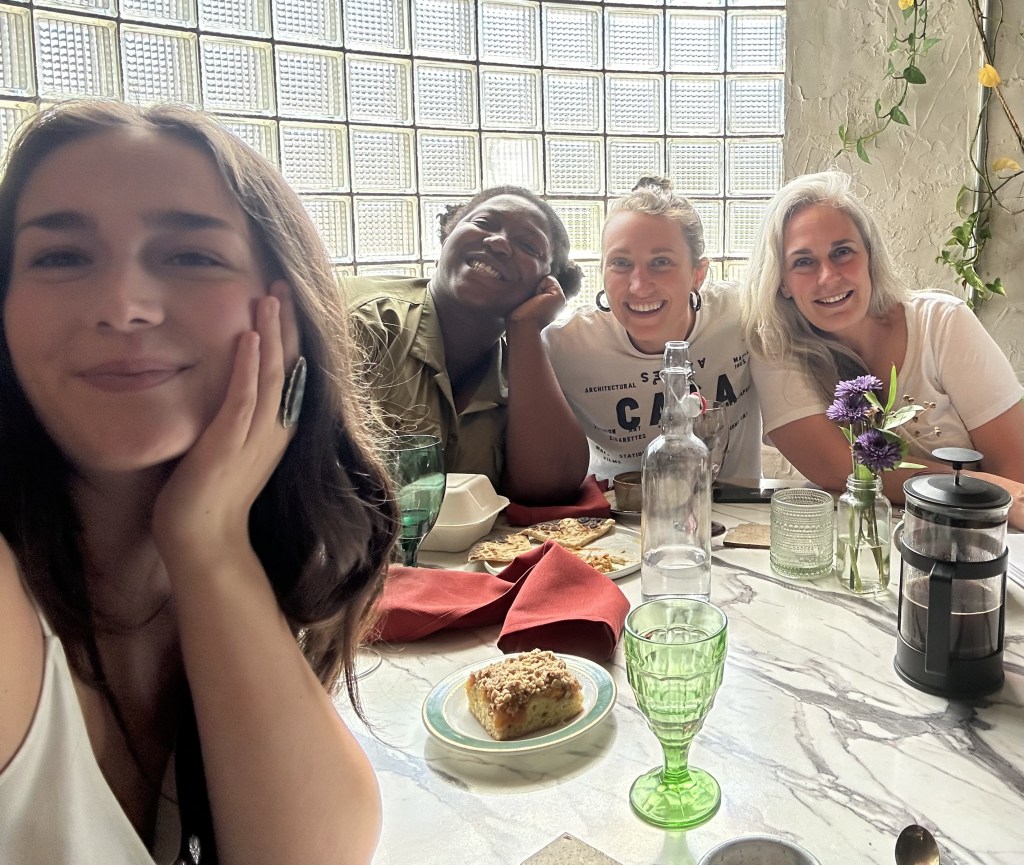
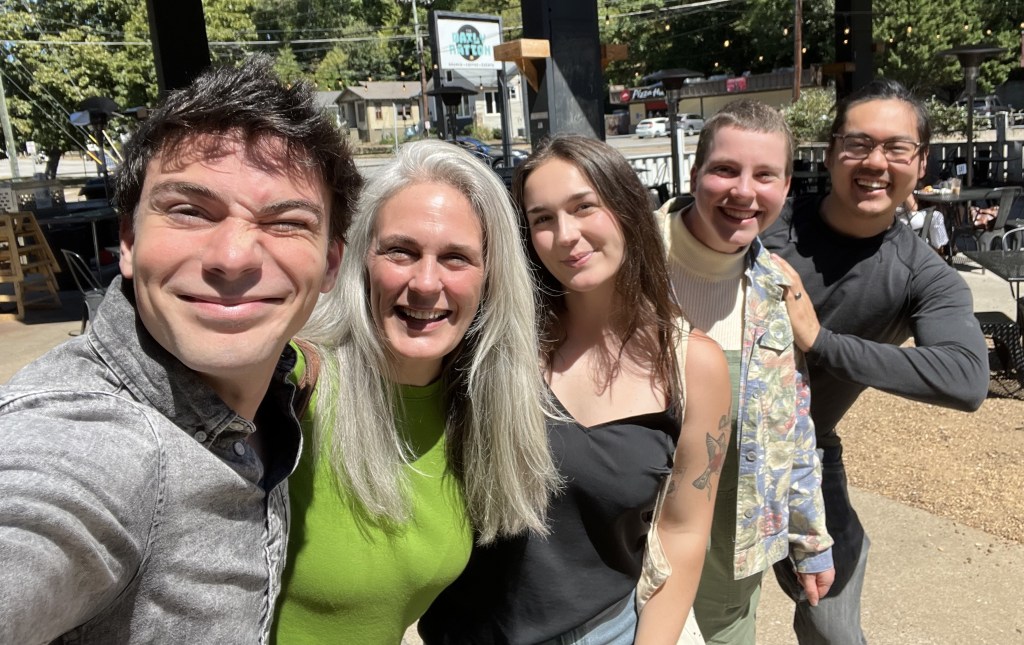
Who: John, Sydney, Ace, and Chance

Church: Mission Red Bank (Anglican)

Lunch: The Daily Ration

Topics: Partnership with the Lord, Suffering, and the Uncertainty of Life  

When I first started this project, I had several friends invite me to their Sunday morning gatherings, several of Sydney’s friends as well. And despite her being in Huntsville part time, Sydney has been in town the past few Sundays and I’ve really enjoyed her being a part of the discussions. Faith has ALWAYS been a part of our lives. Not just doing the church thing… but deep conversations about Jesus, the purpose of life, and real cost of discipleship. At the end of the day, I really don’t think our family knows how to do the superficial and shallow and that makes a lot of people uncomfortable… especially in the south.

But, we’ve still been able to find our people here.

For my third week, we visited our friends at Mission Red Bank, which was a return to home for Sydney in a lot of ways. She was a part of this church community for a while, so she knows a lot of people here. I also think it’s one of the reasons she felt so at ease during worship. At one point, Sydney even leaned over and commented on how much she appreciated the worship style and song choice. It was simple, not showy. It was a chorus of voices, not the elevation of one. (I feel like this might come across as a footnote in the post, but as a mom, this is actually a big deal and a beautiful example of healing that I want to acknowledge.)

There are a few key points from the sermon that I want spend time on and unpack. The first being this idea that we’re all living out our stories… but are we doing it in a fruit bearing way? The pastor offered some context by distinguishing between the active voice of our story (focused on what we are doing) and the passive voice (focused on what God is doing). But, he went on to suggest there’s a third alternative, a”middle” voice, that exists within the partnership we have WITH God.

As we sat down for lunch, our conversation naturally turned to processing this idea, leading us to reflect on the COVID pandemic and the widespread challenges people faced in adapting to long-term change. It’s important to clarify that this isn’t a critique of the protocols implemented during the pandemic, but rather an observation of how those measures impacted certain individuals in our communities.

Personal suffering can be a theological landmine. Discussions around the topic can lead to emotionally charged, or challenging, theological questions, which, if not navigated carefully, may provoke doubt, conflict, or a crisis of faith. At the risk of oversimplification, or platitudes, it can challenge our belief in a loving God. It often raises profound theological questions about the nature of evil, free will, and divine intervention—questions that have been debated for centuries and offer no universally satisfying answers. 

Not wanting to get into the weeds, here’s one of the biggest takeaways I had from our conversation during lunch: Sometimes, out of our inability to change, we can create false narratives about our lives, or ourselves: We’re not smart enough, creative enough, strong enough. And from these false narratives, we can create additional false narratives.

Imagine someone who has experienced repeated failures at work or school. Over time, they start to internalize a belief that they’re not smart enough to succeed. This becomes their core narrative: “I’m just not intelligent enough.” Because of this belief, they might stop trying to take on new challenges, or avoid opportunities for growth, reinforcing their perceived lack of ability.

From this core false narrative, they start creating additional ones. For instance, “I’m not creative enough to find solutions to my problems,” or “I’m not strong enough to handle setbacks,” or even “I’m not deserving of success because I always fail.” These narratives start to influence their behavior, making them less likely to take risks or pursue new opportunities, further trapping them in a cycle of self-doubt and limiting their potential.

Each layer of false narrative builds on the last, creating a self-perpetuating story that feels real but is actually a distortion born from their inability to adapt to initial challenges. Over time, this can shape their entire sense of identity, limiting their growth and opportunities. And sometimes, if we stay stuck in these false narratives, we begin to claim them as our truth. And I think this is a great place where we can meet that middle voice, where we can ask God to partner with us to identify the core issue and help us tear apart the false narratives.

One other element of the sermon that I feel needs attention: Believing in Jesus is more than an intellectual exercise. True faith in Jesus involves more than just agreeing with theological doctrines or accepting historical facts. It requires a deep, personal commitment that transforms the heart, shapes one’s actions, and permeates every aspect of life. As a follower of Christ… I have to actually follow him.

But as someone else said over lunch: The potential of me isn’t limited to me. And this made me think of something else from the sermon. The pastor reminded the congregation that manna sustained the lives of the Israelites when they were in the wilderness. And so often I’ve heard pastors refer to the Bible as our modern day manna. However, I believe that comparison oversimplifies the depth of what we truly need.

In the same way that God met the Israelites’ physical needs with daily bread, He offers us spiritual nourishment through His word. But, I also believe that our spiritual and personal potential is also sustained and guided by something beyond ourselves… his presence. I keep getting drawn back to this.

And as I sat with these four 20-somethings over lunch, I was also struck by the reminder that manna, which was an external gift given to meet the Israelites’ needs, our personal growth, talents, and achievements are often nurtured by external forces—whether divine intervention, community support, or spiritual instruction from the Bible. And I believe that the potential within us is connected to a greater purpose beyond our individual needs. It suggests that our lives, talents, and abilities are meant to impact others and serve a higher calling.

There are so many uncertainties in life. The simple truth is that many of us live like we’ll be around for 50 or 60 more years. But the reality is that we could be gone tomorrow. So continuing to waste our times on false narratives and belief systems is not only unwise, it robs us of the opportunity to live authentically and purposefully in the present. Clinging to what isn’t true or meaningful distracts us from the deeper purpose and fulfillment that comes from living with intention, clarity, and truth.

I also felt a twinge of pain and hope during our lunch as Sydney explained to us how despite the trauma she has experienced from those within the institutional church, she still feels called to the REAL church. And I get it because I feel the same way. I think the REAL church, the bride of Christ, is found in our shared commitment to embodying Christ’s love and compassion, transcending our past wounds to create a space for hope and renewal.

But we have to want to create that space.

CHALLENGE: Ask the Lord for wisdom in where I need more intention, clarity, and truth.

Week 2: Well… I Wasn’t Expecting That (Part 2)

Part 2: Kingdom Centered Church, Christian Nationalism, Citizenship

As soon as the pastor opened up his sermon with “We are Christians of American decent.” I knew where he was going: Christian Nationalism. Although I expected the topic to surface eventually, I didn’t anticipate it happening so soon. Yet, here we are, just two weeks in.

The structure of this sermon was no accident. Having visited over 100 churches across the country, it’s astonishing (or perhaps not) how many leaders use Sunday mornings to push political or social agendas, often sidelining the focus on Jesus—or failing to mention Him altogether. Sermons like these, especially on political topics, often carry a clear agenda. But as provocative as some of the phrasing may have been, the “agenda” for this sermon was strictly the kingdom—but more precisely, our allegiance to it.

I took over five pages of notes on this sermon, which I won’t bore you with here. But, I will share some of the more salient (and challenging) points:

  • Our allegiance to the Kingdom, and to the King, calls us to serve both faithfully. Yet in our pursuit of becoming the ‘ideal American,’ we may be undermining our Christian witness. There’s a great deal to unpack here, but at the end of the day, one truth stands out: no matter your political affiliation or stance on socio-political issues, something far more important remains—the love of Jesus. When we resort to hateful rhetoric or violence to promote our views, we damage our witness as Christians. And when we act this way IN THE NAME OF JESUS, we misrepresent His message of love, grace, and peace to a world that desperately needs it.
  • Building on the first point, the pastor spoke about those who claim to follow Christ yet live according to the patterns of the world. He specifically called out the idolatry of comfort and pride, as well as the relentless pursuit of earthly things like power. As he spoke, the connection he was making became unmistakable: when we allow these desires to dominate our lives, we compromise our faith and lose sight of the eternal kingdom we are truly called to serve.
  • The sermon built toward addressing the elephant in the room: dual citizenship. Over the past eight years, this concept—whether named explicitly or not—has been one of the hardest for many to reconcile. The pastor pointed out how it seems many professing Christians prioritize their American identity over their dual citizenship in both God’s Kingdom and this nation. He also acknowledged that this is a problem of our own making. As a society, we’ve intertwined ‘God and Country,’ elevating them to the same level. But as Christians, they shouldn’t be. What’s even more concerning is how we’ve fused loyalty to both, leading many to believe that allegiance to country is the same as allegiance to God. And that is most definitely not the case.

As we sat together over lunch, reflecting on the sermon, the conversation shifted to the practice of pledging allegiance to the flag. Here’s the thing: while we stand respectfully during the pledge, many in my family, myself included, choose not to recite it—for one simple reason: our ultimate allegiance is to Jesus. Does that make me a bad American? In some people’s eyes, I’m sure it does. But if my love for this country is measured solely by my willingness to recite a few words, then perhaps we’re missing the true essence of what it means to care for and contribute to our nation.

The work we do in the community, alongside others, is a testament to our faith in Jesus and the calling we have to live that faith out—together, not just within our family. (Our organization is NOT faith based… but our faith personally influences so many aspects of our work.) As I sit here and reflect, I can’t help but wonder what it would look like if our ‘fight to be a Christian nation’ wasn’t about passing laws to post the Ten Commandments in schools or mandate Bible reading in classrooms. What if, instead, it was about embodying the love of Christ by caring for the most marginalized among us? Rather than trying to enforce conformity, we could focus on demonstrating the transformative power of Jesus’ love through our actions, inviting others to encounter His grace without coercion.

What if, instead of pushing for theocracy in our schools, we focused on ensuring that every child is fed? In our own district, some schools have washers and dryers on campus so volunteers can wash the clothes of students who lack access to these basic necessities at home. These children don’t need the Ten Commandments displayed in their hallways—they need to feel the overwhelming love of Christ, expressed through His people.

It’s far easier to rally behind “kingdom causes” that require little personal cost—whether that’s demanding prayer in schools or advocating for Christian symbols in public spaces—than to roll up our sleeves and engage in the messy, sacrificial work of meeting people where they are. True service requires more than words; it demands action, compassion, and the willingness to give up our comfort for the sake of others.

It’s easy to stand on a soapbox and declare what society should look like, but much harder to enter the lives of those who are struggling, to share in their burdens, and to show the love of Christ through tangible acts of care. The kingdom of God isn’t built by loud proclamations or political posturing—it’s built by feeding the hungry, clothing the poor, and caring for the broken. It calls us to put aside our agendas and live out the radical love and sacrifice Jesus modeled, one small act of grace at a time.

CHALLENGE: Do something tangible this week.

Week 2: Well… I Wasn’t Expecting That (Part 1)

Who: Brody, Jordan, and Sydney

Church: New City Fellowship Glenwood (Presbyterian Church in America)

Lunch: Oddstory

Topics: Part 1: First impressions and Healing; Part 2: Kingdom Centered Church, Christian Nationalism, Citizenship  

Part 1: First Impressions and Healing

Before I stepped foot in the building, I noticed a diversity in this church community that I’ve never personally witnessed before. Across ethnic, socio-economic, and generational lines, the range of people was, frankly, inspiring. (I even spotted a car with a Trump sticker and another with a Harris/Walz sticker.)

Soon after walking into the building, I was greeted with the warmest hug from my youngest son’s 5th grade teacher. (He’s in the 8th grade now, but this lovely human has stayed connected with our family and has come out to see Sydney and Brayden perform from time to time.) But, it wasn’t the only hug given out that morning.

Confession: One of the things I dread most about visiting any a new church is that painfully awkward “greet your neighbor” moment. I’m always tempted to dive into my purse, act like I’m searching for a pen, and pray that someone from the Greeting Team doesn’t spot me and slap a giant “newbie” sticker on my forehead! But, I was pleasantly surprised when Sydney and I were warmly greeted by a delightful woman named Tracy, followed by a group hug from Deborah.

This heartfelt welcome flowed right into the worship service, where, to my amusement, only one song was written after Sydney was born—just barely! Yet, even in worship, there was a beautiful sense of belonging for us as they began singing a song from Rwanda. (For those who don’t know, Sydney and I took a transformative trip to Rwanda in 2017, which played a significant role in the creation of BTCYI.)

There were also some awkward moments for me, which I immediately wanted to jump into once we sat down with Brody and Jordan for lunch. (And for context, we’ve worked with Brody for the past two years at one of our after school sites. But, more than that, he’s taken on the “older brother” role for Sydney, which has been one of the biggest blessings over the past few years.) We don’t get to see them often, but when we do, the time is always rich… and real.

It felt surprisingly easy to share with Brody and Jordan the personal discomfort I felt when a leader of their church invited anyone in need of prayer and anointing with oil to come forward. It took a while for my to put a finger on where the discomfort was originating. If I’m going to be honest on this journey, I also need to be transparent about where I wrestle with doubt—both in my faith and in the Lord. I know all the “churchy” answers, but simply having head-knowledge without allowing it to reach the heart and soul isn’t what truly transforms us.

Ten years ago, I would have been the first one up there, visitor or not. But the last decade has left me a bit more cynical, thanks to a few too many encounters with charlatans. Yet, I can’t blame all of my skepticism on manipulative leaders from our past. (I also want to take this moment to say the leaders at New City Fellowship gave absolutely no indication of falling into this camp. Quite the opposite.)

Truth be told… I lack the faith.

But, I also know the Lord is bigger than my faith, or lack of it in this season.

I realize it might sound a bit absurd to say I struggle with faith, especially since so much of our life is undeniably a walk of faith. Just look at our bank accounts or why Sydney and Brayden moved to Huntsville—it’s all faith in action. One of my favorite verses, Matthew 27:17, speaks to the tension so many of us feel: trusting in Jesus while still battling doubt. We are far from perfect, but some of the wildest, most counter-cultural decisions we’ve made have come from a place of trust—a beautiful act of worship. But, let’s be honest—you’d be crazy to think we don’t doubt Him, and ourselves, every step of the way. Still, we keep stepping forward in faith.

Except I didn’t on Sunday.

On the surface, I’m tempted to say that I’ve merely grown frustrated with God’s unwillingness to heal. (And this is true to a point.) But if I dig deeper, I’m more angry with the church’s collective lack of compassion. How our family was treated at the height of Brayden’s struggles was disgusting. But, our experiences are far from isolated. I’ve lost track of how many times I’ve urged church leaders to address the youth mental health crisis, only to be dismissed as misguided, with the assertion that the real crisis is purely spiritual.

I suppose I didn’t walk up because I’m tired of the focus being on one and not the other. These two issues—mental health and spiritual well-being—are not mutually exclusive. In fact, they’re often deeply interconnected, with mental and spiritual struggles impacting one another in profound ways.

But it doesn’t stop there, and it can’t. If God truly is good, then the conversation can’t end with a simple dismissal. (And for the record, I do believe He is good.)

There’s absolutely nothing good about the mental health crisis our youth are facing. I’ve lived through the nightmare of sleepless nights, gripped with fear that your child might not be there in the morning. There’s no good in that. I’ve heard parents share the devastation of losing their child to suicide. There’s no good in that.

Yes, the world is broken. Yes, the world is dark. And, yes… I do believe God is good. But there’s a chasm. A big one. And maybe the answer is that we need to do a better job of mourning. Collectively. And maybe in our ever-evolving world of technology, we need to do a better job of connecting to our humanity… with others.

But, we also need to be relying on the Holy Spirit.

The scripture that keeps coming to my mind in Romans 5:3-5 and I was struck by how different these two translations were upon first reading: ESV and NLT. (I think every Bible in our house is ESV.) But, I love the NLT translation here. It aligns more with what scriptures say about Jesus. And it underscores the presence and importance of the Holy Spirit. It also resembles what I’ve seen walked out when the pain of life in unbearable, but the goodness of the Lord is still present.

I know what it means to be compelled by the love of Jesus—a love that’s greater than my doubt, fear, or pain. His love extends beyond the walls of any church building. I also recognize that there are things we’ll never fully grasp on this side of heaven. But, I don’t often ask the Holy Spirit to step in where my understanding falls short.

As I look back on my faith formation, I see where so much of my thinking was built on accepting clichés. at face value. But, I’m not okay with settling for clichés anymore.

Challenge: Be more intentional in asking the Holy Spirit to uncover truth in the midst of clichés.

Week 1: Back to Where It All Began

Who: Liz, Nneka, and Sydney

Church: City Collective (Non-denominational)

Lunch: Mac’s Kitchen and Bar

Topics: Community, Unity, and Deconstruction 

If you know anything about my church leadership background, you know how much I loved (and devoted) my life to discipling young women. My kids grew up with young adults coming in and out of our house EVERYDAY. Most Thursday nights we were busting at the seams as 20+ young women piled into our modest New England home for dinner. Then, we’d head down to the basement for teaching. (And these ladies were committed. It took us TWO YEARS to get through Romans.) Two of them even lived with us for a while.

So, I think it was only fitting that my first week was spent with three young women that I adore. Sydney is my eldest child, and she lives up to the title. While considerably disillusioned with the institutional church, she’s also the most grace-filled person I know. (And she’s had to extend more than her fair share of that grace to her parents.) Nneka is a force of nature and one of the most “real” people I know in Chatt. She’s acutely aware of who she is and who she isn’t. When Nneka enters any room, chances are someone knows her… and adores her. Liz holds a special place in my heart, as does her husband. In part because I married them, but I’ve also spent the past two years in a community group with them. Their house is one of the few in Chatt that I’ll drop in unannounced… or give a quick call announcing my immediate arrival.

These three are safe people to enter into deep waters for my first time out. I also know they happen to be wrestling through the whole faith existence conversation at the moment and, most importantly, they’d be honest.

And they were.

We sat at Mac’s Kitchen and Bar for almost three hours. (It’s a good thing the owners are friends.) And as the conversation unraveled, almost like a tightly wound ball desperately needing release, we began sharing some of our most guarded thoughts… only for everyone else to respond with a similar, “Oh my gosh, ME TOO!”

Deconstruction came up quickly. It’s such a taboo word in so many church circles, and I get it. As I write this, there are over 450,ooo uses of #deconstruction on Instagram. And I think that’s why I don’t really like using it. It’s been reduced to a hashtag, or a reason to disparage the institution of church… which SHOULD be criticized. But an overused hashtag can lead to the loss of nuance in a very important conversation, which is something all four of us are painfully aware of.

One of the ladies shared how she had been deconstructing so much of the harmful teachings her faith was built upon, like so many of her friends. But, now on the other side of that deconstruction, she was working to reconstruct, if you will; however, her friends have shown no real interest in doing the same, which makes finding community painfully difficult.

Someone else then added that deconstruction isn’t limited to faith and that she’s found herself deconstructing all aspects of her like. This prompted me to add a quick, “OOOHHH, SAME!” But shouldn’t that be the natural progression of someone deconstructing their faith? Our faith is the foundation from which we build our lives upon, so if we’ve built other aspects of our lives upon that foundation… things will inevitably fall apart. The infuriating irony is that we’ve all heard countless sermons built around Matthew 7 and the importance of building your lives on a firm foundation. We just never expected the shifting sand to come from within the “church”. (Please note: When I say “church” I’m referring to the institutional church and not the real Church. There’s definitely a difference between the two and we’ll spend a lot of time dissecting them over the next year.)

It actually reminds me of something one of my seminary professors said: Our greatest fear should be spending our lives climbing a proverbial ladder, only to reach the top and realize that we placed the ladder against the wrong wall. And I think that’s what so many of us have been doing, especially as politics subversively (or not so subversively) entered the conversation. (This isn’t something we really got into during the conversation, but it’s coming… faster than I expected.)

One of the ladies then said something really interesting to all of this: To even be able to deconstruct comes from a place of privilege. I’m still wrestling with this one and I know it will come up again. Something else said also gave pause to our conversation and I’ve been thinking about it this past week. For me, there was an elephant in the room, but I couldn’t find a way to tactfully bring it up. So, knowing that we’re friends I just asked Nneka the obvious: How does it feel being the only black person at our church? (I also apologized if my question was offensive.) Liz quickly added that she was also curious about this and Nneka just laughed. (That woman is ALL GRACE.)

She then went on to say that her choice to attend City Collective was “more about culture than color.”

Dr. Martin Luther King Jr. once observed, “Sunday is the most segregated day of the week,”shining a light on how church services in America are often racially segregated. The National Congregations Study (2018-2019) showed some progress toward integration, with the percentage of multiracial congregations increasing from 6% in 1998 to 16% in 2019. However, the majority of congregations remain predominantly composed of a single racial group. Given these statistics, Nneka’s statement about culture has led to so many more questions and revealed so much ignorance on my part.

Two hours into the conversation, we actually began digging into the sermon, which focused on the ways of Jesus and how we can adopt those ways into our lives. And like so many people I’ve talked to over the years, the obvious things came up first: prayer, reading the Bible, being in community. But then we began talking about actually LIVING a life of faith and not simply going through a daily checklist of activities… and for me that means living a life where every outcome can’t be boiled down to something I can do for myself.

It also means not keeping my calendar so full that I miss what the Lord has for me. (One of my goals for September: SLOW DOWN!)

As we sat there for almost three hours, I realized two important things: 1) My biggest fears (and disheartened feelings) about the church are not mine alone. 2) The underbelly of the institutional church is vast and complicated: Oppressive Paternalism and Superiority, Oversimplification of Complex Issues, Lack of Local Engagement, Reinforcement of Stereotypes, Personal or Institutional Benefit. It’s not, by any means, an exhaustive list, but it’s definitely something I’ll be going back to over the next year.

WEEKLY CHALLENGE: Give myself more room for the Lord to interrupt my day… and invite Him to do it.

Embarking on a Year-Long Journey

When I started this blog, it was simply a way for me to document our journey across America… physically, mentally, and spiritually. Our family had endured more than our fair share of spiritual abuse and, honestly, I wanted to embark on a personal journey to see if the things we were being told about our faith tradition were real… and a lot of it wasn’t.

But… SOME of it was.

I’ll always remember the shocking words shared with me the eve of our departure from Maine in 2019. Lois, the matriarch of our church community in Portland, pressed a check into my hands and said,

“Many people in this church want you to fail because if you succeed it will cause them to question everything they believe to be true about Christianity.”

Looking back on that conversation, I’m not sure which is more jolting… people in our church openly voicing a hope in our failure, or the possibility that our families’ willingness to embark on a faith-filled journey would cause others to question their beliefs.

Needless to say, our journey wasn’t a failure. Far from it. But, five years later, we find ourselves in a somewhat similar situation. I won’t unpack all of it here, because my weekly posts over the next year will dive a lot deeper into the “whys” but for now I will layout some of the topics I plan to push into: politics, community unity, self-segregation, women in leadership, and spiritual reductionism (emphasizing spiritual solutions while minimizing, or ignoring, psychology and science).

The “rules” are simply a guidepost I’m planning to stick to as much as possible:

  1. Attend a different church every weekend, for the next year, with a friend or acquaintance
  2. Share a meal and/or conversation after church
  3. Let the conversation unfold from the sermon, but always focus on two important elements: how do we ECUMENICALLY work together to help the most marginalized in our community and what does John 17:20-23 really mean to them.

With regard to #3, I think it’s only fair to share my thoughts:

In these verses, Jesus is NOT calling for uniformity, where everyone is exactly the same in thought, action, or belief. Instead, He is calling for unity, a oneness that mirrors the relationship between Jesus and the Father. This unity is characterized by love, mutual respect, and shared purpose, despite differences. The focus is on being united in spirit and purpose rather than conforming to a single way of thinking or acting.

I’m excited about this year… and also terrified. But that’s how I felt five years ago and it was one of the best decisions of my life.

I went to Christmas Eve Service… and felt NOTHING.

The title is a little sensational. It’s also completely true. But, it probably doesn’t mean what you think.

When my friend, Maggie, invited me to the Christmas Eve service at her church it was an immediate HARD PASS. But, I’ve become painfully aware that this is now my default. So, I took her up on her offer…. and over the next 10 days tried to come up with a convincing reason to bail.

And in a the true spirit of the holiday season, a Christmas miracle occurred. Jamie came with me. He hasn’t stepped foot in a church in over a year, and maybe in the most obvious example of his love for me… he agreed to come. This probably says more about his concern for me than anything else. The kids were almost speechless, with the exception of Holden asking if Jamie was feeling okay. (He also didn’t make it through the entire service, but he definitely put in the effort… and sat through WAY MORE than I thought he would!)

What I learned from this experience:

  • I’ve NEVER liked Christmas Eve services. I have a bias and I know it. I appreciate the focus on Jesus, but I usually walk away from a Christmas Eve service feeling frustrated for one of two reasons: The service is more spectacle than reverence (think Holiday Pageant with a few reference to Jesus) or the service is, as it should be, focused on Jesus… which honestly just makes me frustrated for the simple fact that ALL Sunday services should be just that: Focused on Jesus. Not a 7-part “Christian-washed” self-help series focused on us. PLEASE NOTE: This service was great. In the words of Taylor Swift… I’m the problem. It’s me! (I feel like I might need a kindly reminder here: If your first reaction to reading that last sentence was to judge me for liking Taylor Swift, you might be in the wrong place. OR… MAYBE YOU’RE IN THE RIGHT ONE.)
  • My anger has definitely shifted. Someone recently said that I’m just entering a new stage of the grieving process. I understand the sentiment, but that isn’t a correct assessment. There is a REAL DISTINCTION between the Church and the institution of church. One of the problems is that some people in my situation take a machete to the Church when their anger should, most likely, be focused on those within the institution…. those who have used their “faith” to gain, wield, and abuse power. I still have strong feelings about how those within the institution have treated our family, especially my kids. But, I no longer allow those feelings to fester and create a chasm fraught with bitterness and resentment.
  • My mind was filled with so many things during this particular service, but the most important was the acknowledgment that all my feelings of animosity were gone. Maybe I’m too tired to be angry anymore. 2023 was a year I NEVER want to live again. (It was a great year, but it was, by far, the hardest year of our crazy little journey.)

My husband left before communion. He hasn’t taken communion in over a year. I haven’t taken it for about 9 months. But, I took it that night… for one reason. Because I do believe in the gathering of saints and the remembrance of Christ…and the call we have on our lives. Each of us individually, as well as collectively. But, more importantly, my participation wasn’t moved by emotion: guilt, sadness, or even joy.

I haven’t felt a real connection to the Lord INSIDE of a building in a REALLY long time. And part of me wonders if I ever really did. (I’m sure there were a few times that were genuine, but there are FAR MORE that were manufactured by perfectly timed music or a manipulated call to action.) However, I did walk away that night feeling confident in one thing: Trying to fit our square-pegged family into the current “church” model won’t work. (And maybe this is why we’ve had such a hard time over the past 10 years.)

I think 2024 will be a year of walking in what we know to be true. You cannot look at our lives and say there isn’t something divinely appointed. But, divinely appointed most assuredly don’t mean easy, or painless. It also doesn’t mean that we have to hold on to people or institutions. The Christmas Eve service was, in part, a letting go for me. “Going to church” has been a box that’s needed to be checked off… but you can’t GO to Church. You can only BE the Church.

So, here’s to a year focused on BEING the Church.

The Work We’re Meant To Do

Last week I received a text from a friend in Rhode Island. (For context, our family was part of a church planting team sent to East Providence, Rhode Island, a little over 10 years ago.) One of the first families to join the church became good friends of ours. And, to this day, their personal transformation through the power of the Holy Spirit is one of the reasons why I haven’t completely given up on my faith.

That might come across as melodramatic, but it isn’t.

The text I received was a simple request for our family to fast and pray for them as they enter into a big decision about church planting. And just like that… the Holy Spirit gently pulls.

The words I place here aren’t meant to convince anyone of anything. They’re merely a way for me to chronicle my faith journey… for my kids. Because the truth is very simple… almost everything I’ve been taught about “the church” has been wrong. And as I’ve slowly been dissecting those teaching, I’ve had to take a very hard look at WHAT I believe and WHY I believe it.

Some people would eagerly pounce on what is written in the previous paragraph and accuse me of deconstruction, a process of systematically dissecting and often rejecting the beliefs you grew up with… and they’d be right. But, here’s the thing: The word “deconstruction” has such a negative connotation because, in our neo-political “evangelical”church narrative their is a lack of nuance… and critical thinking. And in a lot of cases… a lack of Jesus and the presence of the Holy Spirit.

But, over the past few years, I’ve also seen the Church… often from within circles of those who have left the institution of “Christian” religion.

Here’s the truth: We haven’t given a regular tithe to a church in YEARS. And there are a lot of reasons for that. But, the biggest one is because we believe it’s important to support the work… not a building. So, we put our money into organizations doing the work Christ calls us to.

And, honestly, even though our organization isn’t a “faith-based” organization… it most certainly IS faith inspired. And that’s the point. The beauty of the church… the body of the church… it that we all have a part to play. Some parts are outward facing, boldly proclaiming… and some are quietly tending to the absolute carnage the neo-political movement is leaving in their wake.

We all have a part of play and, if we are a part of the REAL church, we all have work we’re meant to do.

Getting My Thoughts Down

This morning, I decided I needed to write. There are so many things going on, updates I need to add… but, really, I just need to dump my thoughts. There’s no point to make and some of these things are negative, but as I’ve said many times before… this platform is truly for no other purpose than for my kids to look back and see how I process all the incredible (and sometimes gut-wrenching) things we’ve experienced on this journey. So here it goes:

I can count the times we’ve been to “church” over the past 9 months…on one hand. There are a lot of reasons for this and we all stopped going at different times during those nine months, but at the end of the day the reasons really boiled down to one thing: We didn’t belong there. And here’s the kicker… we all felt that for different reasons. It was almost like the Holy Spirit was stirring the same thing in us… just in different ways. And, to be clear, this has nothing to do with our particular church. It’s ANY church. And it’s specifically the Sunday morning gathering. For Jamie, it was the worship. (Honestly, after our experiences with the CCM world, we all have some serious issues with worship. But, for Jamie, is was like nails on the chalk board and he would just get up and leave… especially if the song was filled with over spiritualized imagery. You’ll lose him at any reference of running water or holy fire… every. single. time.)

I also didn’t TRULY realize how toxic Maine was for our family until recently. The amount of church trauma we experienced, especially the abuses I endured at the hands of insecure men on a power trip, had a HUGE impact on my kids. But, even more, my willingness to endure the abuses probably had a BIGGER impact on them. Recently, someone asked if we had forgiven them and I just laughed. And it was a genuine laugh, not one of sarcasm, or even animosity. Forgiveness is a funny thing and I think it looks differently for each of us. But, I also think there are two types of forgiveness: for the instances when someone is ASKING for forgiveness and for when you simply offer it… allowing yourself to move on. For us, forgiveness has looked like the latter. We moved on and stopped allowing their behavior to take up space in our lives. We’ve had some people tell us that we aren’t truly forgiving them unless we address the issue with them. (I just love it when people tell you how something needs to look… in order to be “right”.) But, if you hear nothing else, hear this: Don’t let ANYONE tell you what forgiveness looks like. I truly feel like the overwhelming majority of abuse in the church has come from the manipulation and power dynamics around the issue of forgiveness. I don’t wish any of those men ANY ill will. Genuinely. But I NEVER want to see any of them ever again… and I don’t have to. I don’t have to talk to them, or bury the proverbial hatchet… and sometimes that’s what forgiveness looks like.

It might not seem like it, based on what I’ve already written, but I am truly hopeful. With each step we take away from the institution, I truly feel like we’re taking a step closer to what it real:

Jesus.

But, more than that… I feel like we are taking a closer step to the REAL Church. And maybe that’s the difference I feel. So many people we know are leaving the Church, but also leaving their faith. Or they’re leaving the “church” but still following Jesus. But we can’t TRULY follow Jesus, as he intended, if we’re aren’t with a community of saints. That community comes in different forms… and I’m thankful for those who recognize this abiding truth.

I Knew This Day Would Come

Ever since the kids picked the name for their band, I knew people would have questions… or, at the very least, a raised eyebrow. Anyone within close proximity to an evangelical upbringing understands the negative contexts of wolves in the scriptures… especially wolves in sheeps’ clothing.

The phrase is an idiom (nerding out a little bit) that is often used to describe something that appears harmless, or even friendly, on the surface, but is actually deceitful… or worse. It’s derived from a biblical metaphor (didn’t realize I would be giving a ELA lesson today) found in the New Testament (Matt 7:15): “Beware of false prophets, which come to you in sheep’s clothing, but inwardly they are ravening wolves.”

The metaphor suggests that just as a wolf would disguise itself by wearing the skin of a sheep to prey upon the flock, there are people who conceal their true intentions or nature behind a seemingly innocent facade. These individuals may present themselves as trustworthy, kind, and harmless, but their underlying motives or actions may be self-serving, deceptive, and harmful. The phrase is commonly used to caution against trusting appearances alone and emphasizes the importance of discernment and critical thinking in evaluating others’ true character or intentions.

And, unfortunately, we’ve had a ton of experiences with these types of leaders within the institution of “church”. And, if I’m honest, I’ve been a little afraid apprehensive nervous about how this whole thing would play out. Because, honestly, we still have good days and bad days. But, more than that, Sydney has been a little more vocal about our “church trauma” during the past few performances.

At a show a few weeks ago she talked about how our family had to leave Maine because sometimes the trauma is so bad that you truly can’t heal… UNLESS you leave. And while you might be tempted to think this is hyperbolic, or just a flare for the dramatic… she’s actually right. The amount of crap our family faced is just ridiculous. (Example: A youth pastor telling his students they aren’t allowed to help Sydney raise money to grant a wish for a child and only relented after parents complained about the absurdity…not to mention the un-Christlike example.)

But, believe it or not… that wasn’t the worst of it.

Not even close.

But, the most impactful thing about the show in Atlanta was the response from the audience after Sydney spoke: the cheers, the applause… what I can only assume is an unfortunate camaraderie.

What’s more unfortunate is the number of people who have left the institution of Church, which has little (if anything) to do with Jesus, and… by default… the possibility of being a part of the REAL community of saints, which has absolutely nothing to do with where you park your butt on a Sunday morning.

What I’ve come to appreciate over the past few years is how this generation isn’t blindly taking the BS anymore. One of my biggest pet-peeves is how so many people misconstrue the true meaning of “child-like” faith. It isn’t a blind acceptance, or gullibility.

It’s inquisitive. It resembles the annoyance of a 3-year-old asking WHY about 10,000 times before lunchtime. It believes that Jesus is bigger than our questions… and our doubts. (Irony: The last producer Sydney met with in Nashville… the one that reached out asking to work with her several times while on the road… did a 180 once we met with him because the subject of “doubt” was a red flag for him.)

But here’s the red flag: People who refuse to acknowledge the existence of doubt. I mean, everyone LOVES the Great Commission… but if you read a couple verses before that (Verse 17), you see that the disciples… the ones who SPENT THREE YEARS WITH JESUS… freaking doubted what they were witnessing with their own eyes. So, we shouldn’t’ be afraid of doubt. But we SHOULD be wary of people who refuse to acknowledge it, admit to having it… because when we avoid it, we’re also diminishing the power of Jesus to conquer it.

So the lesson learned here, folks: These kids’ are FIRE. They have spent years processing, maturing, healing, growing, and… discerning. Suicide is the SECOND leading cause of death for youth between the ages of 10-14 and these two have spent so much time with students who fall within this age bracket. And the stories they share about the abuses they’ve experienced from within the walls of the institution are heartbreaking, infuriating… motivating.

And they couldn’t have found better advocates than these two incredible humans right here.

Celebrity Christian Culture, Christian Nationalism, and Everything Else…. That Has NOTHING to Do With Jesus.

This week has been a little surreal for us. We kicked off our biggest concert series to date, which had me taking a very uncomfortable stroll though memory lane as I tried to find pictures for a slide presentation. When I got to the 2017-2018 catalogue, there were a few eye rolls and audible groans of frustration and annoyance. It’s crazy to think, while in the thick of it, we honestly thought the Christian music world would be a second home to our eldest children. (I’ve also never been more thankful that Sydney saw through the smoke and mirrors of an industry driven by money… in the name of Jesus, of course.)

I will also say that reconnected with a Christian artist we met with during that time. One of the good ones, I say with true humor. (And, for the record, there were several of them. I don’t cast a broad brush stroke over the whole industry.) But, I’ve never been more thankful that we escaped that hot mess. (I used to say, “We dodged a bullet.” But, given where we are as a society, that expression is in poor taste… at the very least.)

This week also included a new experience for me: I attended one of those school board meetings that you see on exploitive TV. I’m not doing to discuss the topic of the dumpster fire, but I will say that the hard-line, “conservative evangelicals” were in full force. The following day someone sent me a screenshot of social media posts made by these self-proclaimed Christians. The statements and accusations were similar to the sentiments shared the night before. However, what caught me off guard was the icon this person used as her identifying marker. Using the same graphic imaging with the social justice movement, it stated:

Christian Lives Matter

So what do Christian celebrity culture and right-wing political ideology have in common? Simply put, they have absolutely nothing to do with Jesus. I can sit here all day and share story after story… things from Nashville, things from our extended family disfunction and church trauma. (Do you guys remember when I told you how one of our old pastors sent me an early morning text telling me to stop calling our Liberty University and Jerry Falwell, Jr. a few years ago? Well, we now know who was on the right side of that hot mess… and it wasn’t him.)

The one thing that gets lost in translation here is my disposition and intention. I’m TRULY not bitter anymore. My husband and I actually laugh about the Jerry, Jr. incident now. But, it can also be incredibly overwhelming… because there’s a price to be paid in all of this.

Our witness to the world.

To take a slogan like Black Lives Matter and making it about you… actually underscores their point even more. This life isn’t about us. It’s about Jesus. And when I walked into that school board meeting this week, that’s one of the first things I thought about. If Jesus entered that room, would he sit on the side with the men and women wearing shirts about God and the military? Would be he condone, or condemn, their insistence that the flag of pedophilia was the “logical” next step in a “woke” classroom. (Ironically, never acknowledging the horrendous number of pastors in our state who are being charged with actual sex crimes against children.)

I’m CONSTANTLY questioning the “faith tradition” I was brought up in. That my kids were brought up in. And maybe that’s the point. It was a tradition…based in, and on, an institution. Thankfully Jesus is so much bigger than that and my faith as a Christian has never been in question. But, how I choose to live out that faith is more important now than ever. A HUGE shift has taken place in our family.

For years, I’ve held on to the false belief that me must remain in the institution of church… but I’m starting to see that remaining in the institution has been the biggest obstacle when it comes to truly following Jesus… and being the REAL church. We can’t hold onto the institution and FULLY embrace what is real.