This photo tells a story, six years in the making.
To truly understand that story, we have to go back to one of the most painful seasons of my life. Many people know the origin story of Be The Change Youth Initiative: a movement born out of a series of deeply unfortunate circumstances marked by misogyny and profoundly unhealthy leadership within the church. But what most don’t realize is that another story was unfolding at the same time, one that, looking back, could only have happened because our family made the difficult decision to physically remove ourselves from our home in Maine… from our community, our comfort, and everything familiar.
But maybe the story begins even earlier than that.
Thirteen years ago, I experienced my first real confrontation with the inconsistencies of the modern evangelical church. I remember opening the Book of Acts and asking what felt like such a simple question: Why isn’t this the church we’re striving to be? Why have we traded authenticity for performance, and community for comfort? Why are we so quick to protect our image rather than pursue the radical simplicity of caring for the marginalized, as the early church did?
The answer I received from one of the elders has stayed with me all these years: “The church in Acts is all but dead.”
At the time, those words devastated me. But now, I see that moment as the beginning of a long journey, one that continues to shape who I am and why I do what I do today.
Fast forward to when we left Maine.
At the time, I was finishing my Master’s in Biblical and Theological Studies at Dallas Theological Seminary. (That detail will become important a little later in the story.) Over the course of just a few years, our family had been part of four different churches. And before I go any further, I want to be clear, this wasn’t church hopping. One of those churches was the one we helped plant in Rhode Island.
But the others… they became the source of some of the deepest church-related wounds my family has ever experienced, wounds that, even now, haven’t fully healed.
There was the church that refused to meet with us when our son began struggling with depression, instead directing us to the Focus on the Family website for help. There was another where the youth pastor actively discouraged students from helping Sydney raise funds for Make-A-Wish America, an act that led to six long months of so-called “mediation.” During that process, the same youth pastor told my husband he needed to “get his wife in line” and “remind her to be submissive.” And then there was the church whose pastor grew so enraged after I confronted him about his hypocrisy, something he had explicitly invited me to do, that Sydney had to physically step between us because she thought he might become physically aggressive.
So, when we decided to leave Maine and begin our cross-country adventure, our family made a very intentional choice: We would visit a different church every Sunday, regardless of denomination. We wanted to experience the breadth of the Christian faith in America, to see how different communities worshiped, taught, and lived out their beliefs. It wasn’t about finding a “perfect” church; it was about understanding the diversity within the body of Christ and recognizing both the beauty and the brokenness that exists across traditions. Each week became an opportunity to learn… about theology, culture, and the ways people interpret what it means to follow Jesus in their own context.
And to be completely transparent… the way those non-denominational churches treated women made me curious and increasingly uneasy. At the time, I still believed in a complementarian framework, one that emphasized different roles for men and women within the church and home. I genuinely thought those boundaries were biblical and even beautiful when lived out with humility and mutual respect. But what I began to see was something else entirely.
Instead of men using their positions to serve and uplift, I saw power being used to silence, to control, and to diminish women’s voices. Decisions were made behind closed doors, leadership teams were entirely male, and women who asked hard questions were often labeled as divisive or rebellious. The language of “spiritual leadership” became a shield for ego and dominance.
So, while I still held to the idea that men and women might have distinct roles, I could no longer ignore how those teachings were being twisted into tools of manipulation. What was supposed to reflect Christ’s love and sacrifice had turned into a system that protected authority rather than people. That tension, between what I believed and what I witnessed, is what first made me start asking deeper questions about how we interpret Scripture, power, and equality in the church.
But, it was a process.
So fast forward when we reached Austin and all my friends were curious if we would visit Austin New Church. For the sake of time, I’ll give you the short version: this church had a reputation for being progressive, open, and affirming, three adjectives that, at the time, absolutely no one would have used to describe me or my faith. The first few times someone suggested it, I laughed it off, certain that it wasn’t my kind of place. But after the tenth time or so, I began to wonder if maybe there was something I was supposed to see there.
So, we went.
But to be completely honest, my motives weren’t pure. I walked into that church with a critical spirit, ready to pick apart every lyric, every line of theology. I was looking for any reason to prove that my assumptions about “churches like that” were right. But I couldn’t find one. In fact, a few weeks later, curiosity got the best of me, and I went back online to listen to the sermons from the week before and the week after the one we attended. And here’s the thing—I’m convinced that if we had gone on either of those Sundays, I would’ve stormed right out, self-righteous and indignant, still convinced of my own correctness. But we didn’t. And that single twist of timing changed everything.
This week’s post is yet another example of the intersection between my personal journey and professional life. And if you’re reading this without much context, here’s a little backstory: this 52-week project was born out of a realization I had a couple of years ago—something both simple and deeply revealing.
As Sydney and I continued to grow Be The Change Youth Initiative, we couldn’t help but notice a pattern. With very few exceptions, nearly every person who felt deeply connected to our mission—whether as a supporter, volunteer, donor, or partner—shared one thing in common: they identified as Christian at some point in their faith journey. And that didn’t just include the folks who followed our work; it extended to the leaders of nearly every organization we tried to build meaningful partnerships with.
At first, this felt like a coincidence. But over time, it became undeniable: something about the way we framed our work, told our stories, and invited people in seemed to strike a chord with those shaped by Christian values and communities—whether they were actively involved in a church or not.
This week’s reflection continues that conversation.
I met Rachel last year. She works for a mental health organization in Chattanooga and was featured in one of our youth mental health videos. At one of our meetings, she told me about her church and invited me to attend with her family. And after several attempts to get it on the calendar for months, we finally made it happen… during PRIDE month.
It wasn’t planned.
Well… it wasn’t in MY plan.
The purpose of this post isn’t to critique or dissect the sermon—I’m not here to give a theological play-by-play. That said, I do want to acknowledge something that struck me as I sat in the service. If I had visited this church during the height of my evangelical conservative era, I probably would have walked away… disappointed. Not because anything was lacking, but because there was nothing to nitpick, nothing to fuel my confirmation bias or trigger a sense of theological superiority in the sermon.
It was thoughtful, grounded, and theologically sound—a clear and faithful reflection on the meaning of Pentecost. And in a strange way, that made me pause. It reminded me just how much I had once relied on disagreement to feel spiritually anchored, and how much my understanding of faith has shifted since then.
So what DID stand out?
Quite a lot, actually. From the moment I arrived—and even before I stepped through the doors—I was met with warmth and welcome. This church community was, without question, the most hospitable I’ve encountered in all 41 weeks of this journey. And what made it even more remarkable was, despite being a smaller congregation, it’s beautiful diversity—both generationally and ethnically. I saw grandparents worshiping beside young children, people of different cultural backgrounds sharing stories over coffee, and a deep sense of unity that didn’t feel forced or performative. It felt real—rooted in shared values and an intentional commitment to building community.
Hymns were sung. The Word was preached. Prayers—both petitions and praises—were lifted together in community. And somewhere in the stillness of that shared liturgy, it hit me.
Over the past twenty years, I’ve been part of many churches. Our family even helped plant one in Rhode Island. Some vibrant, some growing, some rooted in tradition, and all of them chasing relevance. If I’m honest, many of them—no matter how well-intentioned—felt performative. The lights, the transitions, the carefully timed emotional manipulation tempos… it was more production than proclamation. The sermon often felt like an accessory to the experience, not the heart of it.
But here, in this moment, surrounded by people who weren’t performing but simply participating, I was reminded of what church was always meant to be: a gathered body of believers, coming as they are, to remember, to worship, and to be formed—not entertained.
After the service, most of the congregation lingered outside, gathering around tables of snacks and joining in unhurried conversations. What struck me almost immediately was the way children were not only present in these spaces—but genuinely included. They weren’t shuffled off to the side or treated as background noise. They were invited into conversations, asked questions, and listened to with care. Their presence was seen as valuable, their voices as worth hearing. It was a subtle yet powerful reflection of a community that doesn’t just make room for children, but embraces them as full participants in the life of the church.
After the service, I joined Rachel’s family for lunch and had the opportunity to learn more about the church’s history—its values, its evolution, and the community it has cultivated over the years. One moment that stood out was hearing that Rachel and Mariko were the second gay couple to be married at the church. That detail wasn’t shared as a political statement or a theological debate; it was shared as a simple, beautiful part of their story—woven into the fabric of a community that fully embraces them.
In that moment, what I felt most wasn’t controversy or tension—it was reverence. A sacred recognition that the Spirit is alive and moving in this place, breathing new life into what the Church can be. It reminded me of Pentecost: how the fresh wind of God’s Spirit didn’t speak in just one tongue or to just one people, but was poured out in many voices, across lines that had once divided. That’s what I witnessed—diversity not just tolerated, but celebrated as holy. As Rachel spoke, I saw Christ in her, and in the story she and Mariko carry. Their love wasn’t presented as an exception to be explained, but as a reflection of a community shaped by grace, truth, and the radical welcome of Jesus. It was a moment of deep peace—of being held in the light, not in spite of who they are, but because of who they are.
I’ll explore more about the distinctions between the “Big C” Church (the global body of believers) and the “little c” church (individual local congregations) in my next post, especially around their varying stances on LGBTQ+ inclusion. But as we talked, there was a moment that transported me—viscerally and emotionally—back to a conversation in Austin in 2019, when I sat across the table from Jason. It was that same feeling of being gently but profoundly confronted with someone’s lived experience—one that challenged everything I had once believed about who could fully belong in the church.
I recently had a conversation with a friend who asked how I engage with people—especially those who are unwavering in their belief that someone cannot be both a member of the LGBTQ+ community and a follower of Christ. Honestly, I’m not sure I have a perfect answer for that. But over the years, I’ve come to think of these conversations less like debates to be won and more like those “choose your own adventure” books I read as a kid. Except in this case, it’s not about choosing the next plot twist—it’s about tracing where someone’s theology is actually leading them.
When someone holds a rigid theological view on any topic, I try not to start by pushing back directly. Instead, I ask questions that uncover the roots of their belief: What do they think salvation is? Who do they believe Jesus came for? What role does grace actually play? These questions aren’t just rhetorical—they’re intended to move the conversation toward something deeper than rules or doctrine. They help both of us wrestle with what the gospel actually means.
At the end of the day, my hope is always the same: to guide the conversation toward the heart of Jesus. Not a theological system, not a proof text war—but Jesus. The one who continually defied expectations, welcomed the outsider, challenged the self-righteous, and made belonging the starting point, not the reward for good behavior. If we’re not centering our conversations there, I’m not sure we’re really talking about the gospel at all.
Online churches surged in popularity during the pandemic. As in-person gatherings were restricted, many congregations transitioned to virtual services to maintain community and worship. As restrictions eased, in-person attendance began to rebound and by May 2023, 26% of U.S. adults attended religious services in person, while virtual attendance decreased to 5%. This indicates a preference among many for the traditional, communal aspects of worship.*
While two-thirds of those who regularly attend virtually report being “extremely” or “very” satisfied with online services, only 28% feel a strong connection to fellow worshipers.* This underscores the tension many people experience and the frustration many others express:
What is the purpose of the Sunday morning service?
I think most of us will agree that church isn’t about a building; it’s about a community of people committed to following Jesus. I will go a step further and say that the gathering of the church is about creating space to be shaped—together—by worship, teaching, service, and authentic relationships. It’s where we’re reminded of who God is, who we are, and what it means to live out the way of Jesus in a world that often pushes against it. In theory, it’s not just about consuming content or checking a spiritual box—it’s about showing up for one another, being transformed in community, and carrying that transformation into our everyday lives.
There are a lot of strings I could pull here, and maybe I will pull on more of them over the next three months. (Today’s post means I’m 75% through this little experiment.) But, for now, I want to focus on the tension points:
Incarnation vs. Information: Jesus came in the flesh, so some argue that church should reflect that physical, embodied reality.
Accessibility vs. Accountability: Online formats increase access (for the sick, disabled, isolated), but can decrease spiritual accountability and depth of connection.
Community vs. Consumption: Are we participating in the life of a church, or consuming content like a podcast?
Incarnation vs. Information: Why Embodied Community Still Matters
At the heart of Christianity is the Incarnation— Jesus came in person, in the flesh, and dwelt among us. His ministry wasn’t abstract or theoretical—it was deeply personal, physical, and rooted in human experience. He touched the sick, shared meals with strangers, wept with friends, and walked miles alongside his disciples. That embodied presence was central to how he revealed God’s love.
So when we talk about what church is meant to be, many argue that it should reflect that same incarnational reality—not just transferring information about Jesus, but modeling his way of being with people.
This doesn’t mean digital resources, online sermons, or Zoom small groups are inherently bad or unspiritual. They can serve powerful purposes—especially for people who are homebound, marginalized, or living in spiritual deserts. But if we reduce church to just information we consume—one-way teaching, disembodied worship, a curated online experience—we risk missing something vital: presence. The awkward, beautiful, sometimes inconvenient realness of being with other people in a room. In an age of endless content and screens, maybe the most countercultural, Christlike thing we can do is to show up. Physically. Consistently. Incarnationally.
Accessibility vs. Accountability in Online Church
One of the greatest strengths of online church is accessibility. For people who are homebound due to illness, disability, caregiving responsibilities, or social anxiety, digital services offer a lifeline—an invitation to stay connected to a faith community when showing up in person simply isn’t possible. It can also serve as a bridge for those exploring faith or recovering from spiritual trauma, providing a lower-barrier entry point into communal worship. In this sense, online church reflects a deep compassion, extending the reach of the gospel in ways that were once unimaginable.
But with that accessibility comes a potential trade-off: accountability.
Church isn’t just about watching a sermon. At its core, it’s about being formed in community—practicing forgiveness, sharing burdens, and being sharpened through real relationships. These are hard to replicate when your primary connection to the body of Christ is a screen and a live chat.
I also think it’s important to note that attending an in-person “church” doesn’t inherently equate to these things. There’s a strong argument to be made this also doesn’t exist in many traditional church settings either.
Regardless, when church becomes something we consume rather than a community we participate in, spiritual depth can suffer. There’s no one to ask the hard questions, to notice when you’re drifting, or to challenge you when your life doesn’t reflect your faith. It becomes easier to hide, to disengage, or to simply watch passively without engaging in transformation.
So while online church meets a real need—and absolutely has a place in our modern expressions of faith—we must ask how we’re reinforcing connection and accountability in those digital spaces. Accessibility and accountability aren’t enemies, but holding both in tension is essential for a church that both reaches people and roots them.
Community vs. Consumption: Is Church Something We Join or Just Something We Watch?
We live in a culture built on consumption. Streaming platforms serve us curated content 24/7. Podcasts, audiobooks, newsletters, and even spiritual resources are on demand—tailored to our preferences, available at our convenience, and consumable in isolation. So it’s no surprise that this mentality has crept into how we approach church.
When we reduce church to something we watch—a sermon on YouTube, a worship set on Instagram, a Bible verse in our feed—we risk turning something meant to be participatory and communal into something passive and individualistic.
We consume rather than commune. We observe rather than engage.
But the church was never meant to function like a podcast or a weekly broadcast. It’s not a spiritual TED Talk. To participate in the life of a church means to show up and be known—to offer your gifts, your presence, your voice, your story. It means being a part of something that shapes you, even when it’s uncomfortable or costly.
So the real question isn’t “Did I enjoy that sermon?” or “Did the music move me?” The question is: Am I being formed by community, or just entertained by content?
Church was never meant to be consumed. It was always meant to be lived.
And the hard truth is very simple, attending an in-person service on Sunday mornings doesn’t mean we’re living it either. We can sit in a pew, sing the songs, nod along to a sermon—and still remain disconnected, guarded, unchanged.
Living as the church means engaging with others beyond the sanctuary walls. It means pursuing relationships that sharpen us, serving in ways that stretch us, and choosing presence even when it’s inconvenient. It means asking hard questions, embracing accountability, and walking with people through joy and grief—not just for an hour on Sunday, but in the everyday.
So yes, online church has its limitations. But so does in-person attendance when we treat it like just another task to check off.
Church is not a product we consume or a building we visit. It’s a people we belong to, a mission we step into, and a way of life we embody—together.
Topic: Great Hermeneutics and Exegesis… and a Willingness to Go Deep
This week is one where the connections run deep and where the personal and professional cross over… a few times. I met Sarah a year after we moved to Chattanooga and at the time she was working for Mental Health Association of East Tennessee. One of our very first projects together was a seven month labor of love that had us looking at the role of the Church when it comes to the mental health crisis facing our youth.
I could probably write five separate posts about this endeavor, but here’s the short version:
A while back, we tried to gather a group of local youth pastors for monthly conversations about the complex role churches play—both for better and worse—when it comes to the mental health of the young people in their care. Our hope was to create a space for honest dialogue and shared learning, where we could bring in community members with deep lived experience and professional insight—counselors, crisis responders, advocates—people who understood both the systemic challenges and the quiet suffering so many teens endure.
The meetings were co-facilitated by me, Sarah, and our friend Chris, who formerly worked with the Tennessee Suicide Prevention Network. All of us are Christians bringing invaluable perspectives, particularly around the intersection of faith and crisis prevention.
But here’s the hard truth: getting church leaders to attend was nearly impossible.
We heard all kinds of reasons—scheduling conflicts, theological differences, and, at times, just silence. But perhaps the most disheartening barrier was the deep division among some church leaders themselves. In more than one conversation, I felt like I was back in middle school—navigating cliques and rivalries, rather than a shared commitment to serve the young people in our community. It was a stark reminder that ego and turf wars can often get in the way of real, collaborative ministry. But one conversation still haunts me. A pastor with a congregation of over 1,000 people told us, point-blank, that his church “didn’t have a mental health problem.”
Statistically, that’s not just unlikely—it’s impossible.
When 1 in 5 teens experiences a mental health disorder and suicide remains a leading cause of death among young people, the idea that any large group of people—let alone an entire church—would be immune is dangerously naive. And when leaders dismiss the reality their youth are living, they’re not only failing to support them—they’re helping perpetuate the silence and stigma that keep kids from getting help in the first place.
This work is hard. But we keep showing up because we believe faith communities can and should be part of the healing process. And we’re not done trying.
I’m going to circle back to this in a moment—because it directly connects to the work our family is committed to. But more than that, it represents an incredible opportunity for the Church—not just to show up in name, but to step into the kind of transformational work that reflects the heart of the Gospel. It’s a chance to reimagine what it looks like to build relationships, meet tangible needs, and stand in the gaps where systems have failed. And if we’re willing to lean in, the impact could be both immediate and lasting.
So what were my takeaways from Citizens of Heaven?
I’m extremely hesitant to make a list of things I like (or don’t like) about any church. That has never been the goal of this project, and it still isn’t. This isn’t about personal preferences—musical styles, preaching formats, or whether there’s coffee in the lobby. Those things are surface-level. What I’m paying attention to—what this journey is about—is how communities live out their values: how they care for people, how they respond to brokenness, how they make space for those who’ve been left out or hurt. So while I may mention things I appreciated, it’s not to score points or make comparisons. It’s to highlight the ways a faith community’s posture can reflect the heart of Jesus. And in this case, there are some specific ways this church’s leadership and approach have done just that—and they’re worth naming.
One of the things I really need—and honestly feel compelled—to talk about is hermeneutics and exegesis. Not in some academic, ivory tower way, but because how we interpret Scripture matters deeply in the life of the Church and in the lives of the people we’re trying to love and serve. The lens we bring to the Bible—our hermeneutic—shapes what we see and don’t see. And our exegesis, the way we draw meaning from the text, has a direct impact on how we teach, how we lead, and how we show up in the world. When Scripture is handled responsibly, it can bring healing, challenge systems of injustice, and call us toward radical love. But when it’s used carelessly, or through a lens of power, fear, or cultural bias, it can do real harm.
So when I visit churches or listen to sermons, It’s not about whether the speaker is dynamic or the message is polished. I’m listening for how the text is being handled. Are we digging into context? Are we asking hard questions? Are we letting Scripture disrupt us, or are we using it to justify what we already believe? These are the kinds of questions that matter to me.
And, for the first time in a long time, I felt like I was back in seminary. For some, that might sound like a turn-off—like the sermon was going to be too intellectual, too dense, or disconnected from everyday life. But it shouldn’t be. And here’s why:
A gifted preacher doesn’t preach at people from an academic pedestal. They know how to meet people where they are, whether someone is walking through the door for the first time in years or has been studying theology for decades. They’re able to hold both the surface and the depth—offering something that is immediately accessible while also inviting people to go further, to wrestle, to dig into the tension and richness of Scripture.
That’s what good preaching does: it doesn’t water anything down, but it also doesn’t shame people for not knowing everything. It creates space for curiosity. It says, “You don’t have to have a degree to understand this—but if you do want to go deeper, there’s room for that, too.”
That’s what I felt for the first time in a long while: like I was being challenged and fed—not just emotionally, but intellectually and spiritually. And I think we need more of that in the Church today. Because when we honor people’s capacity to think deeply and feel deeply, we’re honoring the full complexity of who God made us to be.
I also want to mention that Citizens of Heaven just kicked off a new sermon series on the Gospel of John. Now, I’ll be honest—John isn’t my favorite book of the Bible (that title goes to James… feel free to psychoanalyze that however you want). But it does contain my absolute favorite passage: John 17:20–23.
I naturally lean toward the ESV for most of my reading, but the NIV’s interpretation of this particular passage has always stuck with me. And I’m genuinely looking forward to seeing how their pastor unpacks these three verses when the time comes.
That said… it might take a little while to get there. This past Sunday, he made it through just a few verses. (As someone who once spent two years walking a group of 20-somethings through the book of Romans, I have nothing but respect for that kind of deep dive.) And honestly? I’m here for it. Bring on the slow, intentional walk through Scripture.
Their pastor also spent time sharing parts of his own mental health journey—a moment that stood out not only for its vulnerability but also for how rare it is to hear from the pulpit. In my experience, pastors are often expected to carry the weight of spiritual leadership with an almost superhuman level of emotional control. But when a pastor openly names their struggles—whether with anxiety, depression, burnout, or anything else—it disrupts that false narrative and gives others permission to be human, too. It models emotional honesty, reduces stigma, and reminds the congregation that faith and mental health are not at odds. In a time when so many are quietly carrying emotional burdens, his willingness to speak openly created space for connection, healing, and grace.
My experience at Citizens of Heaven, juxtaposed against the experiences mentioned at the beginning of this post, reveals a stark and sobering contrast. In many of the spaces we’ve stepped into—especially when visiting churches or seeking collaboration for community work for BTCYI—we’ve often been met with hesitation, defensiveness, or even outright dismissal. Whether it’s theological rigidity, personality politics, or simply a reluctance to partner outside of one’s own circle, the result is the same: closed doors and missed opportunities for meaningful connection.
But Citizens of Heaven felt different. There was a sense of humility in the way they approached their leadership, a willingness to be vulnerable, and a genuine openness to engaging people where they are. Instead of posturing or presenting a perfectly polished image, they embraced authenticity—and in doing so, made space for others to do the same.
This contrast matters. Because it shows what’s possible when a faith community leads with grace instead of ego, hospitality instead of hierarchy, and curiosity instead of control. It’s the difference between gatekeeping and bridge-building. And in a world—and a Church—where so many are feeling disillusioned or displaced, that difference could not be more important.
This week, I’ll be sharing about my first visit to Citizens of Heaven, a church community located in downtown Chattanooga that’s come up in conversations quite a bit over the past few months. I’ll dive deeper into those conversations soon, but for now, I want to reflect on something specific—communion.
I attended their quarterly service dedicated entirely to this sacred practice, and it gave me pause. Communion is beautiful, but for many, it can also be complicated. It brings with it layers of tradition, personal belief, and sometimes even pain. For some, it’s a reminder of belonging and grace. For others, it can stir up memories of exclusion, rigid theology, or unspoken wounds from church experiences. That tension matters. And this week’s service made me think more deeply about how we approach the table—who we believe it’s for, what it symbolizes, and how it can either invite or alienate. I want to share more about that experience, and why I think how we do communion says a lot about what kind of community we’re trying to be.
I also need to make a confession, in an effort to be fully transparent: Over the past 18 months, I’ve only taken communion a handful of times. Not because I don’t believe in its significance—if anything, the opposite is true. It’s because I hold it with such reverence that I haven’t wanted to approach it casually, or in spaces where it felt disconnected from what I believe it’s meant to embody.
For me, communion has never been just about personal reconciliation with God—though that’s certainly a sacred part of it. It’s also about reconciliation with one another. It’s about connection—to the Body, to the people sitting next to you, and to the collective work we’re called to do in the world. When I take communion, I want to believe that we’re committing not only to Christ, but to each other. To being a community that feeds the hungry, cares for the hurting, and bears one another’s burdens.
Communion, for me, is sacred because it’s about shared responsibility. It’s about reminding ourselves that faith isn’t just personal; it’s profoundly communal. That’s why this particular Sunday hit me differently. Not because everything was perfect, but because it stirred up what I’ve been missing—and what I still long to find.
One of the things that has been especially difficult for me over the past five years or so is how often communion can feel like an afterthought. Like something tacked on at the end of a service rather than a sacred center. I’ve sat through so many moments where the bread and the cup are passed around with little reflection, little pause, and little weight—like we’re just checking off a spiritual box so we can move on with the rest of our Sunday.
Can we just pause for a second and talk about those commercial communion cups—the ones with the tiny juice shot and the wafer sealed in the lid like a snack pack from heaven? Every time I peel back that crinkly plastic, I can’t help but wonder what the early church leaders would think. Like, imagine trying to explain to the Apostle Paul that the body and blood of Christ now come individually shrink-wrapped for convenience. “Behold, brother, your salvation… in a 2×2 plastic cup.”
I know it’s meant to be efficient and sanitary, but there’s something wild about the mass production of what was once a deeply communal, table-centered experience. I picture the early church breaking bread over a meal, pouring wine, telling stories, weeping and laughing together—and now we’ve got communion kits that feel like they belong in an airline snack box. I’m not saying God can’t work through foil lids and wafer fragments… but man, if Peter saw that little cup, I think he’d need a minute.
But, all that aside, communion is not a box to check. It’s a holy sacrament. A moment that should stop us in our tracks. A call to remember the radical love of Christ and the sacrificial nature of the kingdom he came to establish—not just for us individually, but for the healing and wholeness of the whole community. When we rush through it, when we strip it of its depth, when we treat it like a side note instead of the sacred act it is—we lose something essential.
At its heart, communion is a disruptive invitation. It asks us to slow down, to examine our hearts, and to reorient ourselves toward Christ and each other. It’s not just about remembering that Jesus died—it’s about remembering why: to reconcile us to God and to one another. It’s an act of surrender, of unity, of restoration. And when we reduce it to a ritual, we risk forgetting its power. We risk forgetting who we’re called to be—together.
This is one of the reasons I deeply appreciated the intentionality behind the service at Citizens of Heaven that was solely focused on the sacrament of communion. It wasn’t rushed or sandwiched between announcements and the final worship song. It wasn’t treated like a ritual to get through or a spiritual snack to tide us over until lunch. Instead, the entire gathering was built around the meaning, weight, and beauty of the table.
There was space to reflect, to confess, to remember. There was a sense of reverence—like we were being invited into something ancient and holy, not just observing a tradition, but actively participating in it. It felt less like checking a box and more like being re-centered in the story of Christ’s love, sacrifice, and the call to live that out in real community. That kind of sacred slowing down reminded me why communion matters, and what it can look like when the Church treats it as the heartbeat of who we are—not just a symbol, but a practice that binds us to Jesus and one another.
Last week, someone asked me what my plans were after this year-long journey wraps up—specifically, if I planned on regularly attending church again. I didn’t have an answer. I just stared at them, and for a moment, the silence hung in the air. It was awkward… mostly for them, but a little bit for me too.
Here’s the thing: I don’t believe you attend church. I believe you are the church. Somewhere along the way, we’ve traded that identity for a destination—a building, a service, a schedule. But I can’t pretend that stepping into a sanctuary on Sunday automatically reconnects me to something holy. I’m still trying to unlearn the version of church that told me presence equals participation.
The early church gathering was deeply communal, intimate, and centered around shared life—not just shared doctrine. Believers met in homes, broke bread together, and pooled resources to care for one another’s needs (Acts 2:42–47). The focus wasn’t on performance or polished production, but on presence, vulnerability, and mutual discipleship. Worship wasn’t led from a stage—it was embodied around a table. Leadership wasn’t about status—it was about servanthood. Communion wasn’t an afterthought; it was a centerpiece.
In contrast, today’s typical Sunday morning service often mirrors a more institutional model. We file into rows rather than gather in circles. We sing along to a worship team, listen to a sermon, maybe greet someone briefly, and head home. It’s more passive than participatory, and sometimes more focused on content delivery than spiritual formation. While there’s nothing inherently wrong with structure or tradition, what we’ve gained in order and excellence, we may have lost in relational depth and shared responsibility.
The early church didn’t just attend gatherings—they were the gathering. And their radical way of life pointed not to a building, but to a person: Jesus. That’s the challenge—and invitation—for us today.
I’ll close with this: I participated in communion when visiting Citizen’s of Heaven. I’ve actually participated in communion several times over the past 33 weeks. And sometimes I haven’t. This ebb and flow has become part of my honest walk with Jesus—learning to come to the table not out of obligation, but out of authenticity. To not fake reverence or belonging just to keep up appearances.
I’ll be returning to Citizens of Heaven in a couple of weeks for a more “typical” Sunday morning experience, but I felt it important to share this experience as well because sometimes it’s the less typical, the intentionally different, that reminds us why we even gather in the first place.
This communion-centered service wasn’t just refreshing—it was recalibrating. It helped me remember that at the heart of our faith isn’t a performance or a polished production, but a table where we are invited to show up as we are. It reminded me that church isn’t meant to be consumed; it’s meant to be participated in. And it stirred something in me I didn’t even realize had grown quiet—hope that sacred spaces still exist where the mystery of Jesus is honored with humility, not just routine.
Topic: What is Church and will I attend a Sunday morning service after this project
Well, I made it to the halfway mark and I’m not sure where to start. Before I began this project, I made a commitment to myself to visit my “home church” every three months to stay connected and, honestly, I miss my people. So, today I went back to City Collective and then grabbed lunch with these two humans. To say I adore them would be an understatement. I genuinely consider them to be family. Liz was there with me during the very first week of this journey, and now, as she sits beside me at the halfway mark, it only feels right that she’s there for the final week, too.
Something people might not know about our family, we don’t have a very large inner-circle. We don’t trust a lot of people, for understandable reasons. But when we do, we hold onto them tightly. The people in our inner circle aren’t just friends—they’re the ones who have walked with us through the highs and lows, who have seen the messy, unfiltered parts of our lives and stayed anyway. Because, here’s the reality: What you see is genuinely what you get with our family. We don’t put on a show, we don’t sugarcoat things, we don’t pander to the “elite”, and we don’t pretend to be something we’re not. We love deeply, we protect fiercely, and we constantly remind ourselves that authenticity matters more than approval. (And, we screw up A LOT.) We’re not here to impress the right people or fit into a mold—we’re here to live with purpose and to stand by our values.
So, as I sit at my local coffee shop reflecting on the past six months, the only thing I can think about is something I told Kody during lunch: After this year-long project is done, I’m not sure if I’ll regularly attend a Sunday morning service ever again. I know that seems like a radical, maybe even heretical, statement, but it really isn’t. Over the past six months, I’ve met some of the most extraordinary people—fellow sojourners navigating the complexities of faith. A recurring theme in our conversations has been the growing tension with how the contemporary church has embraced a business model, often prioritizing growth metrics, branding, and polished performances over genuine community, discipleship, and the raw, messy beauty of authentic faith. And one of the questions everyone seems to be asking:
If not this, then what?
I won’t even begin to unpack all of that here, but I will say this—and I can only speak for myself. For far too long, I blindly accepted what was handed to me, never questioning the traditions, the systems, or the way faith was packaged and presented. But when I finally did start asking questions—when I started holding the modern, entertainment-driven model of church up against what I saw in the book of Acts—I was met with dismissal. I was told that the kind of church described in Acts was “all but dead,” an idealistic relic of the past rather than a blueprint for today. And that response only deepened my questions: Why had we strayed so far from it? And why was there so much resistance to returning?
The next few paragraphs provide a brief yet concise overview of how the early church was formed. While not an exhaustive account, they highlight some of the key moments and foundational aspects that shaped its development:
Before 400 AD, the early church looked very different from both the formalized structure that developed later and the modern Sunday morning experience. The church was more decentralized, relational, and often underground due to persecution. Christians primarily met in homes (Romans 16:5, Acts 2:46) rather than in designated church buildings. These were small, intimate gatherings where believers shared meals, prayed, worshiped, and discussed scripture. There were no official clergy as we think of them today. Leadership was based on spiritual gifting (Ephesians 4:11–13) and often included elders (presbyters), deacons, and itinerant apostles or prophets.
As Christianity grew, certain trends began to shape a more formalized church structure. Apostles and prophets gave way to bishops (overseers) who provided stability as false teachings arose (e.g., Gnosticism). By 200 AD, bishops were central leaders in most major cities. As Christianity spread, letters and gospel accounts were shared widely. To maintain doctrinal unity, church leaders began distinguishing inspired writings from others, leading to the development of the New Testament canon. Worship began to include more structured prayers, creeds, and sacraments (like baptism and communion) to unify believers across different regions.
Everything changed when Emperor Constantine legalized Christianity in 313 AD (Edict of Milan). Within a century, Christianity went from an outlawed faith to the dominant religion of the Roman Empire. Instead of meeting in homes, Christians began worshiping in basilicas (Roman public buildings repurposed as churches). Bishops gained more authority, eventually leading to the rise of the papacy in Rome. The church became intertwined with the state. By 380 AD, Emperor Theodosius made Christianity the official state religion (Edict of Thessalonica), enforcing doctrinal unity. To settle theological disputes, church leaders convened councils (e.g., Nicaea in 325 AD, Constantinople in 381 AD), establishing foundational Christian doctrines like the Trinity.
At the end of the day, I think the formalized structure was created for three reasons: to combat heresy, to maintain order, and to gain legitimacy. (This does not take into account any nefarious agendas.) But, when the church transitioned from a decentralized, organic movement to an institutionalized structure, several key aspects of early Christianity were diminished or lost:
Intimate, Relational Community → Replaced by Large, Institutional Gatherings
The early church thrived in small, house-based gatherings where believers shared life together, breaking bread, confessing struggles, and supporting one another.
As church buildings and formalized services took over, faith became more about attendance rather than participation, leading to a loss of deep, personal relationships.
Spirit-Led, Participatory Worship → Replaced by Spectator-Based Services
In the first-century church, everyone could bring something to the gathering—songs, teachings, prophecies (1 Corinthians 14:26).
Over time, worship became structured, performance-driven, and clergy-led, making most people passive observers rather than active participants.
The early church lived out radical generosity, sharing all things in common (Acts 2:44-45).
When Christianity became the state religion, financial giving was redirected toward maintaining church buildings, clergy salaries, and institutional programs, rather than directly supporting those in need.
Mission & Discipleship → Replaced by Doctrine & Authority Structures
Originally, Christianity spread through discipleship and personal witness, with ordinary believers carrying the gospel wherever they went.
As the church formalized, hierarchical leadership and doctrinal enforcement became the focus, shifting the emphasis from making disciples to maintaining theological orthodoxy.
Countercultural Kingdom Mindset → Replaced by Political & Cultural Alignment
Early Christians were outsiders, often persecuted because their faith clashed with the Roman Empire’s values.
When Christianity became a state-sponsored religion (4th century), it gained power and influence—but at the cost of its radical, countercultural nature. The church started aligning with political structures rather than challenging them.
Again, this isn’t an exhaustive list, and it’s definitely an oversimplification of some deeply complex historical shifts. However, it highlights key ways in which the early church evolved—and, in some cases, drifted from its original intent. The goal isn’t to romanticize the past but to recognize where we may have lost something valuable and consider how we can reclaim the heart of authentic, transformative faith today.
So, as I begin the second half of this journey, here are a few of the things I’ll be pondering:
How Can We Recover What Was Lost?
Rebuild Authentic Community
Shift focus from large services to smaller, more intimate gatherings where real relationships can form.
Emphasize discipleship over attendance, encouraging deep, personal investment in each other’s lives.
Redirect Resources to People, Not Programs
Focus on meeting tangible needs rather than maintaining expensive buildings or extravagant productions.
Challenge the consumer mindset by fostering generosity and mutual support.
Return to Grassroots Discipleship & Mission
Equip believers to live out their faith daily instead of depending on professional clergy for spiritual growth.
Shift from church as a place to go to church as a way of life, where discipleship happens everywhere, not just on Sundays.
Reclaim the Church’s Prophetic Voice
Refuse to let political and cultural power dictate the church’s message.
Return to a radical, kingdom-centered faith that prioritizes justice, mercy, and truth over institutional preservation.
You know… easy stuff!
CHALLENGE: Spend some time thinking—and talking with others—about what you believe the church is meant to be. Is it a building? A gathering? A movement? A family? How does your understanding of church align with what you see in Scripture, especially in the book of Acts?
Then, take it a step further: If you could strip away tradition, expectations, and modern structures, what would the church look like in its purest form? And what small steps can you take to live that out in your own community?
It was only a matter of time before a stranger invited me to church… 23 weeks, to be exact.
A couple of weeks ago, I was sitting at Velo, meeting with a videographer, when a man took the seat at the table beside us, waiting for someone to join him. Our conversation carried on for about ten minutes, weaving through ideas and stories, when I noticed my dear friend, Matt Macaulay, approaching our table. Or so I thought.
As it turns out, Matt wasn’t coming to see me—he was there to meet the man sitting just beside us. Introductions were exchanged in that effortless, serendipitous way that only happens in coffee shops, and that’s when Robert, Matt’s meeting companion, smiled and admitted something.
“I apologize, but I was listening in on your conversation.”
I had to laugh. It wasn’t the first time a stranger has tuned in, and it definitely won’t be the last. But, I love when people hear aspects of our story, or our work, and are moved to engage in conversation, or even get involved. And, in this case, Robert extended an invitation to attend church with him at The Gathering, in Ringgold, where he leads worship.
His pastor, an alumnus from the same seminary I attended, was teaching on Romans 7, which is always a treat for me. (Almost 10 years ago, I took a group of college-aged women through the Book of Romans…. every week for almost two years.) It’s one of my favorite books of the Bible, second only to James. And as I sit here in the coffee shop going through my notes, my bullet points, I’m struck by a few of them given where we find ourselves as a country… and a church.
When you try to please all, you please none
Be true to the truth; You will offend some
We want things to be simple, to be black and white, but they aren’t
One of the most complicated things on this earth is a Christian
I find myself nodding in agreement with each of these statements, yet I also recognize how, without the right context, they could be misused or misunderstood. Truth without clarity can be wielded as a weapon just as easily as it can be a foundation. And in a time when our world craves certainty, it’s tempting to distill complex realities into easy answers—when, in reality, faith often calls us to sit in the tension.
On my second page of notes, I have underscored and placed multiple asterisks by the following notation:
“When society is friendly, keeps the peace, things are “normal” – this is the grace of God. But when God pulls His hand from society… it goes nuts.”
I want to leave this quote as a marker for my next post because the pastor at The Gathering approached this topic in a way that stood in stark contrast to the church I visited later that evening. One thing I’ve become increasingly attuned to is how pastors weave politics into their sermons—sometimes subtly, sometimes unmistakably—making it clear not only where they stand but also where they expect their congregants to stand.
That was NOT the case at The Gathering. In fact, I had absolutely no idea where this pastor stood politically—and that, in itself, felt refreshingly rare. What I did notice, however, was the almost painstaking intentionality in his message. Rather than using the pulpit to push an agenda, he leaned into the tension of what it truly means to follow Jesus in today’s culture—a journey that is anything but simple, neat, or easily categorized. His focus wasn’t on drawing political lines but on illuminating the complexity, the cost, and the countercultural nature of discipleship.
During lunch, Robert and I talked about ALL THE THINGS! Honestly, I love conversations like the one we had that morning. I appreciate a “crazy Jesus story” and Robert definitely has one of those. But, it’s also encouraging to be reminded of the ways God moves in unexpected places and through unexpected people. Hearing Robert’s story—his struggles, his doubts, and the moments where everything seemed to fall apart, only for grace to show up—was both humbling and inspiring. It’s easy to forget that faith isn’t always neat and predictable; sometimes, it’s wild, messy, and full of surprises.
Conversations like this remind me that we’re not alone in our questions, our searching, or even in the moments when we feel like we’re getting it all wrong. God meets us there. And sometimes, He does it in ways that make for the best “crazy Jesus stories” we’ll tell for years to come.
A few days later, I was having a conversation with a friend when she asked how I was capable of staying optimistic in the face of so much adversity. I had to laugh. She was talking about the kind of optimism that doesn’t always come naturally—the kind that feels less like blind hope and more like a choice you have to make every single day. She was talking about the way we keep pushing forward, even when the weight of the world feels unbearable.
I had to laugh because the truth is, I don’t always feel optimistic. There are moments when the problems seem too big, when the setbacks feel personal (and sometimes they are), and when the work feels endless. But what keeps me going isn’t the absence of struggle—it’s the belief that change is still possible. It’s the people I’ve met who refuse to give up. It’s the students who dream big despite their circumstances, the community members who show up for each other, and the small victories that remind me why we started in the first place.
Optimism, for me, isn’t about ignoring the hard things—it’s about choosing to fight for the good despite the hard things. And meeting people like Robert is a reminder that hope isn’t just an abstract idea—it’s something we build together, one conversation, one act of kindness, one moment of understanding at a time. Robert’s story, his resilience, and his willingness to keep going despite the obstacles remind me that change happens in small, steady steps. It’s in the way people show up for each other, in the communities that refuse to be defined by their struggles, and in the belief that even the smallest efforts can ripple outward in ways we may never fully see.
CHALLENGE: This week, the challenge is simple: REST. Take care of yourselves, my friends. Check in on your people.
Topic: Finding Hope in Uncertain Times and Planning for the Future
It was bound to happen eventually—my professional work would collide with this deeply personal project. And honestly, maybe it’s time I stop trying to draw a line between the two. Be The Change Youth Initiative is more than just a nonprofit; it’s an extension of our family and the values we live by every day. The truth is, even if the organization didn’t officially exist, we’d still be out there doing this work—advocating for change, uplifting communities, and empowering young people. It’s not just what we do; it’s who we are.
This week, we attended Silverdale Baptist Church with our friend Gerry and his family. Our connection with Gerry began last year during a two-day United Way workshop in Chattanooga—a gathering that started as a professional workshop, but quickly revealed itself to be a moment of divine alignment, where paths crossed for reasons beyond what any agenda could outline. Gerry’s warmth and authenticity stood out immediately, and over time, our conversations have evolved into a meaningful friendship. Attending church with him this week was a beautiful reminder of how the connections we make in unexpected places often end up shaping our journey in profound ways. It’s those unplanned, serendipitous moments that remind us there’s always something bigger at play, weaving people and experiences into the fabric of our lives.
But I’m getting a bit ahead of myself. Before diving into everything else, I’d like to take a moment to talk about the church service itself, as it’s worth reflecting on. Let me preface this by saying I’m not entirely comfortable with the notion of attending a church once and then talking about the sermon. That has never been my intent. However, if there’s something that stands out—whether it’s deeply problematic or profoundly impactful—I believe it’s important to acknowledge it. If there’s an issue, it warrants thoughtful critique. Likewise, if something inspires me or leaves a meaningful impression, I think it deserves to be celebrated and shared.
One of the aspects I deeply appreciated about their pastor was his willingness to embrace science as a tool to affirm the existence of the Lord. Rather than viewing science and faith as opposing forces, he used scientific principles to highlight the intricate design of creation. He even went so far as to present a pie chart to the congregation, detailing the composition of our atmosphere. The chart showcased the precise and finely tuned percentages of elements like oxygen, nitrogen, and carbon dioxide—elements that are essential for life to exist. It was a compelling moment that underscored how such delicate balances could point to intentionality and design rather than mere chance.
During our brunch, we had a meaningful conversation about the level of intentionality the staff demonstrates in their teaching approach. The use of real-world examples serves multiple purposes: it makes learning more engaging and relatable, it fosters critical thinking by showing students how academic subjects intersect with everyday life, and it equips them with the tools to apply their knowledge in meaningful ways. This approach reflects a commitment to holistic education—one that goes beyond the classroom and prepares students to become thoughtful and informed members of society.
Eventually, our conversation shifted to reflect on life and where we currently find ourselves in the United States, particularly in the context of the work we do with Be The Change Youth Initiative (BTCYI). As we discussed the state of the nation, themes like inequality and the growing need for intentional community building came up. We talked about how these issues are intertwined with our mission (and our faith) and why the work we’re doing is so critical right now.
In particular, we focused on the urgency of addressing food insecurity, not just as a logistical challenge but as a deeply human issue that reflects broader societal inequities. In the United States—one of the wealthiest nations in the world—it’s heartbreaking that so many children and families still struggle to access basic needs like food. We also reflected on how divided and polarized things can feel in the country right now and how that division impacts community-based work. BTCYI takes an intentional approach to bridge these gaps by focusing on collaboration—bringing together students, creatives, and local organizations to build a unified effort around many important issues, like food insecurity. The work is deeply personal, driven by the belief that creating small, impactful changes at the community level can ripple outwards to inspire larger transformations.
Ultimately, this part of the conversation reinforced a shared understanding: our mission with BTCYI (and as followers of Jesus) is not just about addressing immediate needs, but also about fostering hope, unity, and a sense of purpose in a time when so many people feel disconnected. By equipping young people to step up as leaders and inviting entire communities into this work, we’re creating a model for how change can happen—even amidst challenges—and how we can all bring something valuable to the table.
CHALLENGE: If you’re disconnected, or discouraged, in the current political climate, think about your community and how you can connect with people to create meaningful change together. Whether it’s volunteering at a local organization, starting a conversation about an issue you’re passionate about, or collaborating on a project that uplifts others, small actions can lead to big impacts. By working alongside others who share your values, you can build a sense of belonging, find renewed hope, and make a tangible difference in your community. Remember, change starts with connection—so take that first step today.
Topic: Youth Ministry and Why Our Kids Are Leaving the Church
We woke up Friday morning, and for the briefest of seconds, it felt like we had been magically transported back to Maine. A thick blanket of snow covered everything in sight. It was stunning—postcard-worthy, really. But unlike the Northeast, with ample amounts of salt and a fleet of snowplows primed and ready to go, our Southern corner of the world collectively hit the panic button. Schools closed, stores emptied of bread and milk like we were prepping for the apocalypse, and somewhere, a single snowplow coughed to life.
The snowstorm didn’t just bring the city to a standstill—it also led many local congregations to cancel their in-person Sunday services. Most churches quickly pivoted to online gatherings, embracing the beauty of technology (and maybe the comfort of preaching in slippers). So, I decided to tune in to the virtual worship service at First Centenary UMC and feeling a bit optimistic—or perhaps overly ambitious—I asked Piper if she’d like to join me. And the odds were most definitely not in my favor.
When I talk about my family and where each of us stands on this winding journey of faith, Piper is firmly planted in the skeptic camp. And honestly, I can’t blame her. Our kids—especially our three oldest—have witnessed some pretty tough, even unsettling, things over the years. And to be fair, most people probably would have shielded their children from the things we experienced for fear that it would ruin their faith. But, I hold to the hope that Jesus is bigger than all of that… and, in the end, their faith will be stronger because of it. And maybe that decision will show itself to be a disastrous one. But, I’m still betting on Jesus.
And the belief that knowing how to identify wolves in sheep’s clothing will also help them see those who are truly following Jesus. (And, YES, this is where Sydney and Brayden got the name of their band.)
Sydney and Brayden, for all they experienced, still caught glimpses of the good that can come from our faith tradition: genuine community, moments of grace, and the kind of hope that feels like solid ground. But Piper? Piper primarily saw the cracks in the foundation. She saw the cycle of overly charismatic preachers selling a version of the gospel that, if we’re being honest, wasn’t real. It was Jesus repackaged—not for transformation, but for personal gain. (Usually in the form of a big, shiny building.) She watched leaders use His name to build their own little empires, twisting music into a tool for emotional manipulation, and wielding shame like a weapon, all under the banner of “it’s for your own good.”
So, her skepticism isn’t a surprise. It’s a response. A defense against a version of faith that promised light but often delivered shadows… and this is what I want to talk about today. Why youth have been walking away from the church for years… and why for the first time young men are out numbering young women in our congregations.
My seminary graduation project was an in-depth paper examining the challenges within youth ministry in the United States. It specifically focused on how Bill Hybels’ Willow Creek model—particularly its entertainment-driven approach at Sun City—contributed to fostering a form of “fake Christianity.” The paper explored how prioritizing attractional, performance-based programs over discipleship and spiritual depth led to shallow faith formation among youth, raising concerns about the long-term impact on their spiritual growth and commitment.
In addition to analyzing the impact of entertainment-driven youth ministry models, my graduation project also explored how witnessing parental hypocrisy significantly contributes to students walking away from their faith—often long before they ever step foot on a college campus.
Many young people observe a stark contrast between how their parents present themselves at church and how they behave at home. At church, parents may appear deeply spiritual—serving in ministries, attending Bible studies, and speaking about Christian values—yet at home, they may display anger, judgment, racism, misogyny, dishonesty, or indifference toward living out the very faith they profess. This disconnect sends conflicting messages to their children, creating confusion and disillusionment about what it truly means to follow Jesus.
This kind of hypocrisy can subtly erode a child’s trust in both their parents and the Church. Rather than viewing faith as a transformative relationship with Christ, students may begin to see Christianity as a social obligation or performance. Over time, they may grow cynical, believing that if faith doesn’t change how their parents live day-to-day, it must not be real or meaningful.
This internal conflict often causes students to emotionally and spiritually disengage from their faith communities long before they physically leave home. They might go to church every Sunday and youth group every Wednesday night, but they’re merely checking a box, keeping their parents satisfied while feeling increasingly disconnected from the faith being presented to them.
Over time, this routine participation becomes hollow—a performance rather than a genuine pursuit of spiritual growth. Students may learn how to say the right things and engage in church activities, but inside, they wrestle with doubt, frustration, or even resentment. They may silently question the authenticity of the faith they see modeled, wondering why it doesn’t seem to transform daily life in meaningful ways.
This quiet disengagement can be mistaken for compliance, making it easy for parents and church leaders to overlook the deeper struggles these students face. By the time they reach college or adulthood, they often feel free to step away entirely because their faith was never personally owned—it was inherited, not internalized.
Without witnessing consistent, authentic faith at home, students are left vulnerable to viewing Christianity as shallow, performative, or irrelevant to real life. This disconnect highlights the critical need for parents and the church to model genuine discipleship—faith that is honest about struggles, rooted in grace, and visibly transformative in everyday actions. Only then can young people begin to develop a faith that is resilient, meaningful, and truly their own.
By the time they reach college or adulthood, they’re not “losing” their faith—they’ve already distanced themselves from it due to years of witnessing inauthentic faith modeled at home. My paper argued that this issue, combined with shallow, entertainment-focused youth ministries, creates a perfect storm that leaves students spiritually unprepared and disconnected. Addressing this problem requires more than just rethinking youth programs; it demands a call for authentic, consistent faith within families. Parents must model genuine, lived-out discipleship at home, demonstrating grace, humility, and a reliance on God not just in public but in their daily lives.
For those unfamiliar with our story, there was a defining moment during our time church planting in Rhode Island that deeply challenged and reshaped our perspective. It was as if God placed a mirror in front of us, revealing the weight of a truth we could no longer ignore. Jamie and I were struck by the realization that we hadn’t fully embraced our responsibility to intentionally disciple our own children. This conviction led us to sit down with Sydney and Brayden—just 11 and 8 years old at the time—and offer a heartfelt apology. We confessed that we hadn’t taken our role in guiding them spiritually as seriously as we should have.
But that conversation didn’t stop at an apology. We took the next, more humbling step: we gave them permission to hold us accountable. With their own professions of faith, Sydney and Brayden were no longer just our children—they were our brother and sister in Christ. That truth changed everything. It reframed how we led our family, how we loved them, and how we invited them to walk alongside us in faith. From that moment on, our family dynamic shifted into something deeper and richer—a shared journey of growing in Christ together, where accountability, grace, and discipleship became central to our home.
It was the best and worst decision of our lives. (It was really the best and I highly recommend it.) Now to the other issue.
Historically, youth church attendance has been steadily declining, but in recent years, a surprising shift has emerged: more young men are attending church than young women. This unexpected trend has sparked a critical question—why?
One possible explanation lies in how some churches embrace more rigid, patriarchal interpretations of Scripture, creating environments where traditional male dominance is not only accepted but celebrated. These spaces often frame male leadership and authority as divinely ordained, appealing to young men who feel drawn to clear, hierarchical structures that affirm their power and control.
This trend is further fueled by the rise of Christian nationalism, where faith becomes tightly intertwined with political identity, often promoting ideals of male strength, dominance, and authority as central to both religious and national identity. In these circles, being a “strong Christian man” is equated with defending traditional gender roles, family structures, and political ideologies. This messaging can be particularly appealing to young men seeking belonging, purpose, and identity in an increasingly complex world.
Simultaneously, many young women are stepping away from church spaces where they feel marginalized, silenced, or burdened by harmful teachings. The lingering effects of purity culture, the minimization of women’s voices in leadership, and a lack of meaningful engagement with issues like gender equality, mental health, and abuse have pushed many young women to disengage. They are increasingly unwilling to participate in faith communities that uphold systems of oppression under the guise of biblical authority.
The widening gap between young men and women in church attendance reflects deeper cultural and theological problems and alienates those seeking authentic, inclusive expressions of faith. Addressing this imbalance requires confronting these harmful ideologies head-on and reimagining church communities as spaces of justice, equality, and true discipleship for everyone.
As I wrap this post up, there is one more topic needing to be addressed… and it honestly needs its own post.
Jesus’ ministry was radically inclusive and justice-driven. He stood with the marginalized, challenged oppressive systems, and called out hypocrisy among religious leaders. He defended the outcast, uplifted the poor, and showed compassion to the hurting. Yet many youth look around and see churches avoiding conversations about systemic racism, poverty, climate change, and gender inequality. Even worse, some churches actively resist movements for justice, dismissing them as “too political” or “divisive.”
This disconnect leaves young people feeling disillusioned. They wonder how a faith built on love, compassion, and justice can ignore or oppose the very issues Jesus cared deeply about. When churches prioritize comfort, tradition, or political alignment over the well-being of the oppressed, youth begin to question the Church’s relevance and integrity.
Many feel that by avoiding or rejecting social justice, the Church is missing a critical opportunity to live out the Gospel in real and transformative ways. They long for a faith community that not only preaches about loving one’s neighbor but actively works to dismantle systems of injustice and advocates for the vulnerable.
Without this alignment between belief and action, young people are left searching for more authentic expressions of faith—spaces where following Jesus means standing up for justice, mercy, and truth in both word and deed.
CHALLENGE: If you have children, no matter the age, spend some time talking to them about their experiences in their faith communities. WARNING: It might be tempting to take a defensive posture depending on their answers. Try to fight against the temptation and truly listen to what they say. If you need some prompts to start the conversation, I’ll provide a few below
Do you feel like the church encourages you to think critically about your faith and the world, or does it pressure you to accept certain ideas without question?
Do you feel like you have the freedom to question or challenge what’s being taught at church? Why or why not?
What kind of church or faith community would make you feel most connected to God? What would it look like?
Is there anything about our faith or how we practice it as a family that feels confusing or uncomfortable to you?
Do you feel like our church welcomes and supports people who are different—whether in gender, race, background, or beliefs? Why or why not?
Have you heard any messages at church that blend Christianity with politics or patriotism? How do those messages make you feel?
Topic: Who Can Take Communion; Living OUT Church vs Going TO Church
About a month ago, Sydney and I were speaking at a monthly “networking” event when I was approached by Allison, who found my blog and expressed an interest in talking more about it at some point. We exchanged numbers and made a tentative plan to grab coffee in the New Year. But, when my plans to visit a church fell through a few weeks ago, I posted on Instagram asking if anyone was open to letting me tag along. Almost instantly, Allison sent me a DM, and just like that, our timeline got fast-tracked!
So, the Sunday before Christmas I visited Sojourn Community Church in the North Shore/ Hill City community. It was the last week of Advent and, honestly, I’m not sure what I was expecting, but all the notes I had would eventually take a back seat to what happened during communion. This sacrament has always felt complicated to me. On one hand, it’s deeply personal—a reflection of grace, sacrifice, and our relationship with Christ. But on the other, it’s tied to the broader relationship one has with the church, and for me, that relationship has felt strained. Over time, communion began to feel more ritualistic than relational, like a practice I went through without feeling fully present in its meaning.
But in all my years of taking communion, across the country and around the world, I heard something during this service that I’ve never heard before. The pastor invited all believers in Christ to participate, but with an important qualifier—not if they were under church discipline. There was no explanation, which led me to have so many questions! (I’m hoping to connect with this pastor to have a conversation about the proclamation, but the lack of context has also provided me space to process my own thoughts, from my own experiences.)
Communion is not merely a ritual or a private exchange between us and God—it’s also a public affirmation of unity within the body of Christ. By excluding those under church discipline, he wasn’t being exclusionary for exclusion’s sake but was instead (I think) pointing to something vital about the heart of the Gospel: reconciliation.
While it might come across as gatekeeping the table, it could also be about honoring the purpose of communion—a celebration of Christ’s sacrifice that brings healing and unity, both with God and with His people. Communion is sacred, not just in its symbolism but in its implications. If someone is under church discipline, it’s often because there’s a significant break in their relationship with the church or its leadership, and taking communion without addressing that brokenness can feel contradictory. Communion is a time to reflect on grace and forgiveness, and part of that reflection involves confronting areas in our lives where reconciliation is needed.
This perspective can be challenging. How often do we think of communion as merely about our personal faith, forgetting its communal aspect? The pastor’s words remind us that the body of Christ is not just a metaphor; it’s a living, breathing community of believers bound together by love and accountability. To take communion while disregarding those connections would cheapen its meaning.
This connection to community was also something we talked about during lunch. In the South, the question “Where do you go to church?” is almost as common as asking about the weather. It’s a question that carries cultural significance, often serving as a gateway to connection or shared values. But it also raises a deeper question: Is church really something you can go to?
At first glance, “going to church” makes sense—it’s shorthand for attending a service or being part of a local congregation. But when we think about the essence of what the church is, the phrase feels incomplete… or outright wrong. The church isn’t a building, a Sunday morning service, or a place you check in and out of like a doctor’s office. The church is the people—the body of Christ, a community of believers united in their faith and purpose.
When we reduce the church to a location, we risk missing the richness of what it means to BE the church. Scripture consistently reminds us that the church is not about bricks and mortar but about lives being built together in Christ (Ephesians 2:19-22). It’s about relationships, discipleship, and living out the gospel in everyday life—not just for an hour on Sunday.
So instead of asking “Where do you go to church?” maybe the better question is, “Who are you doing life with?” AND “How are you living together as the church?” (And, personally, I think that last question is key!) These questions shift the focus from a physical place to the relational and spiritual essence of what it means to follow Christ.
These questions could also make a lot of people feel very uncomfortable.
Perhaps the most important question isn’t whether we go to church, but whether we are the church wherever we go. The idea of “going to church” can unintentionally create a passive mindset, where faith is compartmentalized into a weekly event. But when we see ourselves as part of the church, it becomes an active, ongoing participation in God’s mission—caring for others, seeking justice, and growing in faith.
And yet, to take it a step further, I believe one of the collective challenges in the contemporary church is our dependence on leadership to create those opportunities for local outreach. We often look to pastors and ministry directors to guide us, plan for us, and essentially carry the weight of creating the opportunities. While strong leadership is vital, this dependence can inadvertently rob the church—the people—of its call to take initiative in the everyday spaces where we live, work, and interact.
The Great Commission wasn’t given exclusively to church leaders; it was given to every follower of Christ. But in many cases, we’ve adopted a consumer mindset, where we wait for someone else to organize, fund, and lead the way in serving others. This creates a gap between what the church is called to be and what it often becomes: a group of people who attend but rarely step into their own agency as disciples actively living out the mission of God.
What would happen if we flipped that script? What if we stopped waiting for opportunities to be handed to us and started asking, “How can I be the church today?” What if, instead of looking to leadership to define our mission, we looked to our communities and identified ways we could personally engage—whether it’s loving a neighbor in need, advocating for justice, or sharing hope with someone who feels lost?
The truth is, being the church isn’t limited to organized programs or large-scale missions. It’s found in the everyday acts of kindness, the small sacrifices we make for others, and the courage to live out our faith in a way that reflects Christ. When we embrace that call, we empower the church to be what it was always meant to be: a living, breathing movement of people working together to make the love of Christ known in the world.
So perhaps the question isn’t only whether we are the church wherever we go, but whether we are willing to take personal ownership of the mission, instead of waiting for someone else to lead us there.
CHALLENGE: Take time this week to honestly reflect on your involvement in living out the mission of the church. Ask yourself:
Is my engagement in local “missions” dictated primarily by the opportunities presented by my church leadership, or am I actively seeking ways to serve and love others in my daily life?
How often do I rely on organized programs or events to fulfill my call to be the hands and feet of Christ?
In what ways am I personally taking initiative to reflect God’s love in the spaces I already inhabit—my workplace, neighborhood, school, or family?

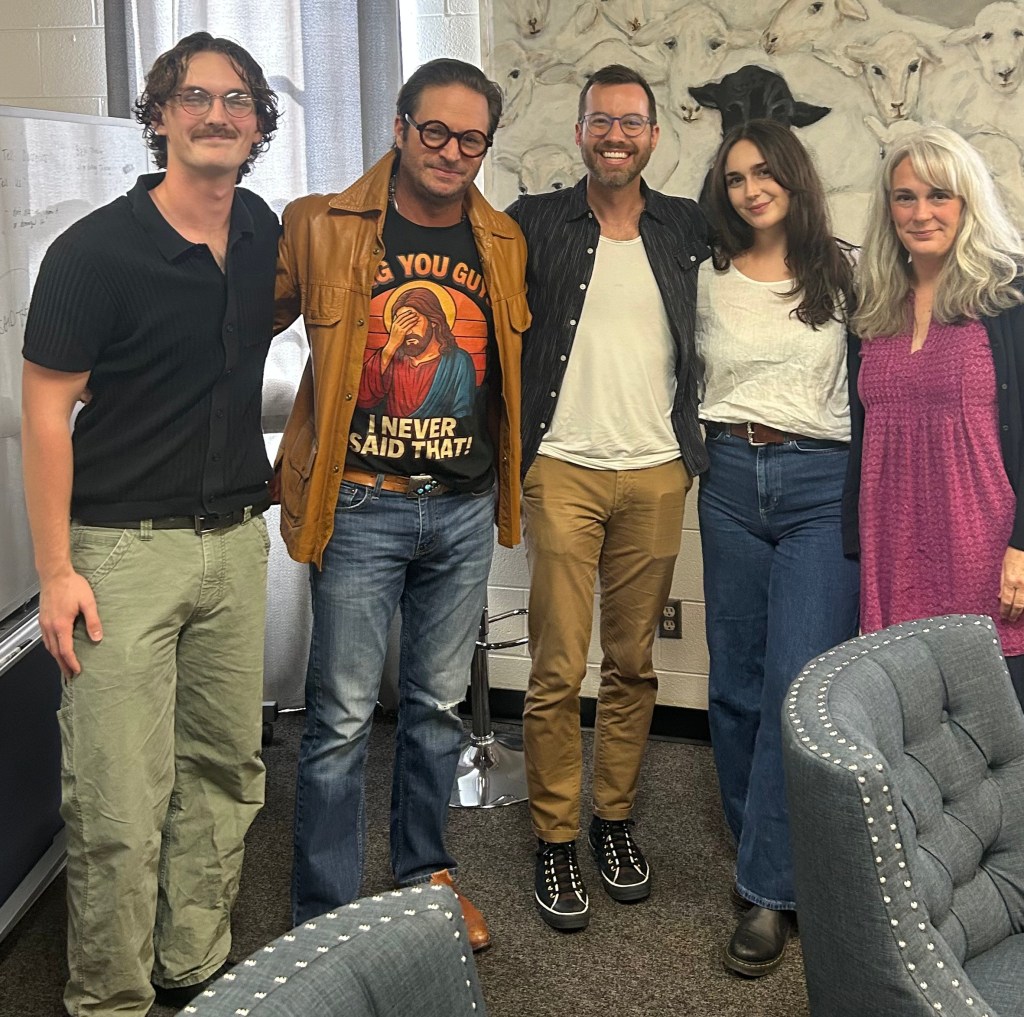




 Searching for Jesus in A̶m̶e̶r̶i̶c̶a̶ Chattanooga