Lunch: It was a night service so we went back to Shannon’s house.
Topics: What IS a Seventh-day Adventist? What is the ecumenical church?
A few weeks ago, my friend Shannon asked if I had any interest in attending a Seventh-day Adventist (SDA) Church because one of her regular customers at Niedlov’s is a pastor at The Well. Obviously, I was. But, my knowledge/association with this denomination is limited. Honestly, I only have three: 1) When I bought my first house, I couldn’t close on a Saturday because it was their Sabbath; 2) I’ve spoken at a Death and Dying class for the the past three years at the local Seventh-day Adventist college; and 3) My seminary was adamant that the SDA church is a cult.
So… there you go. SIGN. ME. UP.
I don’t want to waste a lot of time discussing the cult accusation, but I do feel like it needs to be addressed. The perception often stems from misunderstandings, theological differences, and the historical context of the denomination’s development. So, I’m going to geek out for a couple of paragraphs (for those who are interested). But, please note, this is a 100,000ft snapshot and will not go into great detail… and feel free to skip the next two paragraphs if you’re not interested.
The Seventh-day Adventist Church emerged from the Millerite movement of the 19th century, which incorrectly predicted the Second Coming of Christ in 1844. This event, known as the “Great Disappointment,” led to understandable skepticism. Some critics associate the SDA Church with the broader millenarian and apocalyptic movements of the time, which were often labeled as fringe or cult-like. Additionally, Ellen G. White, one of the SDA Church’s founders, is regarded as a prophet by Adventists. Her writings are highly respected within the denomination and often used alongside the Bible for guidance. Critics sometimes argue that SDAs elevate White’s writings to the level of Scripture, which they view as heretical. Adventists, however, assert that her writings are subordinate to the Bible and serve as an inspired commentary.
Some Christians conflate SDAs with groups like Jehovah’s Witnesses or Mormons due to a lack of understanding. These groups differ significantly in doctrine but are often lumped together as “cults” by those unfamiliar with their beliefs. But, when it comes to the biggest differences from more traditional Christian denominations, there are a few – Sabbath Observance: SDAs believe the biblical Sabbath is Saturday, not Sunday, and emphasize its observance as a key aspect of faith; Investigative Judgment: SDAs teach that Jesus is currently conducting a heavenly investigative judgment that began in 1844. This doctrine is unique to Adventism and can be seen as unorthodox by other denominations; Health Practices and Lifestyle: many SDAs advocate for vegetarianism, abstaining from alcohol and tobacco, and maintaining healthy living as part of their faith. While many Christians value healthy lifestyles, some view these practices as overly prescriptive.
So… what was our experience?
To be fair, this wasn’t a typical church service. It was more a celebration of the Advent, including a potluck meal, a few Christmas carols, and the telling of the Christmas story by the youngest members of the congregation. From the moment we arrived, we were greeted with open arms. Mike, the pastor, was visibly surprised—but deeply moved—that we had chosen to join them. Over the next hour, we connected with some of the warmest, most genuinely curious people I’ve encountered since starting this project.
Continuing a trend I’ve come to treasure, it didn’t take long before I crossed paths with someone I already knew from the community—the professor from the Death and Dying class where I speak each year. The surprise on both of our faces was priceless, and I honestly couldn’t tell who was more shocked to see the other. What followed was a shared laugh and a warm hug, a moment that felt like more than just a coincidence. It was a beautiful reminder of the deeper connections that fuel my why for this project—the power of community, shared experiences, and the unexpected ways our paths intertwine.
As I delve deeper into this project, I find that the larger questions surrounding the ecumenical church increasingly center on themes of unity, diversity, and purpose within the broader Christian community. Drawing from my experience as a lens, here are some of the key questions that have repeatedly come up:
What does true unity in the church look like?
How can churches across denominations come together in meaningful ways while respecting theological, cultural, and liturgical differences?
Is unity about agreement, collaboration, or something deeper, like mutual love and understanding?
How can the church celebrate diversity without losing its shared mission?
In what ways can diverse traditions, practices, and interpretations enrich the ecumenical movement?
How can churches avoid letting differences become barriers to collaboration while maintaining authenticity in their individual beliefs?
What role does community connection play in the ecumenical movement?
How can churches remain relevant and connected to their local communities while working toward broader unity?
How does encountering familiar faces in unexpected places (like the professor) remind us that the church exists beyond walls and doctrines?
How do we define the ‘why’ of the ecumenical church?
What is the ultimate purpose of the ecumenical movement: to foster unity among Christians, to better serve the world, or to witness to the Gospel in a divided society?
How does a focus on shared mission, such as serving the marginalized or promoting justice, help to bridge divides?
How does the ecumenical church navigate the tension between tradition and modern challenges?
How do we honor centuries-old practices and teachings while addressing contemporary issues like mental health, inclusivity, and societal polarization?
What does success look like for the ecumenical church?
Is success measured in theological consensus, shared worship, collaborative service, or simply in the relationships built between people of faith?
How do we celebrate progress when unity feels elusive?
These questions invite reflection not only on theological or organizational challenges but also on the heart of what it means to embody Christ’s prayer in John 17:21: “that they may all be one.”
CHALLENGE: Take one of the six questions above and start a conversation with someone in your circle. Bonus points if it’s someone engaged with a different denomination… or holds a different political view?
Topics: The Ecumenical Church, The “Perfect” Church, and Meeting People Where They Are
Something you might not know about me… I’m a bit of a paradox when it comes to rules. I’m a fierce rule follower—well, sort of. If someone else imposes rules on me, you can bet I’ll push back, challenge them, and defend my independence. But when it comes to rules I set for myself? I’m unwavering. Once I commit to my own boundaries or standards, I follow them to the letter—even when they seem overly rigid or no longer serve a practical purpose. It’s like I have this inner code I can’t break, no matter how much it defies logic.
And when I started this project, I set a few ground rules for myself—and I’ve already broken one of them. But here’s the twist: I’m calling it progress! My original plan was to visit a new church every week for a year, allowing for a few intentional breaks for reflection and travel. The goal was to explore, learn, and engage with a wide variety of faith communities.
However, something beautiful happened along the way. I began connecting with people in the community who were curious about what I’m doing and eager to share in the experience. Some even invited me to attend church with them. The only catch? I had already visited their church. At first, I hesitated, feeling like I was breaking my self-imposed rule. But then I realized that this project isn’t just about visiting different buildings or checking off boxes—it’s about building relationships and fostering meaningful connections. And if revisiting a church means deepening those connections, I’m more than okay with bending the rules.
So, this week I returned to Restoration Southside with my new friend Mary Claire. I met Mary Claire in 2023 when Sydney and Brayden were performing at TEDx Chattanooga’s first Sessions event. And we ran into each other again this past summer when the kids were performing at Highland Park Porchfest, which is when I told her about this little project of mine… and she invited me to church with her. Saying “yes” to Mary Claire’s invitation turned out to be a beautiful reminder of the importance of connection. It was about so much more than attending church.
I’ve already talked about my appreciation for Restoration Southside in another post. (If you’re interested in reading my thoughts, you can do so HERE.) For today’s post I want to talk more about the conversation Mary Claire and I had over lunch as it relates to the ecumenical church and meeting people where they are on their spiritual journey, specifically the idea of faith as a shared space, not bound by rigid walls or denominational lines. Embracing unity and diversity across traditions—creates a space where people can feel welcomed and valued, regardless of where they are in their relationship with God or the church.
But, that’s easier said than done.
We talked about the importance of grace and openness in spiritual communities, not expecting everyone to fit into a mold but rather walking alongside them, hearing their stories, and honoring their unique paths. We also reflected on how often people feel disconnected from traditional church settings because they fear judgment and/or don’t feel like they belong. But when the focus shifts to meeting people where they are—whether that’s in doubt, curiosity, or conviction—it opens the door for true connection, growth, and healing.
Since my lunch with Mary Claire, I’ve had three interesting interaction with people who have either sent me a DM, or personally stopped to talk about some of my posts. And there is a common theme: Church as a meeting place, or a gathering of any sort, just isn’t cutting it. Each interaction has brought a unique perspective, yet they all converge on a shared struggle—a widening gap between what individuals seek from their spiritual communities and what they feel is being offered. Importantly, this disconnect doesn’t stem from a mindset of “you’re not giving me what I want.” Instead, it reflects a deeper longing, a heartfelt question: “There has to be more to it than this, right?”
For some, the issue seems to be a lack of genuine connection. Church as a meeting place often feels transactional or routine, a place to check off a weekly obligation rather than a sanctuary where deep relationships are formed and sustained. Others have expressed a longing for something more dynamic and meaningful, a space where conversations about real-life struggles—mental health, family pressures, or social justice—are not just welcomed but encouraged.
What stands out to me is not just that people feel the current format of church gatherings isn’t cutting it, but that they are yearning for something different. They want a place that feels alive, relational, and deeply attuned to the realities of today’s world. Whether it’s a reimagining of church as a collaborative, grassroots movement or a space for intimate and authentic community, the hunger for meaningful engagement is undeniable. But, not just within their church community… they want meaningful engagement throughout our city. As one person so eloquently put it: There has to be more to all of this than hanging out with my church friends a couple times a week and serving at the soup kitchen once a month.
Another of these conversations centered around how younger generations, in particular, are seeking authenticity over tradition. It’s not about rejecting faith or spirituality but rather about finding expressions of these values that are real, relevant, and inclusive. Another person shared how they’ve started hosting small gatherings at home, blending faith-based discussions with communal meals, and have found this to be far more fulfilling than the large, impersonal gatherings they had been attending. What’s fascinating is how this theme isn’t just about dissatisfaction—it’s also about possibility. And, I don’t think it’s an “either/or” scenario. It’s more about “and/both” and how we can come together on Sunday, but dig in deeper Monday through Saturday.
It’s a reminder that there’s a tremendous opportunity for faith communities to evolve and adapt, to become spaces where people feel seen, heard, and genuinely supported. For me, these conversations are not just about what’s missing but about what could be built in its place. I keep returning to the idea that perhaps the heart of this issue isn’t the institution itself but the ways in which it’s being experienced. Are we creating environments where vulnerability can thrive? Are we meeting people where they are, in their questions and struggles? Are we offering more than just a gathering—a true sense of belonging?
These interactions have been a powerful reminder of how important it is to listen. They have challenged me to think about what kind of spaces I’m fostering in my own life and work, and how I can contribute to this larger conversation about community, faith, and connection.
When I look back on my conversation with Mary Claire, I’m thankful for the connection to such a beautiful person who feels the weight of the world in a profound way, carrying a heartfelt burden for others to be seen, valued, and truly loved. Her compassion is contagious, and our time together reminded me of the beauty that emerges when we pause to connect with those who carry such an intentional vision for others.
It’s in moments like these that I’m reminded none of this is by chance. These conversations, these intersections with kindred spirits, have felt divinely orchestrated—threads in a larger tapestry being woven together. Over the past four months, each interaction has offered me a glimpse into something extraordinary: the possibilities of what the ecumenical church in Chattanooga could look like.
This isn’t about buildings, denominations, or traditional frameworks. It’s about a church that is alive and vibrant, a mosaic of people from all walks of life united by their desire to serve, love, and uplift their community. It’s about breaking down barriers and finding common ground—where shared humanity takes precedence over doctrinal differences, and the focus shifts to what truly matters: fostering connection, meeting tangible needs, and creating spaces where everyone feels welcome and valued.
Mary Claire’s deep burden for others mirrors the larger vision I see unfolding—a church that moves beyond routine gatherings and into the heartbeat of the city, one that listens, learns, and loves in practical, transformative ways. These connections are not only inspiring but also challenging me to consider how I can contribute to this vision, how I can help create spaces where people are drawn together in unity and purpose.
Looking back, I see these moments as pieces of a puzzle, each one adding clarity to what could be possible. The ecumenical church in Chattanooga doesn’t have to be confined to a single space or system; it’s something far greater—a network of relationships, a movement of shared hope, and a reflection of what it means to truly embody love in action. And for that, I am profoundly grateful.
CHALLENGE: I encourage you to reach out to someone… ask them out for coffee or a meal… and talk about the ecumenical church in Chattanooga. (Bonus points if they attend a different church than you!)
Before I dive into this week’s post, I need to provide some context and acknowledge a few of my personal blind spots and grievances. I’m under no illusion that anyone is eagerly awaiting my thoughts on this church—or any church, for that matter. But I’m deeply invested in this project because I genuinely want to move beyond my blind spots, challenge my assumptions, and engage in honest, meaningful conversations about faith, community, and the role of the church in our lives.
I also believe that Christian Nationalism is one of the biggest obstacles to genuine faith and meaningful community that we’re collectively facing at this moment. It often conflates religious identity with political ideology, distorting the core teachings of Christianity and creating division instead of unity. By prioritizing power and cultural dominance over humility and service, it undermines the church’s ability to reflect Christ’s love and engage with the broader world in a way that fosters understanding, compassion, and justice.
Having said this, for those reading this post, I hope you can see the care and intentionality behind my words. Calvary Chapel is doing some meaningful work in our community, and I want to acknowledge that. However, there are also some aspects that merit a closer look—areas where I believe there’s room for growth, or conversations, that need to happen. My goal is not to criticize for the sake of it, but to engage thoughtfully and honestly with both the strengths and challenges I’ve observed.
Before visiting on Sunday, my only associations with Calvary Chapel were two experiences separated by about four years. The first was in 2020 when they invited Charlie Kirk to speak at their weekend services about one month before the presidential election. I took a screenshot from their website (pictured below), and I think it speaks for itself. Having someone like this speak during a church service raises several concerns, primarily related to the separation of church and state, tax laws, and the potential impact on the congregation’s unity and focus.
The second was more recent, during a workshop where I met a few people working with a nonprofit that was previously under the organization. However, due to a loss of financial support tied to the church’s political stances, the nonprofit has placed some distance between themselves and the church.
THE GOOD: However, I want to start off by highlighting some of the positive efforts coming from Calvary Chapel. For many evangelical churches, the pro-life ethos begins and ends with the ballot box, or legislative initiatives. But, Calvary Chapel is actively encouraging and equipping its congregation to engage with the pressing needs of fostering and adoption in our community. This emphasis reflects an important extension of the pro-life ethos—caring for vulnerable children and families in tangible, life-changing ways.
The church has also organized efforts to serve the homeless community in Chattanooga, including providing meals, clothing, and other essentials. These initiatives often involve members of the congregation volunteering their time and resources to meet immediate needs. They have also been involved in disaster relief efforts, both locally and regionally, mobilizing volunteers and supplies to assist communities affected by natural disasters. Calvary also hosts programs aimed at mentoring and supporting at-risk youth, often providing opportunities for education, personal development, and spiritual growth.
So, given how much good work is coming from Calvary, why is there so much hostility aimed at this church?
I think it can be boiled down to two things: Patriarchy and Politics. And I’m not trying to be flippant. These are complex, deeply rooted issues that shape how many evangelical churches are perceived, and I can’t unpack these topics in one blog post. However, I can provide a brief overview based on conversations I’ve had with both those who attend and those who do not.
Patriarchy: The nuances of this topic are immense, encompassing theological, cultural, and personal dimensions. Yet for many within evangelical churches, it can feel as though there’s little room for meaningful dialogue. The concept is often presented as a settled issue—rooted in tradition and scriptural interpretation—leaving little space to question, critique, or explore alternative perspectives. This lack of conversation can lead to frustration or disengagement for those who want to wrestle with the complexities, particularly in a modern context where questions of equality, leadership, and gender roles are increasingly relevant. For many, “patriarchy” symbolizes centuries of systemic inequality where women and marginalized groups were excluded from power, opportunities, and decision-making. It is often associated with oppression and unjust societal norms that have subordinated women in various spheres of life—family, work, religion, and government. This issue is SO MUCH more than women not having the ability to hold pastoral positions, or a wife submitting to her husband.
Politics: For many, a church’s alignment with specific political figures or ideologies blurs the line between faith and partisanship. When a church aligns itself with a particular political ideology, it can inadvertently misrepresent the faith to outsiders, making it seem that being a Christian is synonymous with belonging to a specific political party. When a faith community is seen as prioritizing political agendas over spiritual ones, it can alienate those who hold different views or who are seeking a space free from political divisiveness. Political discussions often involve complex, nuanced issues that don’t always align neatly with a single theological perspective. Simplifying, or polarizing, these issues can lead to a lack of critical thinking and thoughtful engagement.
Churches are called to focus on higher, eternal principles that transcend political ideologies. When politics takes center stage, it can detract from the church’s role in promoting love, justice, and reconciliation, reducing its impact to a partisan tool rather than a spiritual refuge.
So, what was my experience at Calvary Chapel Chattanooga?
Specifically focused on the sermon, because concerts with flashy lights and big video screens distract me…. the sermon was, overall, pretty solid. It should be noted that it was presented by “Pastor Kenny” and not their lead pastor. (I’m going to nerd out for the remainder of this paragraph and the next, so if preaching styles aren’t your thing, skip these paragraphs.) Going in, I was curious if Calvary would lean into expository teaching, drawing out the meaning of a specific passage by explaining its context, breaking down individual verses or phrases, and connecting them to the broader biblical narrative. And for the most part, he did. But he also used textual preaching, focusing on a single verse or small passage but does not systematically work through an entire section or book. There was definitely some cherry-picking going on, which can definitely happen when you use NT verses to underscore OT passages, creating theological and interpretive challenges.
The New Testament often references the Old Testament, fulfilling prophecies or expanding on earlier principles. However, these connections require careful handling to respect the original OT context. Misapplying NT insights can impose meanings on OT passages that were not intended by their original authors. Without considering historical, cultural, and literary contexts, the preacher risks creating theological inconsistencies. The strength of scripture lies in its complexity and interwoven narrative. While NT verses can illuminate OT themes, careful exegesis ensures that connections enrich understanding rather than detract from the integrity of either testament. (Okay… I’m done geeking out.)
THE BAD: The name of the sermon series, Under God, One Nation, is a mirror of our country’s Pledge of Allegiance. It might be a pithy play on words, or it could symbolize a bigger agenda. I won’t pretend to know their intentions, but it was definitely a red flag for me. And while I will not give a complete breakdown of the sermon, I do want to note one thing I found a little unsettling. The sermon was based on 1 Samuel 13:16-14:23 (focused primarily on Jonathan and Saul), but the pastor took time to interject how wives are responsible for supporting and encouraging their husbands. He actually noted that he was moving off topic to specifically talk to wives, which is always a red flag to me. (See my notation above about the patriarchy.)
He said the following: “What this armor bearer just said to Jonathan speaks your husband’s love language when he’s looking around and saying, ‘Is there anybody that believes, wants to believe God with me?’ He goes on to tell wives that they should know that their husbands aren’t pigs, or egotists, and that God has hardwired them to believe that where there is support there is respect. And that wives need to recognize the reality that God has a design and a plan for our husbands, that when we challenge our husbands we are not “freeing them up to be everything God has called him to be.” (Please, feel free to listen to this excerpt from the November 17th sermon, beginning around the 38 minute mark.)
The summation of this weirdly placed side sermon: if we “release” our husbands to be everything that God calls them to be, we will have husbands that will love us as Christ loves the church. This is a theological minefield. First, and foremost, the love that Christ demonstrates for the church is unconditional, sacrificial, and initiated by Christ, not contingent on the church’s actions. This love is rooted in grace and reflects Christ’s sacrificial nature, not the church’s merit or behavior. Imposing a condition like “release” undermines the unconditional nature of Christlike love.
Additionally, the idea of “releasing” implies that wives hold significant control over whether their husbands fulfill God’s calling. This perspective can shift responsibility away from husbands’ personal accountability to God for their growth, character, and obedience. Biblically, every believer, male or female, is individually accountable to God (2 Corinthians 5:10). But, most importantly, teaching this principle could unintentionally perpetuate unhealthy dynamics in marriage where wives feel pressured to defer, or comply, unconditionally, even in situations that may be harmful, or unwise. It risks enabling manipulation by framing spiritual growth as contingent on the actions of one spouse rather than both pursuing God together.
ALL THE QUESTIONS THAT I HAVE: So, why did I bring up Christian Nationalism at the beginning of the post? A few weeks ago, Calvary Chapel Chattanooga uploaded a video on their social media platforms from their lead pastor. This same video was played the Sunday before the 2024 presidential election. In this video, he stated,”I do feel that for a church like ours, an election message may have in many ways been sort of redundant.” This was followed up with a reference of James 4:17: Remember, it is sin to know what you ought to do and then not do it.
This is important and I’m going to circle back to it.
While I can critique the use of cherry-picking scripture to serve his own agenda, or manipulate his congregation, the truly egregious offense was his admonishment of anyone who would choose to sit this Presidential election out, or choose to write in a candidate that accurately reflects their own beliefs. He then went on to say, “I’m convinced that the Christian in the West is going to be judged for how he or she voted.”
At the very least, declaring that Christians will be judged for how they vote fosters division within the body of Christ. It creates an “us vs. them” mentality that prioritizes political allegiance over unity in faith. Criticizing those who sit out an election or vote for a write-in candidate as sinful overlooks legitimate reasons for such actions. Christians may abstain from voting as a form of protest or choose a candidate who aligns more closely with their moral convictions, even if that candidate has no chance of winning. Reducing these nuanced decisions to “error” or “sin” marginalizes thoughtful, prayerful political engagement.
But, it was his “quick side note” that was most problematic for me: “…to those of you who now by grace have recognized your error in the past, you’ve got to repent. You must repent of the part you played and what it is that has come upon us. I feel that many Christians have blood on their hands and will answer for it one day… I don’t have to tell you, Church, which way to vote. I’m confident that you will and that you’ll vote the right way.”
Statements like “you’ve got to repent” and “Christians have blood on their hands” weaponize guilt to enforce political conformity. This rhetoric implies that voting for a particular candidate is not only a civic duty, but also a spiritual one, with eternal consequences. It places undue pressure on congregants and could alienate those whose consciences lead them to different political conclusions.
The pastor closed out his address with this acknowledgement: If you’re unclear at this point as to which of these two candidates to choose, then perhaps I have absolutely failed you as your pastor… and then tells people that they know what to do and if they don’t do it then it’s a sin. (Circling back to James 4:17 reference.)
This is disconcerting for several reasons, particularly in how it blends theology, personal responsibility, and political coercion. Using James 4:17 in this context risks distorting its meaning to pressure congregants into a specific political action, equating non-compliance with sin. This interpretation could manipulate congregants’ spiritual sensitivity and misrepresent scripture’s intent. (This verse addresses personal moral conviction and accountability before God.)
The pastor’s comments, especially “I don’t have to tell you which way to vote…you’ll vote the right way,” heavily imply a partisan preference. Coupled with his statement that he feels he has failed as a pastor if congregants are unclear on the “right” candidate, this crosses into the territory of political endorsement, which churches are advised to avoid under IRS 501(c)(3) regulations. This can blur the line between spiritual guidance and political advocacy, risking the integrity of the church’s mission. (Calvary Chapel Chattanooga has drawn this criticism several times in the past.)
So, where does that leave us?
In seminary, I remember debating another student about the influence of eschatology, a branch of theology that deals with the study of “last things” or end-times events, when it comes to our world view and how our eschatology dictates our motivations and actions. He fervently disagreed with me, but I think this is a clear example of the power eschatology holds. Christian Nationalists generally align with an eschatology that supports their vision of societal transformation under Christian dominance. At the risk of nerding out again, here are a few potential frames of reference:
Postmillennialism often encourages believers to engage in politics, law, and education to establish God’s kingdom on Earth before Christ’s second coming. This fits the Christian Nationalist agenda of intertwining religious and governmental power. (The world will gradually improve as Christian principles permeate society.)
Dominion Theology overlaps with eschatological beliefs and is influential in some Christian Nationalist circles. It emphasizes direct engagement with societal systems to bring them under Christian control, often merging with postmillennial thought. Christians are called to “take dominion” over society, based on Genesis 1:28 (“fill the earth and subdue it”). As a result, political and cultural institutions should reflect biblical laws and governance.
Critics argue that the blending of eschatology with nationalism often distorts Christian theology, focusing more on political power than on Christ’s teachings about humility, love, and grace.
I agree.
If you’ve read this far… I’m impressed. I’m also exhausted. This past week has taken me back to my seminary days and, honestly, I’ve loved it. Before Be The Change Youth Initiative took us on this life-changing, crazy adventure, my goal was to teach theology at a collegiate level. Since then, the Lord has placed new desires on my heart, but, regardless, sound theology is important… now more than ever. And the only advice I can give is to be mindful of who you sit under. Church leadership wields significant influence, and a pastor’s worldview, especially in a Christian Nationalist context, can shape not only your theology, but also how you engage with others and society as a whole.
Being part of a church means aligning yourself with its doctrine and practices to some extent. If a pastor’s teachings frequently merge faith with political ideology, or create an “us vs. them” mentality, it distracts from the gospel’s central message of grace, love, and humility. Take time to evaluate whether the teaching aligns with the whole of Scripture, challenging you to reflect Christ in your daily life, and equipping you to engage in the world with compassion and integrity.
I’ll end with this. I know a lot of people who call Calvary Chapel Chattanooga their home. I love them dearly. They are genuine, kind-hearted individuals striving to live out their faith and serve others. I’ve seen their passion for their community, their willingness to help those in need, and their desire to follow Jesus sincerely.
Would I choose to attend a church like Calvary? The short answer is NO. Their lead pastor is objectively partisan and this is problematic, to say the least. And I don’t feel called to navigate those waters. (I do feel this is a calling and I know people who are firmly planted in churches that border on Christian Nationalism for this reason.) My fear is that we are moving into an era where we’re no longer choosing our churches based on denominational beliefs or proximity to community… or even for the more superficial things like worship preferences (that’s a jab at myself). My fear is that our tribal political stances have infiltrated sects of the institutional church to the point where unity SEEMS futile.
But, I pray it isn’t. And I’m trying my best to lean into this tension.
Topics: The Institution of Church vs The Real Church, The Kingdom of God
We first met Katie and Chase in September 2021 at a panel discussion entitled Youth Mental Health & the Church. They were invited to attend the discussion, where Sydney and I spent some time talking about our story and our work in the community. It was a unique moment where our faith and our mission intersected in a formal setting since moving to Chattanooga. This panel was the culmination of six months of collaboration, with mental health and church leaders meeting monthly to address blind spots, missed opportunities, and areas for growth in how the church can better support young people and their families.
Since then, Katie and Chase have become close friends for so many reasons. They’re as genuine as it gets, never taking themselves too seriously, and every time we’re together, there’s no shortage of laughter. Yet, they’re also deeply thoughtful about life and faith. I know I can text them about any theological question I’m wrestling with, and they’ll respond with honesty and insight, always taking the conversation seriously. They’re also avid live music fans and have shown up for our kids on so many occasions to celebrate them.
Find friends like this. You need them.
Now for the our experience on Sunday: Nestled in the heart of the St. Elmo community, the church has a quiet, tucked-away charm that instantly reminded me of the beautiful stone churches we visited in Scotland last summer. Its architecture and serene surroundings exude a timeless beauty, and stepping inside brought an immediate sense of peace and reverence. The space felt like a sanctuary from the everyday, where history and tranquility blend to create an inviting atmosphere for reflection and connection.
Over the years, I’ve attended only a handful of Episcopal churches, but one aspect that stands out as a constant is the deep attention given to liturgy. Episcopal services have a unique reverence and structure, a thoughtful rhythm that carefully guides each part of the worship experience. This attention to detail creates a sacred atmosphere that invites everyone to participate fully, engaging the heart, mind, and spirit. The use of ancient prayers, communal responses, and symbolic actions connects worshippers to centuries of Christian tradition, offering a sense of continuity that transcends time and place. It’s a beautiful reminder of the church’s commitment to intentionality and depth in worship, where every word and gesture feels meaningful and purposefully directed toward honoring God.
Sydney and I felt a little scattered. A traditional Episcopal service has its own cadence, a kind of rhythm we’re not used to, with each part of the service flowing into the next. But we found ourselves fumbling through it, juggling books and bulletins as we tried to follow along with everyone else. When it came time to kneel for the prayers, we had a funny moment, laughing at ourselves as we balanced everything in our hands, wondering how to make it work.
Despite the initial awkwardness, though, there was something really special about being there. There’s a deep sense of community and belonging in that small church, a feeling that everyone is genuinely welcome. It’s something you can feel from the way the members interact with each other and with newcomers like us. We may have felt a bit out of sync, but being in that space still left an impression on us—a reminder of how meaningful a tight-knit community can be, even when the rituals feel unfamiliar.
After church, the four of us grabbed lunch at The Hot Chocolatier and we talked about… all the things: how they decided to make this church their home, the election, the comparison between the institution of church and what we commonly refer to as the REAL church, and the Kingdom of God. I could spend an entire blog post writing about each of these… rich, complex, and full of nuance… but I want to focus on the latter two for this entry.
The topic of differentiating between the institution of church and the REAL church has actually come up several times over the past week. So, for the purposes of clarity, I want to explain what I’m referring to with each of these concepts:
Institution of Church: Universally, the term often refers to the organized, formal structures of the church, which include the buildings, denominations, leadership hierarchy, programs, and official doctrines. These structures are often governed by policies, traditions, and human-made systems. For the record, I don’t believe these elements are inherently bad; they can serve essential purposes. However, I do think we’ve often placed too much emphasis on what happens within church walls on Sunday mornings, sometimes to the detriment of living out our faith the rest of the week. At its best, the institution can provide a foundation for community, support, and shared worship. But at its worst, it has been misused by those with selfish agendas, distorting the Christian faith for personal gain, power, or control. When this happens, it risks becoming an obstacle to genuine spiritual growth, overshadowing the real mission of the church: to be a compassionate, active presence in the world, fostering love, justice, and transformation beyond any single gathering. And somewhere between those extremes lies a very real issue: we often allocate more resources to maintaining buildings than to caring for the marginalized in our communities. When I refer to the institutional church, I’m specifically referring to the extremes of that spectrum, those who have distorted, or completely missed, the mission Christ left to his people.
Real Church: The real church, in a theological sense, is often seen as the body of believers united in their faith in Christ. It’s described as a spiritual community transcending any physical or organizational boundaries. The real church includes people from diverse backgrounds, denominations, and cultures, connected by shared beliefs, values, and love for one another. It emphasizes relationships, mutual support, authentic worship, and the lived expression of faith. The real church is about living out values, serving others, and reflecting the teachings of Jesus in everyday life.
But, I want to close out this post with our conversation about the Kingdom of God. I’m currently doing a study by Jamie Winship that has had me looking at the Kingdom of God, juxtaposed with Christianity. And as we talked about this over lunch I really appreciated the perspectives that Katie and Chase offered. At the end of the day, the Kingdom of God is a central theme in Jesus’ teachings, referring to God’s rule, presence, and influence over all creation. It is not a physical territory but rather a spiritual reality where God’s will, values, and justice reign. It is marked by peace, compassion, humility, and a focus on uplifting the poor, marginalized, and oppressed.
Christianity, on the other hand, is the organized religion and faith tradition that has developed around the teachings, life, death, and resurrection of Jesus Christ. It includes specific beliefs, doctrines, practices, and denominations, as well as historical and cultural structures. While Christianity’s purpose is to help those wanting to follow Christ and, ideally, to reflect Kingdom values, it is also shaped by human institutions, customs, and interpretations. And even though Christianity has been the primary means through which the message of the Kingdom is shared, it is not synonymous with the Kingdom itself. (Yeah… that might be a hot take, but that’s where I stand on it.)
One of the things that has stuck with me this week has been Katie’s comment that the Kingdom of God isn’t just about the people of God. It’s about the presence of God. It’s about the work of the Holy Spirit. It’s about so much more than us.
CHALLENGE: When you think about the Kingdom of God, what specifically do you think about? How does the religion of Christianity fit into your understanding of the Kingdom of God?
Well, it only took me 10 weeks to break one of the rules for this project… not duplicating church visits. But, I’m actually taking this as a HUGE moment of growth win. Ten years ago, I would have clung to the “stick to the rules” mentality at all costs, missing the bigger picture. But I learned years ago that flexibility and openness usually lead to the most meaningful experiences, even if it means letting go of my own expectations.
So, what precipitated this deviation…
If I was a betting woman… all my chips would be on the Lord.
And this is where my personal writing project intersects with my work life… and where things have the potential to become messy, complicated beautiful. For those who aren’t familiar with our story, here’s a very brief synopsis for context (as it relates to church/faith/ministry): Our oldest daughter, Sydney, started an organization called Be The Change Youth Initiative when she was 15… and it started as a ministry… born from a deep pain intentionally inflicted upon her by a misogynistic youth pastor who belittled her desire to create change in our community and actively discouraged other students from getting involve. (Yes, we know how asinine it sounds… but we also wouldn’t be where we are today if it hadn’t happened. So here’s to making some pretty great lemonade out of some really bad lemons.)
Sydney wanted to create a place where youth, no matter their age, would be ENCOURAGED to use their gifts and talents to help others. And that’s exactly what we did for two years… as a ministry. Essentially, this meant we were engaging with youth and families within Christian communities and the non-profits we partnered with were also faith-based organizations. But that changed in 2018 when we were approached by a chapter of Make-A-Wish in Texas and we took BTCYI on the road.
When we chose to stay on the road in 2019, focusing on conversations with youth and families about the mental health crisis, most of our contacts were within church circles because Sydney was still working with a team within the Contemporary Christian Music (CCM) circles in Nashville. However, those connections quickly disintegrated as we recognized the link between youth mental health struggles and the trauma they were experiencing within the institutional church. This realization had a profound impact on the music Sydney and Brayden created and CCM wanted nothing to do with it. (It is also one of the reason why they now perform under the name In the Company of Wolves.)
And it was the absolute BEST thing that could have ever happened to my kids.
So… why do I share this?
Because last week Sydney and I found ourselves in a two day workshop with members of six other organizations to talk about collaboration… and half of the organizations were faith based. One of the men was Anthony, pictured above with his wife Elaine. I wish I could share all the “coincidences” that unfolded over those two days; but, needless to say, there were too many to actually be a coincidence. Each of us walked into this cohort, partnered with another organization, working on our own individual projects. But, as we sat together, each bringing our diverse backgrounds and unique experiences, sharing our stories, we began to see a powerful overlap in our work.
It wasn’t a duplication of programs or services, which can often happen in a town with so many non-profits. Instead, we began to see where one program ended, another naturally picked up. But, better yet, we each began to see how our individual programs could benefit from collaboration…. and not from a financial standpoint. Honestly, I don’t think any of us even talked about finances during those two days. We were more excited about the potential for true impact and transformation in our community… especially for youth.
So, a few days later I emailed Tony, told him about this project, and asked if I could attend church with him and his wife. Afterwards, we went to lunch and didn’t talk about the sermon once. But, we did talk about life and work and what happened over those two days at the workshop… and we began dreaming.
And since then Sydney and I have started putting work behind the dream.
A key goal of this year-long experiment is to discover how people of faith can come together to drive meaningful community transformation—without spotlighting any single church or denomination. The vision is to create a shared space where individuals, united by purpose rather than labels, can collaborate on initiatives that make a tangible difference. By focusing on values and the common good, rather than organizational affiliations, the aim is to foster a sense of unity that transcends traditional boundaries, encouraging diverse voices to contribute and allowing the impact, not the institution, to shine. This approach seeks to highlight the power of collective action, rooted in faith, that’s accessible to anyone committed to serving others and enriching the community.
I can’t believe I’m only 10 weeks in to this little project… and the threads I’ve been gently pulling are now intertwining. I’m not sure what the final product will be, but it feels like it’s starting to take on a life of its own. It’s like watching puzzle pieces fall into place—only I still don’t know what the picture will look like. There’s something so thrilling in the unknown. It’s almost as though the project is leading me.
And, if my children are reading… this is what walking by faith looks like.
CHALLENGE: Do you have dreams for your community? Spend some time thinking/talking about those dreams. Our family strongly believes that each of us has unique gifts that can help make our community a better place. (Follow-up question: What special gifts do you bring to the table?)
Topics: Personal Responsibility, Spiritual Manipulation/Religious Coercion
Before I dive into this post, there are two things I want to share. First, I hadn’t actually planned to attend this particular church. In fact, I had two other churches on the schedule. One of Holden’s friends invited him to a special event that ended up getting rescheduled; I was also set to attend an afternoon service with one of our board members. But when I realized I’d be cutting it close for Piper’s publishing debut (side note: all the women in our family are now published authors!), I decided to switch things up. So, at 9:30 a.m., I made a quick decision—I’d go to church by myself. And that leads me to my second point.
This project was conceptualized around the idea of attending church with someone I knew, sharing a meal or coffee afterward, and having a meaningful conversation about our shared faith. So, when it came time to attend church alone, I hesitated. But I also saw it as a great opportunity to spend time with Holden. When it comes to our family’s religious trauma faith journey, Holden was really young during the worst of it. And while he didn’t experience everything firsthand like our older children, he still felt the ripple effects of the struggles we faced. I saw this as a chance to open up a conversation about those experiences—what faith means to him now, the lessons we’ve learned, and how we’ve grown from it all.
So how did I choose this particular church:
When we first moved to Chattanooga—the so-called “mecca” of local churches—we did a few Google searches to see what was out there. We had one rule: If the church’s landing page prominently featured the pastor or worship team selling books or CDs, it was a hard pass. And there was one church in particular that always topped the Google search engine list. (Their SEO game was on point.) So, this is the church I chose.
First things first, I need to acknowledge my own biases and blindspots. For context, I’m not a fan of Bethel. (And that’s putting it mildly.) We attended their church in Redding when we lived on the road and it was truly the most disturbing church experiences I’ve ever personally been witness to and there were definitely similarities between the two. On the surface level, it was like walking into a concert: loud music, film crews on stage, photographers walking up and down the aisles snapping pictures of the congregation during worship. There was also banner waiving, a live painting, chaotic movements coming from those gathered at the front of the stage, and the speaking of tongues. No matter how you feel about any of those things, I want to provide a visual representation of the experience. It was loud and there was a lot going on.
Worship lasted for almost 80 minutes, the longest I’ve ever experienced, and was followed by a few announcements that segued into a time of prayer… over weather and blood curses. And this is where things get a little disconcerting. (Holden is adamant in me sharing his opinion that things were disconcerting weird from the very beginning.)
While my goal with this project isn’t to critique specific sermons, I do want to highlight what I consider troubling indicators that I believe reflect a broader issue within the church as a whole. And this opening prayer over weather and blood curses (i.e. tornadoes, COPD and diabetes) definitely falls into that category. The person leading this prayer believed that with enough faith, things like tornado paths can be altered and hereditary diseases, such as COPD and diabetes, can be healed. Please note: I’ve witnessed the miraculous and unexplainable happen through prayer, so this isn’t a commentary on what God can do. Instead, it’s a reminder of the balance between divine intervention and the personal responsibility we hold in practicing good stewardship.
This also brings me to a larger issue within the church: the resistance to taking responsibility. In some cases, churches foster a mindset that prayer alone can combat the forces of nature, sidelining the urgent need for real, tangible action. For example, many in the church have been vocal opponents to environmental efforts. Many congregations downplay, or outright dismiss, scientific evidence in favor of a belief that God will take care of the earth regardless of human behavior and this mentality isn’t limited to environmental issues—it extends to health concerns as well. Conditions like COPD and diabetes, which have clear links to lifestyle choices and environmental factors, are often treated as solely spiritual battles that can be overcome through faith and prayer. While spiritual support can be an important aspect of coping with illness, this approach ignores the vital role that medical science, personal responsibility, and practical changes in behavior play in managing these conditions.
During our conversation over lunch, I asked Holden for his take, and his response made me laugh, “I would have gone with the ‘my body is a temple’ approach, and, at least, talked about your responsibility to make healthy choices. Calling them blood curses is wild.” Stewardship is real. And when we don’t take those responsibilities to heart, the consequences are real.
And this is only ONE example of questionable theology that came from the stage that morning. Here are a few other statements that were made:
God only loves people that come to Him and respect Him.
You attract the favor of God by your honor.
God blesses other people to test your heart.
And these were just three of MANY.
I don’t have time to delve into all the questionable theology I encountered, but I want to give some attention to the topic of the sermon: tithing. Throughout the message, the pastor repeatedly mentioned that his words might be offensive or could upset people. Each time, he softened this by reminding the congregation that he loves them and is only delivering the sermon because he wants what’s best for them. This pattern of presenting a potentially controversial message, and arguably SELF-SERVING message, and then immediately framing it as an act of love seemed like a way to disarm criticism and make it harder for the congregation to question, or push back. It felt less like a genuine conversation about giving and more like a strategic emotional appeal to bypass any discomfort, or dissent. Instead of fostering an open discussion about the biblical principles behind tithing or the personal struggles people may face with financial giving, the focus was on justifying the message under the guise of love. Then, to finish up the service, he asked for every single member of the congregation, whether giving or not, walk down to the stage and pass by the offering plate.
What a juxtaposition from the end of last week’s service.
I want to close with this… There were several moments during the service when I found myself silently praying—for people to have the wisdom to discern truth, and for evil to not find a foothold. But, there was another moment worth mentioning, when the pastor asked everyone to greet one another with a hug. I wish you could have seen Holden’s face as the woman in front of us turned to embrace him. Moments before she was speaking in tongues and the next minute she was hugging Holden like she’s known him all his life. And while he was as stiff as a board for the first 10 seconds, he eventually warmed up to her and returned the hug. And in that moment another prayer came to mind: Lord, give me eyes to see people the way you see them. Give me the ability to love people the way you call me to love them.
Especially the people I disagree with theologically.
It’s so easy to walk into a church, with your personal baggage in tow, and throw daggers. And, to be fair, I would never “join” a community like that. (And I don’t think any other member of my family would have made it through worship the entire service except Holden.) But, it did show me how much I’ve grown. How much I’ve healed. And while I might still be carrying some baggage, maybe it’s more like an overnight duffle instead of a a full-blown checked luggage situation.
CHALLENGE: Listen to a podcast, or grab a book, that helps you process through your church/religious trauma. A few weeks ago, K.J. Ramsey’s The Lord is My Courage was recommended to me and I’ll be honest… the title and cover art had me saying NOOOOOOO! But, never judge a book by its cover, right? This has been one of my best reads in a while. (I definitely recommend it for young, and more seasoned, women!)
Topics: Motivated by Love, Institution vs Bride, Micro vs Macro
A few weeks ago, I had the opportunity to join a group of people from different corners of Chattanooga’s music scene for a meeting at the Mayor’s office. On a personal level, it was exciting to look around the room and realize that I knew half the people there—because we’ve collaborated with so many of them. On a professional level, I noticed an interesting parallel between the music community and the church community. There are a lot of people with strong personalities opinions and a lot of potential for incredibly impactful collective work.
As I was leaving the building, I spotted my friend Libby chatting with someone else from the meeting. Never one to meet a stranger, I introduced myself to Kyron, the new music director at New City East Lake. I then proceeded to invite myself to their church and they graciously accepted my invitation. And I’m so thankful they did because it turned out to be one of the most meaningful church services I’ve ever experienced.
Upon entry of the sanctuary, I was immediately reminded of my grandmother’s church: old wooden pews, stained glass window, and acoustics that any vocalist would salivate over. (I’ve grown to appreciate that last one thanks to my kids.) My secondary thoughts: This congregation is incredibly diverse. Like its sister church in Glenwood, which Sydney and I visited about a month ago, New City East Lake has a diversity that spans across generation, ethnicities, and socio-economic classes. And its service felt like a time travel/teleportation back to Cuernavaca, Mexico when I was a study abroad student in college.
The ENTIRE service was bi-lingual, which has its own unique challenges, but this service had a beautiful flow that never came across as disjointed. I should also note that worship had me chuckling thanks to a few “old school” throwbacks that I knew by heart. Not to mention some songs in Spanish! I’m a little rusty, but singing those songs took me back to living in Mexico… back to a time where community and church were truly synonymous.
And before I move on to the conversation during lunch, I have to talk about how this church does communion. I’ve been to hundreds of churches over the years and I’ve NEVER experienced communion like this. They empty the pews, row by row, each person coming to the front of the church to pick up their cup of grape juice, or wine… yes, real wine. Each congregant also breaks off their own bread before creating a ginormous circle around the room. This followed with the taking of communion and then another song of worship.
An introvert’s nightmare.
But, as I looked around the sanctuary, for the second time since starting this year-long experiment, I was struct by the diversity. Generational diversity. Ethnic diversity. Socio-economic diversity. And compared to so many of the homogenous congregations I’ve grown accustomed to, this was a refreshing and powerful reminder of what community should look like. It wasn’t just a gathering of people who looked alike or shared the same background—it was a true mosaic of life experiences, perspectives, and stories. In this space, everyone had a seat at the table, no matter where they came from. It made me realize how much richer our shared faith and sense of belonging can be when we embrace diversity, rather than shy away from it. This sanctuary was a glimpse of the inclusive, welcoming church world I hope to see more of.
As we moved into lunch, something happened that has NEVER happened before: I took ZERO notes. During the sermons, I typically take pages of notes and this Sunday was no exception. My little reporter-style, hand-held notepad with the Mary Poppins quote (“There’s a whole world at your feet.”) was filled with notes. But in the actual discussion time with my friends this week, I was so busy talking about the sermon… and it’s implications… that I only wrote one sentence:
Where are you giving your attention?
For context, the sermon was entitled “Let Your Kingdom Come – The cycle of Love” and was rooted in Acts 3:1-10. The premise: Love was the mark of the early church. And here are just a few of the notes I took away from the sermon:
They saw the kingdom of God on the move and were a part of it.
The kingdom of God is NOT for self-promotion.
True joy can be found when we shift focus from ourselves to others.
The “agenda” is not to control and dominate.
The “agenda” is about power… the power of love.
Peter denied Jesus until the power of love consumed him.
The teaching centered around this idea that Jesus modeled a profound cycle of love that should follow in our day-to-day lives, which consists of three components: Notice, Engage, Give. As a quick synopsis NOTICE simply means cultivating awareness. Jesus was attentive to the needs of the people around him. This is really about moving from self-focus to others-focus, recognizing where love is needed. ENGAGE is the next step once we’ve noticed the need. Jesus looked past the struggles and stepped into their lives, shared their burdens, and connected with them on a deep, personal level. To engage means we’re showing up with empathy, actively listening, and making the decision to get involved in meaningful ways, whether through offering time, resources, or emotional support. GIVE is all about love in action. Giving is not just about material possessions but about offering ourselves—our love, our care, our presence. It’s a selfless act that completes the cycle, contributing to the well-being of others without expectation of return. (Please, read that last part again.)
And that brings us full circle to the one thing I scribbled down in my notebook during lunch: Where are you giving your attention? We’d been sitting there for about 45 minutes by then, with to-go boxes already ordered, when Kyron dropped the question. It hit me like a punch to the gut. I’ll never forget the sound that escaped me in that moment—it was somewhere between a gasp and a laugh, but it carried the weight of a realization I wasn’t ready for.
Confession: During this current season, my attention is all over the place and I’m having some really difficult discussions with myself, my family, and a few other people in my inner circle about my priorities and how they’ve shifted in ways I never anticipated. It feels like I’m juggling a hundred things at once—projects, relationships, responsibilities—and none of them are getting the attention they truly deserve. (And this isn’t new.) But, the question Kyron asked wasn’t just about focus, it was about intention. Where am I placing my energy, and more importantly, why?
I’ve come to realize that attention is more than just where my mind wanders—it’s a reflection of what I value, consciously or unconsciously. And right now, my values feel scattered. I’m caught between the urgency of deadlines, the pull of new opportunities, and the need to nurture the people I care about. In these tough conversations, it’s becoming clear that some things need to change. I’m being forced to confront what really matters to me and make some hard decisions about where I need to invest my time, and heart, moving forward.
Maybe that’s the real punch—the realization that not everything can be a priority, and if I don’t choose wisely, something, or someone, will inevitably be left behind.
CHALLENGE: This week might be a little difficult, or even painful, because it’s based in the the acknowledgment that not everything can be treated with equal importance. Take an inventory of your current priorities… based on how you ACTUALLY spend your time… and ask yourself if it lines up with how you WANT to spend your time. The struggle of balancing immediate responsibilities, long-term goals, and personal relationships, while accepting that some things may need to be left behind can be difficult. But, it’s also really important.
If I had to choose one church in Chattanooga where most of my friends attend, besides my home church, it would be Mission Chattanooga. I probably know around 50-60 people who are part of the community, and that’s without counting their kids. Although there aren’t many people in my own age group (40-50), it’s truly heartening to see the congregation filled with so many young adults and families. There’s an energy and vibrancy there that makes Mission Chattanooga a really special place.
Before moving to Chatt, I had absolutely no experience with the Anglican Church. If you have no familiarity, it’s a Christian denomination known for its blend of tradition, liturgy, and scripture-based worship. In my LIMITED experience, Anglican churches often strike a balance between honoring historical practices and being relevant to modern life. You’ll find both ancient prayers and hymns alongside more contemporary music and teachings. I’ve heard some people refer to it as a “middle road” between Catholicism and Protestantism. (I don’t know that I agree with this sentiment, but I understand it… and I think it’s a relatable comparison for those who have attended services in both traditions.)
On this particular Sunday, I saw a lot of those young people I mentioned above. My phone buzzed several times during the service. A text from some asking if I was at their church… one asking why I was at their church! (The common question: Is our family thinking about becoming members? And the answer is no.) We’re not really a “high liturgy” family. Some people love it, and I truly understand why. Our family just isn’t in that camp. And…I know this is a hot take… but, we don’t do membership.
The teaching this week was based in John 15, anchored in a sermon series about abiding, but underscoring the importance of connection and community. Full disclosure: I had a hard time tracking with it, and to be fair to the speaker, I think it’s because it was a message typically given to younger adults, specifically college students who are looking to create community. The advice was to put yourself out there, do as many things as possible, in hope of finding your place and your people, which can be great advice for college students yearning for a sense of belonging in a new community. But as someone past that stage of life, it felt a little disconnected from the reality of so many people I know.
I’ve learned that community often grows in more organic, sometimes slower, ways—through deep, intentional relationships that don’t always come from attending a large number of events or joining a lot of group. It’s less about quantity and more about quality, about being present in the spaces where you already are, investing in those around you, and allowing those connections to develop over time. I found myself reflecting on how, for me, abiding means trusting that authentic community will come through these deeper, more sustained engagements rather than constantly seeking it out in every new place.
And this is where my weekly conversation found its grounding.
The phrase “church hurt” carries a weight of shared experience for many people. It’s not just a term; it’s a marker of a deep, often unspoken, wound that many people carry from their time within a church or religious community. And I think it’s one of the reasons why so many of us are hesitant to jump back into the waters of community. I also think it’s important to acknowledge that “church hurt” has become a catch all phrase for a long list of behaviors and experiences, including, but not limited to abuse of power, gossip and conflict, legalism and indoctrination, and judgmental rejection. Not all abuse is equal, but it is critical to recognize that all forms of harm—no matter how subtle or severe—leave lasting wounds.
Each experience under the umbrella of “church hurt” affects people differently, depending on their personal history, faith, and resilience. While some may suffer deeply from spiritual abuse or emotional manipulation by leaders, others may feel hurt by the judgment and exclusion they experience within the congregation. The key is to understand that, regardless of the intensity, each experience is valid.
One of the things I really appreciated about the people gathered around our lunch table was their willingness to hold space for talking about our “church hurt” without fear that we are “hurting” the church. In many church cultures, unity is highly valued, and anything that disrupts the appearance of harmony can be labeled as divisive. As a result, when someone brings up problems or critiques the church, they may be accused of “gossiping” or “stirring the pot,” even if their concerns are legitimate. And it’s important to note that creating a safe space to air grievances and process our experiences can quickly escalate to a gossip sessions if the focus shifts from seeking understanding, healing, and resolution to simply venting frustrations or criticizing others without constructive intent. While it’s crucial to provide a place where people feel heard and validated, there’s a fine line between healthy processing and harmful gossip.
And sometimes it can be hard to tell the difference.
But, one of the things I’ve learned over the past decade is the importance in asking the right questions. Instead of fueling negative energy, asking thoughtful, open-ended questions helps guide the dialogue toward deeper understanding and growth. One of the most powerful questions I’ve ever been asked was: What would healing look like here?
This simple question has the power to transform a conversation, keeping it solution-focused and rooted in empathy rather than criticism. Asking questions like this is crucial, because without them, we risk repeating the same mistakes or falling into cycles of negativity that hinder growth. By encouraging reflection and seeking clarity, we open the door to meaningful change and a deeper understanding of ourselves and others.
We also give ourselves space to heal as a community… as a church. And we desperately need this.
CHALLENGE: Whether you’ve experienced “church hurt” or some other relational hurt, as yourself the question: What would healing look like here?
This week is an “off” week for me. I was actually at a retreat center in Sewanee for the final weekend cohort with a group of women who work in the non-profit community in Chattanooga. I ended up going Saturday morning because Sydney’s birthday was Friday and, well obviously, family comes first. But, honestly, I didn’t want to go at all.
September is always a challenging month for us. With National Suicide Prevention Awareness Month in full swing, and Sydney and Brayden being in Huntsville, things have been a bit more hectic than usual. I really needed the break, but moments like these tend to feel more stressful than restful.
However, something shifted for me last Sunday, and I can still feel the ripple effects of that shift. Hopefully, those ripples continue—and spark even more meaningful changes.
One of the women opened up to the group, sharing a personal struggle and reflecting on the powerful grip shame can have. It was a sobering reminder of how deeply shame can take root, especially in spaces meant for healing. The church, unfortunately, has a long history of being one of the worst offenders in this regard. Rather than offering grace and understanding, it often amplifies feelings of guilt, leaving people feeling judged and unworthy.
This tendency to weaponize shame is especially heartbreaking, considering that the very essence of faith is meant to be about love, acceptance, and redemption. Yet, too often, the church becomes a place where people are made to feel like they must hide their imperfections, reinforcing a cycle of shame that can be incredibly hard to break.
What makes this issue even more frustrating is the silence it imposes. There’s a rule in many church circles that you can’t speak out against the institution itself. Leaders are typically quick to underscore the need for loyalty unity, framing any critique as an attack on the church as a whole. Some are told that raising concerns is divisive—or worse, as going against God.
This creates a toxic environment where people are unable to voice their pain or call out harmful practices. Instead of fostering open conversations and accountability, it discourages honest dialogue. It’s as if protecting the institution becomes more important than protecting the very people it’s meant to serve. And so, the cycle of shame deepens, with those who are already struggling being made to feel like they must carry their burden in silence.
Shame is also used as a tool of control within many church communities, and it’s especially damaging to women. When shame is wielded as a weapon to keep people in line, or maintain power structures, fear of judgment often outweighs personal growth, healing, and authentic connection with others and with faith. The power of shame is that it doesn’t just control behavior; it controls identity. When women are constantly told that they are “less than” for the choices they’ve made or the lives they lead, it doesn’t just impact their actions—it warps how they see themselves. They begin to internalize the belief that they are inherently flawed, that they are undeserving of love, respect, or leadership roles in the church. This is why shame is such an effective tool of control—because it convinces people that they are powerless, even when they aren’t.
The church often frames this shame as “accountability” or “discipline,” when in reality, it’s about maintaining a power structure that benefits those at the top. (Look at any church sex scandal since the beginning of time over the past few years and note how many times the man in questions blames the women and children they’ve abused.) By keeping women ashamed and silent, leaders can avoid being challenged, questioned, or held accountable for the culture they’ve helped create. Shame keeps people compliant, fearful of stepping out of line, and it ensures that the system stays intact.
And, in part, I think this is one of the reasons why our family has found it increasingly more difficult to engage with the institutional church. But, there was definitely a shift in my mindset this past weekend. The institutional church isn’t the REAL CHURCH and I have neither the desire, nor time, to play devil’s advocate. Not now.
CHALLENGE: Have you fallen into the trap of “comparing sin”? Do you think differently about people who have engaged in a “greater sin” than yours? Ask for your eyes, and heart, to be opened to any damaging systems of beliefs.
One month into this little project and there is one thing I’m pretty certain of: I’ll run into someone I know at every church I visit this year. Sure, Chattanooga holds the title of the most churched community per capita in the country, so the odds are in my favor—but it goes deeper than that.
These aren’t just people we know. They’re our partners in the community… artists, business owners, non-profit employees. And, this is WHY, in part, I wanted to start this little project of mine. Our family often talks about how “uncommon” it feels to be surrounded by people who resist casual Christianity. Some of these people have stepped away from the institutional church altogether, while others remain deeply rooted in their local congregations.
And I think both types of people bear a common thread.
Sydney and I were in Burlaep a few weeks ago and ran into Stefan, a local realtor who used to work at Chattanooga Sports Ministries. Knowing that he attended a church regularly, I asked if I could tag along one week and then grab lunch after to talk about all the things. I never quite know how people will react to this because “southern hospitality” is typically offered, not requested. But he was game, and I’m really glad he was.
Restoration Southside is a church with whom I have a little familiarity. It’s a go-to spot for larger ecumenical church/community functions, but I wasn’t sure what to expect… except that I would see some familiar faces. And I saw several. There were also a few things that immediately stood out: Worship was bilingual… and they incorporated a banjo. (I don’t want to be biased, but the banjo will forever have my heart.) They also led a corporate prayer for those struggling with infertility, or pregnancy loss, and underscored their commitment to this community. This is an area I’ve seen many churches unintentionally overlook, especially when so much emphasis is placed on families. Their level of intentionality was inspiring.
One of the things I also found interesting was their communion series for younger students. A class traditionally seen in Catholic catechism, this type of lengthy instruction isn’t typically embraced in Protestant denominations. Whenever I see a serious dedication to the spiritual growth of younger generations, and not a mere commitment to gimmicks that make church cool and hip slay and lit, I’m encouraged.
The sermon was solid, but what impacted me the most was the community, which is what Stefan and I talked about the most over lunch. (I also want to take a moment to say that La Delicia is the absolute best AUTHENTIC Mexican food I’ve had since living in Mexico. If you’re local to Chatt and love Mexican food, I can’t suggest this place enough.)
Over lunch, I asked Stefan why his family chose Restoration Southside, and his answer was simple: community. If you’ve ever worked in ministry, you know this can be a sensitive topic. In Western cultures especially, many people choose a church based on personal preferences—worship style, building aesthetics, charismatic pastors, service length, or youth programs. In all honesty, I haven’t had many people tell me they’ve chosen their church home because of the community itself. Stefan also mentioned the strong emphasis on serving at Restoration, which stood out to me. After spending over a decade in children’s ministry, I know firsthand how challenging it can be to find willing volunteers. And as a parent, I’ve been on the other side too, longing for a season where I’m not guilted or pressured into “serving” when all I really needed was 30 minutes to sit still and absorb an encouraging word.
But at Restoration, they highlight the deeper human connection that comes from serving—particularly the friendships that form among those who serve together. Stefan shared how this has shaped his own experience. He also spoke about the inter-generational aspect of the church, which closely mirrors the early Christian communities where people of all ages lived, worshiped, and served side by side, fostering relationships that transcend age and stage of life.
But, probably the most impactful thing about that Sunday was taking communion. Besides the Christmas Eve service last year, I haven’t taken communion in almost a year and a half. (That’s a blog post for another time.) But the short of it is simple: I haven’t felt compelled to take communion, ESPECIALLY at a church where I wasn’t a part of their community. On a personal level, communion calls for self-examination, reconciliation, and the pursuit of holiness. But, corporately, at the Communion table, it holds that all believers are equal. There’s no hierarchy—whether rich or poor, old or young, everyone comes with the same need for grace. This fosters a spirit of humility, inclusion, and shared dependency on God. Communion provides an opportunity for the church to reflect on its own spiritual health. And over the past couple of years, I’ve been wrestling through this. I’m still wrestling through this.
And, for the record, our family hasn’t regularly attended a church for about a year and a half. But, even before we stopped, communion has felt more about a personal reflection and call for repentance… not a corporate one. But on this day, it just felt different.
CHALLENGE: Reflect on what SERVING has meant to you in the past and what feelings come to the service. Have you experienced serving as an opportunity to build community? If not, how might you approach it differently to foster deeper connections?





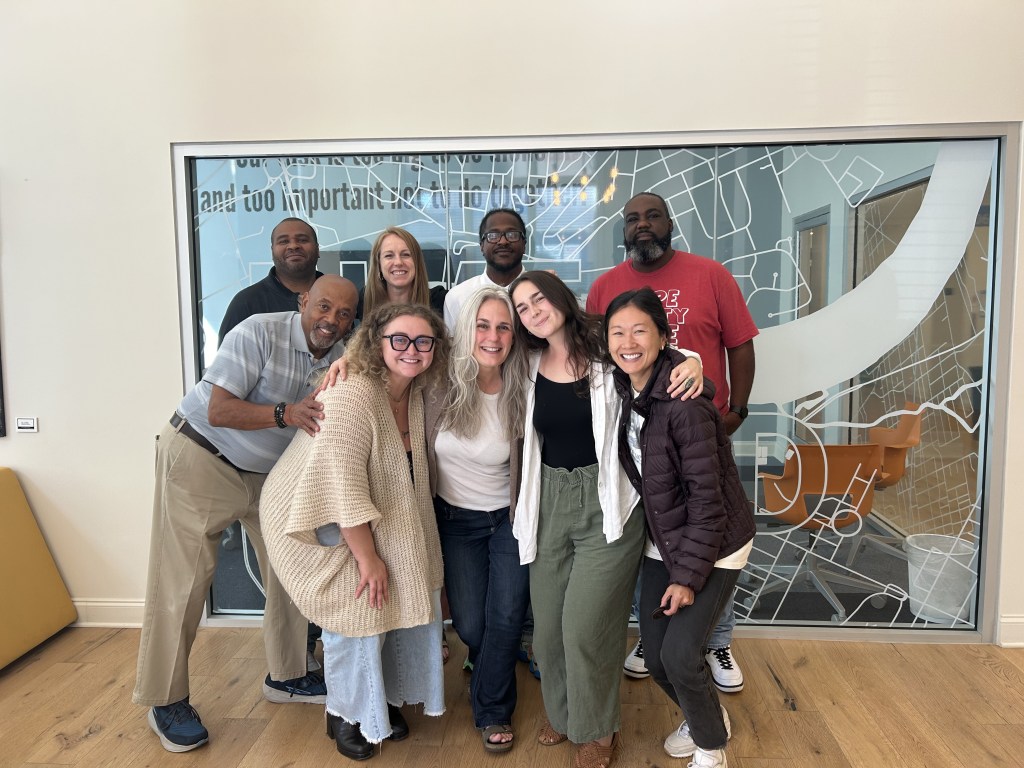


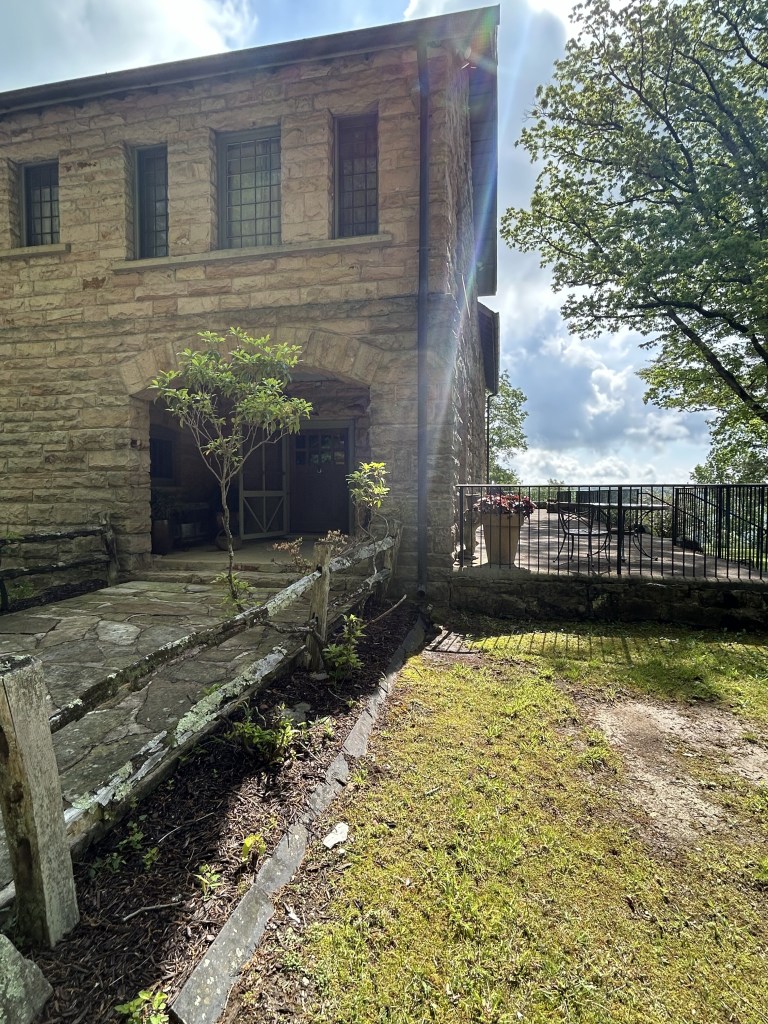
 Searching for Jesus in A̶m̶e̶r̶i̶c̶a̶ Chattanooga