Week 17: Why is the Bible So Hard on Rich People?

Who: Xaris

Church: Lookout Mountain Presbyterian Church

Lunch: Kenny’s

Topics: The Wealth Dilemma

I pretty aware of my blindspots, biases, and where I’m most likely to get stuck… my strongholds. (Whether I’m actively working on them is an entirely different matter, but I am acutely aware of them.) This self-awareness also informs how I approach projects like this one. I value transparency from the outset because it sets the tone for genuine, productive conversations. For instance, one of my deeply held perspectives—which some might find provocative—is that the concept of “rich people” in a church feels inherently contradictory. To me, it seems misaligned with the core values of humility, generosity, and service that the church is supposed to embody.

I will also say that when I talk about “rich people,” I recognize that wealth is relative and means different things to different people. For example, I might look at someone living in a million-dollar community and see them as rich, but someone from a community with fewer resources might look at my life and think the same about me.

Perspective is important.

This relativity makes conversations about wealth and, dare I say it, privilege, complex, especially in contexts like the church, where ideals like humility, generosity, and stewardship are central. My goal isn’t to define who is “rich” but to acknowledge the tension that arises when wealth—however it’s perceived—enters spaces meant to prioritize community, equity, and service. It’s a conversation worth having because it challenges all of us to reflect on how we view and use what we have.

It’s also worth stating that I don’t say this to judge individuals but to highlight a tension that I wrestle with and feel compelled to name. Acknowledging this openly is part of my commitment to being forthright, even when my thoughts might challenge the status quo.

Okay… back to the task at hand.

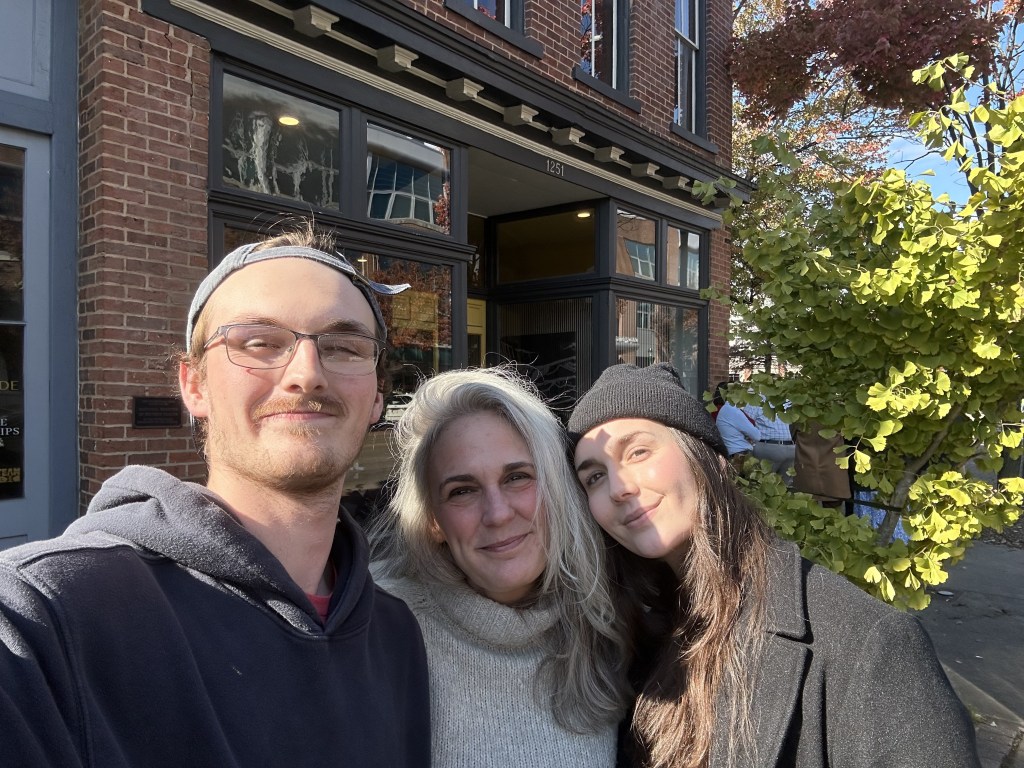
First, let me introduce you to Xaris. She is truly a delightful human being and an accomplished musician. I crossed paths with her years ago when she was working for East Lake Expression Engine, but have stayed connected over the years. When I found out that she attended Lookout Mountain Presbyterian Church, I reached out to see if I could tag along one week and she graciously said yes.

Arguably one of the wealthiest churches, in one of the wealthiest communities in the Chattanooga, I made a conscious effort to approach the experience with an open mind. It’s easy to let stereotypes or personal beliefs take the lead in shaping how we see places like this—a church in an affluent area can evoke thoughts about exclusivity and materialism, or a disconnect from the struggles of less privileged communities. But I reminded myself that wealth doesn’t necessarily define the character of a congregation or the authenticity of their faith.

Instead of jumping to conclusions, I focused on observing, listening, and understanding what this church values and how they use their resources. Do they embody generosity and service? Are they engaging with and uplifting their broader community? These are the questions I brought with me, determined to let the answers speak louder than any assumptions I may have had.

As an aside, I also want to say this: the sanctuary was absolutely stunning—one of the most beautiful modern interpretations of a classic cathedral that I’ve ever encountered. It felt like stepping into a space where history and modernity were in conversation, each enhancing the other. The design seemed intentional, not just about aesthetic beauty, but about creating a space that invites both reflection and community. It carried a sense of timelessness while still feeling accessible and relevant to today. It was the kind of place where you couldn’t help but pause and take it all in, appreciating the craftsmanship, the symbolism, and the vision it took to bring such a space to life. (Okay… I’m done.)

At the end of the service they had everyone sit down to hear an update… about their capital campaign. I’m pretty sure I rolled my eyes at the mention, but as soon as they announced the $17 million price tag my jaw dropped. For context, here’s a quick snapshot of our family’s history with capital campaigns: A little over 10 years ago, we moved to Rhode Island for six months to help plant a church, and it was an incredibly transformative experience for our family. It shaped our understanding of what the church could be—a catalyst for meaningful community impact.

When we returned to our home church after those six months, they were at a crossroads having to decide whether to invest $2 million in a renovation and expansion project or use that same money to plant up to 10 churches in other communities in Maine. We were fierce advocates for the church plants, believing deeply in the mission of extending the church’s reach to where it was needed most. However, the leadership chose the expansion.

That $2 million price tag eventually ballooned to over $12 million, funding an indoor soccer field, a three-story slide, and a state-of-the-art theater with flashing lights and all the bells and whistles… because nothing says “Hope of the World” like a entertainment complex. (Yes, I’m being snarky.) While I understand the intention to create an inviting, family-friendly space, it was hard to reconcile that choice with the immense opportunity to plant seeds of faith in multiple communities. That experience left an indelible mark on how I view decisions like these, which is why my reaction to this $17 million campaign wasn’t exactly subtle.

But I want to shift the focus here. My personal conviction is that investing this kind of money into a building feels deeply incongruent with the heart of the gospel, especially when we’re surrounded by pressing needs like homelessness and a growing food insecurity crisis in our community. To me, the gospel is about loving our neighbors, serving the least of these, and living out a message of compassion, generosity, and justice. When I see such immense resources poured into physical structures, I can’t help but question whether it aligns with the mission we’re called to as the body of Christ. (Again… I’m looking solely at the capital campaign for the building renovations and expansion, not at the totality of their work in their community and beyond.)

The church’s $17 million capital campaign is undoubtedly a significant undertaking, but what stands out to me—and deserves recognition—is the fact that their pastors, deacons, and elders have pledged to personally cover 35% of the cost. Whether or not I agree with the idea of spending $17 million (I don’t, but we’ll set that aside for now), this level of commitment from leadership is worth noting.

It’s not often that you see leaders willing to invest so deeply and tangibly in the very vision they’re asking their congregation to support. Covering 35% of such a massive total means they’re not just asking others to step up; they’re leading by example, putting their own resources on the line to demonstrate their belief in this campaign. This also reframes the conversation about generosity and stewardship within the church. Leadership taking such a significant financial stake challenges the congregation to consider their own role in supporting the mission—hopefully not out of obligation but as part of a shared commitment to something bigger than themselves. It’s a reminder that when leaders lead by example, they inspire others to do the same, fostering a culture of collective responsibility and shared vision.

But I also want to highlight something said during the service that really stuck with me: “Why is the Bible so hard on rich people?” That’s a bold question to pose, especially in a church situated in one of the wealthiest communities in the area, arguably in the whole state of Tennessee. It’s not the kind of message you might expect to hear in a place where wealth is likely a reality for many in the congregation.

This question is deeply rooted in scripture. Time and again, the Bible warns about the dangers of wealth—not because money is inherently evil, but because of its power to distract, corrupt, and create barriers between us and God. Passages like the story of the rich young ruler, or the parable of the rich man and Lazarus, challenge us to think about how wealth can breed complacency, self-reliance, and a false sense of security.

The question also forces us to wrestle with what it means to live faithfully while holding material wealth. Are we using our resources to serve others, uplift the marginalized, and embody Christ’s love? Or are we clinging to wealth as a measure of success or comfort?

What I appreciated most about this bold moment was its potential to stir up honest reflection within a community that may not often confront this tension. It wasn’t about shame or condemnation but about opening the door to deeper conversations about stewardship, generosity, and living out the gospel in ways that transcend personal comfort.

In a world where wealth can often insulate us from the struggles of others, this question challenges each of us to take an honest look at our hearts and priorities—regardless of whether we see ourselves as rich. Wealth, whether great or modest, has the potential to create distance—shielding us from discomfort, the needs of others, and the transformative work of empathy and solidarity. This isn’t just about money; it’s about how we steward our lives, our resources, and our influence.

I believe there’s a profound opportunity here to reimagine what it means to be the church. It’s not just about the physical structures we build but the relational and spiritual bridges we create. It’s about redirecting our focus outward—to those who are hurting, overlooked, or in need of hope, healing, and help. This requires us to embody the gospel in ways that prioritize connection over convenience, service over self-interest, and community over individual gain.

My conversation with Xaris offered a unique space to reflect on and embrace the paradox of wealth and faith. Together, we held space for the tension—the recognition that wealth can both empower and entangle, that it carries the potential to bless others but also to burden us spiritually. We discussed the challenge of living generously without losing sight of humility and the ongoing struggle to align our resources with our values.

This paradox is at the heart of what it means to navigate a life of faith in a material world. It’s not about rejecting wealth outright, but about reorienting our relationship with it—acknowledging its influence while keeping it in submission to God’s purpose. Something my kids have CONSTANTLY heard from me: The Lord doesn’t really care about the 10% you’re supposedly required to give to the church. He cares about the entire 100% and how you use your resources (financial and personal) to help others. In that conversation, we found room for honesty, for questions, and for the kind of reflection that inspires action. It reminded me that the church’s true calling isn’t confined to buildings or budgets but is realized in the way we love, serve, and uplift those who need it most.

CHALLENGE: How would your relationship with wealth—whether you have much or little—look different if you truly believed that everything you have belongs to God? How might this belief change the way you give, spend, save, and invest? If someone looked at your bank statements or your calendar, what would they say you value most? And how do those priorities reflect the heart of Christ?

Week 16: What is the Church?

Who: Mary Claire

Church: Restoration Southside

Lunch: Kenny’s

Topics: The Ecumenical Church, The “Perfect” Church, and Meeting People Where They Are

Something you might not know about me… I’m a bit of a paradox when it comes to rules. I’m a fierce rule follower—well, sort of. If someone else imposes rules on me, you can bet I’ll push back, challenge them, and defend my independence. But when it comes to rules I set for myself? I’m unwavering. Once I commit to my own boundaries or standards, I follow them to the letter—even when they seem overly rigid or no longer serve a practical purpose. It’s like I have this inner code I can’t break, no matter how much it defies logic.

And when I started this project, I set a few ground rules for myself—and I’ve already broken one of them. But here’s the twist: I’m calling it progress! My original plan was to visit a new church every week for a year, allowing for a few intentional breaks for reflection and travel. The goal was to explore, learn, and engage with a wide variety of faith communities.

However, something beautiful happened along the way. I began connecting with people in the community who were curious about what I’m doing and eager to share in the experience. Some even invited me to attend church with them. The only catch? I had already visited their church. At first, I hesitated, feeling like I was breaking my self-imposed rule. But then I realized that this project isn’t just about visiting different buildings or checking off boxes—it’s about building relationships and fostering meaningful connections. And if revisiting a church means deepening those connections, I’m more than okay with bending the rules.

So, this week I returned to Restoration Southside with my new friend Mary Claire. I met Mary Claire in 2023 when Sydney and Brayden were performing at TEDx Chattanooga’s first Sessions event. And we ran into each other again this past summer when the kids were performing at Highland Park Porchfest, which is when I told her about this little project of mine… and she invited me to church with her. Saying “yes” to Mary Claire’s invitation turned out to be a beautiful reminder of the importance of connection. It was about so much more than attending church.

I’ve already talked about my appreciation for Restoration Southside in another post. (If you’re interested in reading my thoughts, you can do so HERE.) For today’s post I want to talk more about the conversation Mary Claire and I had over lunch as it relates to the ecumenical church and meeting people where they are on their spiritual journey, specifically the idea of faith as a shared space, not bound by rigid walls or denominational lines. Embracing unity and diversity across traditions—creates a space where people can feel welcomed and valued, regardless of where they are in their relationship with God or the church.

But, that’s easier said than done.

We talked about the importance of grace and openness in spiritual communities, not expecting everyone to fit into a mold but rather walking alongside them, hearing their stories, and honoring their unique paths. We also reflected on how often people feel disconnected from traditional church settings because they fear judgment and/or don’t feel like they belong. But when the focus shifts to meeting people where they are—whether that’s in doubt, curiosity, or conviction—it opens the door for true connection, growth, and healing.

Since my lunch with Mary Claire, I’ve had three interesting interaction with people who have either sent me a DM, or personally stopped to talk about some of my posts. And there is a common theme: Church as a meeting place, or a gathering of any sort, just isn’t cutting it. Each interaction has brought a unique perspective, yet they all converge on a shared struggle—a widening gap between what individuals seek from their spiritual communities and what they feel is being offered. Importantly, this disconnect doesn’t stem from a mindset of “you’re not giving me what I want.” Instead, it reflects a deeper longing, a heartfelt question: “There has to be more to it than this, right?”

For some, the issue seems to be a lack of genuine connection. Church as a meeting place often feels transactional or routine, a place to check off a weekly obligation rather than a sanctuary where deep relationships are formed and sustained. Others have expressed a longing for something more dynamic and meaningful, a space where conversations about real-life struggles—mental health, family pressures, or social justice—are not just welcomed but encouraged.

What stands out to me is not just that people feel the current format of church gatherings isn’t cutting it, but that they are yearning for something different. They want a place that feels alive, relational, and deeply attuned to the realities of today’s world. Whether it’s a reimagining of church as a collaborative, grassroots movement or a space for intimate and authentic community, the hunger for meaningful engagement is undeniable. But, not just within their church community… they want meaningful engagement throughout our city. As one person so eloquently put it: There has to be more to all of this than hanging out with my church friends a couple times a week and serving at the soup kitchen once a month.

Another of these conversations centered around how younger generations, in particular, are seeking authenticity over tradition. It’s not about rejecting faith or spirituality but rather about finding expressions of these values that are real, relevant, and inclusive. Another person shared how they’ve started hosting small gatherings at home, blending faith-based discussions with communal meals, and have found this to be far more fulfilling than the large, impersonal gatherings they had been attending. What’s fascinating is how this theme isn’t just about dissatisfaction—it’s also about possibility. And, I don’t think it’s an “either/or” scenario. It’s more about “and/both” and how we can come together on Sunday, but dig in deeper Monday through Saturday.

It’s a reminder that there’s a tremendous opportunity for faith communities to evolve and adapt, to become spaces where people feel seen, heard, and genuinely supported. For me, these conversations are not just about what’s missing but about what could be built in its place. I keep returning to the idea that perhaps the heart of this issue isn’t the institution itself but the ways in which it’s being experienced. Are we creating environments where vulnerability can thrive? Are we meeting people where they are, in their questions and struggles? Are we offering more than just a gathering—a true sense of belonging?

These interactions have been a powerful reminder of how important it is to listen. They have challenged me to think about what kind of spaces I’m fostering in my own life and work, and how I can contribute to this larger conversation about community, faith, and connection.

When I look back on my conversation with Mary Claire, I’m thankful for the connection to such a beautiful person who feels the weight of the world in a profound way, carrying a heartfelt burden for others to be seen, valued, and truly loved. Her compassion is contagious, and our time together reminded me of the beauty that emerges when we pause to connect with those who carry such an intentional vision for others.

It’s in moments like these that I’m reminded none of this is by chance. These conversations, these intersections with kindred spirits, have felt divinely orchestrated—threads in a larger tapestry being woven together. Over the past four months, each interaction has offered me a glimpse into something extraordinary: the possibilities of what the ecumenical church in Chattanooga could look like.

This isn’t about buildings, denominations, or traditional frameworks. It’s about a church that is alive and vibrant, a mosaic of people from all walks of life united by their desire to serve, love, and uplift their community. It’s about breaking down barriers and finding common ground—where shared humanity takes precedence over doctrinal differences, and the focus shifts to what truly matters: fostering connection, meeting tangible needs, and creating spaces where everyone feels welcome and valued.

Mary Claire’s deep burden for others mirrors the larger vision I see unfolding—a church that moves beyond routine gatherings and into the heartbeat of the city, one that listens, learns, and loves in practical, transformative ways. These connections are not only inspiring but also challenging me to consider how I can contribute to this vision, how I can help create spaces where people are drawn together in unity and purpose.

Looking back, I see these moments as pieces of a puzzle, each one adding clarity to what could be possible. The ecumenical church in Chattanooga doesn’t have to be confined to a single space or system; it’s something far greater—a network of relationships, a movement of shared hope, and a reflection of what it means to truly embody love in action. And for that, I am profoundly grateful.

CHALLENGE: I encourage you to reach out to someone… ask them out for coffee or a meal… and talk about the ecumenical church in Chattanooga. (Bonus points if they attend a different church than you!)

Week 15: Does Grace Really Cover the Relentless Weight of Imperfection?

Who: Brayden and Sydney

Church: City Collective

Lunch: Kenny’s

Topics: Parenting, Church Hurt and Healing

I’m starting the fourth month of this project and it seemed only fitting to revisit our home church in Chattanooga. I think it’s good for grounding, but also… I miss those humans. Sydney and Brayden were in town this past week for Thanksgiving and with it being the beginning of Advent… it just felt right.

If you happened to know our family before we lived on the road, you know that we’ve experienced our fair share of “church trauma” that deeply impacted not only our spiritual lives but our personal relationships, leaving lasting marks on how we view community, trust, and belonging.

Church trauma can be complex, often involving feelings of betrayal, judgment, or disillusionment with institutions, or individuals, we looked to for guidance and care. For us, it led to a season of wrestling with questions about faith, identity, and where we fit in. Yet, through that pain, we also began to learn the importance of healing, authenticity, and finding spaces where grace prevails.

While some of those experiences were deeply problematic, they’ve also given us a unique perspective—one that fuels our passion for fostering safe, inclusive environments where others can feel seen, heard, and loved for who they are. (One of the reasons our non-profit has this tagline is deeply rooted in our interactions with youth across the country who have also experienced church trauma.)

But today I want to pivot to something just as vulnerable and meaningful: parenting—and how, even with the best intentions, we can sometimes unintentionally add to the hurt or, at the very least, fail to ease it.

If church trauma taught us anything, it’s that the environments we create and the ways we lead profoundly matter. And as parents, we hold the responsibility of shaping not just our kids’ understanding of the world but also their understanding of themselves, of love, and yes, even of God. That’s a weighty thing to carry, and let’s be honest: we don’t always get it right. In fact, sometimes, the very things we think we’re doing to protect, or guide, them can end up causing hurt.

Parenting through the lens of our own wounds—whether those come from church trauma, past relationships, or personal insecurities—can be tricky. Yet, those very wounds can also lead to powerful growth and redemption in the way we parent. For me, some of the most meaningful changes have come directly from facing the pain of my own childhood experiences and choosing to do things differently.

As someone who grew up in an abusive home, I made a firm promise to myself: the cycle of harm would end with me. I am deeply grateful to say that this pattern of abuse has been broken, and my children have grown up in a home where love, not fear of physical harm, guide our relationships. But, perfection is not attainable in parenting and we still project fears, impose expectations, or unknowingly echo patterns we swore we’d never repeat. And while it’s hard to admit, there are moments when our own brokenness becomes the weight our kids carry.

Over the past few years, I’ve been reflecting on something deeply personal—how our parenting style and practices were shaped by the institutional church and, in some ways, how they contributed to, or even deepened, the trauma we experienced within that environment. Maine is about as polar opposite to Tennessee when it comes to church communities, particularly in terms of religious culture and engagement. While Tennessee is deeply rooted in the Bible Belt with a strong emphasis on church attendance, evangelical traditions, and vibrant community involvement, Maine tends to have a more secular culture, with lower church attendance and a less prominent role of religion in daily life.

But, our family was deeply invested in the church community in Maine (and in Rhode Island when we were church planting). And with that, our kids got a front row seat… to a lot. So, as I sat down with Sydney and Brayden over lunch we started to dig into all of it. (For the sake of context, I will say that while we typically attended conservative leaning churches, we were usually more moderate in our perspectives, often valuing open dialogue, questioning, and a focus on grace over strict adherence to dogma or political alignment.)

While no specific situations were discussed , we did focus on the profound yet often imperceptible journey toward attaining the perfection of Christ… and the guilt and shame that can arise when we inevitably fall short. This tension between striving for holiness and grappling with our human limitations often leaves believers feeling burdened, as if their efforts are never enough. And here’s where the “old Deirdre” would have waxed on about the liberating truth that Christ’s perfection is not a standard we achieve through our own strength, but a gift of grace that transforms us over time.

I honestly cringe thinking about it. It’s such a surface-level, white-washed answer that offers little depth or real-world application, failing to address the complexities and struggles people actually face. It feels dismissive, as though it’s designed to check a box rather than engage in meaningful dialogue or provide genuine support.

Over lunch, Brayden shared about the weight, as well as the subsequent guilt and shame, that accompanies the standoff between the ideal we’re striving for and the inevitable ways we fall short. The “church answer” is easily regurgitated: This journey isn’t about arriving at perfection in this life, but faithfully walking with Christ, trusting that He who began a good work in us will bring it to completion.

But that “church answer,” while true, often feels insufficient in the face of the real, raw emotions that come with falling short time and time again. It doesn’t always address the lingering feelings of inadequacy or the questions about whether we’re truly making progress. Brayden expressed how the tension between striving and stumbling can leave a person feeling stuck in a cycle of trying harder and falling harder, wondering if grace really covers the relentless weight of imperfection.

I want to stop and pose that question again: Does grace really cover the relentless weight of imperfection? Intellectually, we know the answer is yes. Scripture assures us time and again that God’s grace is sufficient, that His mercies are new every morning, and that His love is steadfast and unchanging. But on a heart level—where guilt lingers, shame whispers, and self-doubt festers—the answer often feels less certain.

In those moments, grace can feel abstract, like a concept we’re supposed to grasp but struggle to truly internalize. We wonder if God is as patient with us as He says He is, or if He’s secretly disappointed that we’re still wrestling with the same struggles. The weight of imperfection isn’t just about falling short—it’s about carrying the fear that our shortcomings make us unworthy of the very grace we’re promised. And when the “church” wields shame and guilt, it can leave people feeling even more isolated and burdened, as though their struggles disqualify them from belonging or from truly experiencing God’s love. Instead of becoming a sanctuary for grace and healing, it can turn into a place where perfection is subtly demanded, and failure feels like a spiritual flaw rather than a human reality.

This shame and guilt can distort the message of the Gospel, shifting the focus from Christ’s finished work to our own inadequate efforts. It reinforces the lie that we must fix ourselves before we can approach God, rather than trusting in the truth that He meets us in our brokenness. Yet this is precisely where grace does its most profound work. It meets us not when we’ve figured everything out, but in the depths of our brokenness and the messiness of our journey. Grace doesn’t just forgive—it transforms.

So perhaps the real question isn’t whether grace can cover the weight of imperfection, but whether we’ll allow it to. Will we stop striving to earn what’s freely given? Will we believe that even in our worst moments, we are still held, still loved, and still being made new? And as a parent this becomes even more vital. Can we extend that same grace to ourselves when we falter, knowing that our imperfections don’t disqualify us from loving our children well? Can we model the same vulnerability, humility, and trust in God’s grace that we hope to cultivate in their hearts? The truth is, healing and growth—both in our own lives and in our children’s—are built on the foundation of grace, and learning to embrace it ourselves is the first step toward teaching them to do the same.

Maybe what’s missing is the acknowledgment that this journey isn’t just about a theological truth, but about the lived experience of wrestling with it. It’s about learning to sit in the discomfort of that tension and allowing it to draw us closer to God, rather than pushing us into a corner of self-reliance or despair. The church answer may remind us of the goal, but it’s in the messy middle of our humanity where the depth of Christ’s love and patience becomes most transformative.

One of the things I appreciated most about our conversation was the reminder that my kids’ level of emotional intelligence is pretty astonishing. Arguably the best thing I ever did as a parent was give them permission to hold me accountable… both as their parent and as a follower of Jesus. The key has always been anchored in owning my mistakes, learning from them, and saying I’m sorry.

Creating a space where our kids feel safe to share their hurt—even when it’s caused by us—is absolutely essential. True healing, whether from church trauma or our own parenting missteps, demands humility, grace, and a commitment to keep showing up, no matter how hard it gets. I’m not the same person as I was back in Maine. But, honestly, I’m not the same person I was when I started this little project. Growth has a way of surprising us like that—reshaping our hearts and perspectives in ways we never anticipated. And while the journey hasn’t been easy, it’s in these messy, transformative moments that I’ve come to see the beauty of grace, not as a far-off concept, but as a daily lifeline.

CHALLENGE: Do you feel the tension between striving and stumbling? If so, do you feel stuck in a cycle of trying harder and falling harder? You might intellectually know that grace covers the relentless weight of imperfection, but do you know it at the core of your being.. the kind of knowing that brings peace even when you fail, the kind that allows you to rest in God’s love instead of constantly scrambling to prove your worth? It’s one thing to understand grace as a concept, but it’s another to experience it deeply, allowing it to free you from guilt and shame, and to let it transform the way you see yourself and others. Only then can we truly embrace the process of being perfected, knowing that we don’t have to get it all right to be loved and accepted.

Week 14: What I’ve Learned From the First Three Months

WARNING: In this post I talk about Nazism and abortion.

By now, if you’ve been following along on this journey, you know that I believe in the individual conviction of each follower of Jesus, based on their unique life experiences and the ministry set before them. Equally, I would never expect someone else to hold by personal beliefs, or convictions.

Disagreement is inevitable, but division doesn’t have to be. When we approach one another with an openness to listen and a commitment to love, we honor the diversity of gifts and callings God has given His people. At the end of the day, I’m less interested in whether someone agrees with me and more interested in whether our lives point others toward the grace and truth of Jesus. That, I believe, is what matters most. We don’t have to see eye to eye on every issue to walk hand in hand in faith.

But, in order to walk hand in hand… I must trust you. And trust is earned.


Three months in and so much has changed in me… and in the world. So, first… a confession: I entered into this project with a lot of desperation. If you know our family’s story, you know how we truly lived by faith for a very long season of our lives. And, yes, I would say that most of us still live our lives by that same faith… but it’s pretty battered.

In some cases… it’s all but decimated.

But, our anger isn’t really aimed at God. Our anger is towards people who claim to represent the Lord, but use their position and power to self-promote and oppress. Those who twist what is sacred into a tool for control, trading humility and service for pride and ambition. Instead of reflecting the love and justice of God, they manipulate faith as a means to divide, exclude, and consolidate their influence.

This misuse of authority isn’t new, but its consequences feel particularly pronounced in the United States today. We see it in leaders who invoke God’s name while endorsing policies and practices that harm the most vulnerable. We see it in the hypocrisy of preaching love while sowing division. And we feel it in the growing disillusionment of those who once found solace in the church, now turning away because the message of hope has been overshadowed by a hunger for power, control, and dominance.

The result is a nation grappling with profound spiritual dissonance. Many people feel disconnected from the faith traditions that once guided them, not because they doubt God’s goodness, but because they cannot reconcile that goodness with the actions of those who claim to speak for Him. It is a call to reflection, repentance, and renewal—both individually and collectively.

True faith invites us to serve, not to dominate; to build bridges, not walls; and to uplift the weary, not burden them further. In this moment, perhaps the greatest testimony to God’s love is not in grand declarations but in small, consistent acts of kindness, integrity, and justice. It is a time to reclaim the essence of faith: not as a weapon, but as a balm for a wounded world.

And this brings me to the elephant in the proverbial room: That little election we had in the US a few weeks ago. But, here’s the thing… the issue really isn’t the election. Or even who was elected. It’s what the election has unleashed. And this is where the Church must stand up. No matter how you voted, or if you even voted at all.

We’ve seen a rise in Nazi demonstrations, not just as isolated incidents but as organized, emboldened displays of hatred that echo a dark chapter of history many hoped would never repeat itself. These demonstrations thrive in an environment where fear and division are stoked, and where those in power fail to condemn—or worse, tacitly endorse—such ideologies. It’s not just troubling; it’s dangerous.

What the election has exposed is a reckoning with the values we claim to hold as a nation. It’s not just about political affiliation or party lines; it’s about the soul of a country struggling with what it means to be good, just, and humane. And this is something that has come up time and time again in my conversations on Sunday afternoons. We cannot turn a blind eye to how faith has been weaponized to harm instead of heal.

We’re also witnessing a heartbreaking surge in maternal deaths, a direct consequence of restrictive policies on reproductive healthcare. (And, yes, I said it.) Reproductive health care encompasses a wide range of medical situations, including life-threatening conditions like ectopic pregnancies, miscarriages, stillbirths and severe fetal anomalies. In these moments, abortion is not a choice of convenience—it is a medical necessity to preserve the life and health of the mother. Ignoring this reality, or legislating against it, places women in unimaginable positions, forcing them to endure preventable suffering or risk death.

Yet, some Christians have adopted a rigid stance, viewing all abortions as sinful without considering the context or complexity of each situation. (I’m also very aware that there are those who hold a hard line on this topic and, no matter the circumstances, will not budge from their position.) However, it’s important to remember that faith calls us to act with compassion, to seek understanding, and to prioritize the well-being of those in difficult and painful circumstances. This isn’t about compromising on convictions but about recognizing the full humanity of individuals, listening to their stories, and responding with empathy rather than judgment.

I also think it’s important to note that equating abortion with mere birth control fails to acknowledge the broader systemic issues that lead women to seek abortions in the first place—poverty, lack of access to healthcare, domestic violence, and limited support for mothers and children. If we are truly “pro-life,” our commitment must go beyond opposition to abortion. We must advocate for comprehensive healthcare, affordable childcare, paid parental leave, and resources that support women and families.

Jesus modeled a way of engagement that prioritized people over legalism. He didn’t shy away from difficult conversations, but He always led with love, meeting people where they were. Imagine if the Christian response to abortion reflected that same love—if we replaced condemnation with compassion and judgment with understanding. What if we truly listened to women’s stories instead of assuming we already know their motives or circumstances?

And these are just two examples of of many.

So, why is this post so “political”?

If you’ve read this far and feel like it’s political… that’s part of the problem. And, as a Church, there is absolutely no way we can ignore the infiltration of partisan politics and ideologies into the way we are, collectively, living out our faith and engaging with the world. When partisan politics and ideologies infiltrate the Church, they distort our priorities, divide our communities, and distract us from the true mission of reflecting Christ’s love. As followers of Jesus, we are called to something higher: to be salt and light in a world desperate for hope and to love without condition. This requires us to discern carefully where our allegiance lies, ensuring that our faith shapes our politics—not the other way around.

Jesus was neither a Democrat nor a Republican. He wasn’t a socialist or an authoritarian. He came to establish a way of life that transcends human political systems. He called His followers to live by a higher standard, one that defies earthly labels. As His disciples, we are invited to follow this new way, prioritizing His teachings over political ideologies and reflecting His heart in how we engage with the world around us. It moves beyond allegiance to any political party and instead calls us to reflect the values of justice, mercy, and humility in every aspect of public life.

What this moment demands of us is not a narrowing of focus to a single issue or partisan agenda but an expansion of our compassion, our advocacy, and our willingness to stand in the messy, uncomfortable places where faith meets the realities of human suffering. It requires us to resist the temptation to weaponize our convictions or to draw dividing lines that separate “us” from “them.” Instead, it calls us to live out the radical love of Jesus, who crossed every boundary to meet people in their pain and offer them hope.

The truth is, we won’t all agree on how to address these issues. Some will accuse me of not being “Christian enough”… or of compromising faith because I refuse to toe a specific ideological line. But unity in the body of Christ has never meant uniformity. It means seeking to understand one another, even when we differ. It means being committed to the ministry of reconciliation, both with God and with one another.

But, if we’re serious about walking hand in hand, as I said earlier, we must also be serious about earning trust. Trust requires honesty, humility, and a willingness to confront uncomfortable truths. It requires us to do the hard work of listening, learning, and acknowledging the ways we’ve fallen short—not just as individuals but as a collective Church.

I’m still wrestling with what it looks like to live faithfully in a world as broken and divided as ours. But here’s what I do know: our faith was never meant to be easy, and it was never meant to be a shield from the suffering of the world. If anything, it calls us deeper into it—to stand with the oppressed, to defend the vulnerable, to love the unlovable, and to be a light in the darkest places.

And this is my personal commitment in 2025. I’m still working out what it’s going to look like, but the working out of my faith is far from finished, and the call to love—truly, deeply, sacrificially—is as urgent as ever. Let us be people who answer that call.

WEEK 12: Find Yourself Some Friends Like These

Who: Katie, Chase, and Sydney

Church: Thankful Memorial Parish (Episcopal)

Lunch: The Hot Chocolatier

Topics: The Institution of Church vs The Real Church, The Kingdom of God

We first met Katie and Chase in September 2021 at a panel discussion entitled Youth Mental Health & the Church. They were invited to attend the discussion, where Sydney and I spent some time talking about our story and our work in the community. It was a unique moment where our faith and our mission intersected in a formal setting since moving to Chattanooga. This panel was the culmination of six months of collaboration, with mental health and church leaders meeting monthly to address blind spots, missed opportunities, and areas for growth in how the church can better support young people and their families.

Since then, Katie and Chase have become close friends for so many reasons. They’re as genuine as it gets, never taking themselves too seriously, and every time we’re together, there’s no shortage of laughter. Yet, they’re also deeply thoughtful about life and faith. I know I can text them about any theological question I’m wrestling with, and they’ll respond with honesty and insight, always taking the conversation seriously. They’re also avid live music fans and have shown up for our kids on so many occasions to celebrate them.

Find friends like this. You need them.

Now for the our experience on Sunday: Nestled in the heart of the St. Elmo community, the church has a quiet, tucked-away charm that instantly reminded me of the beautiful stone churches we visited in Scotland last summer. Its architecture and serene surroundings exude a timeless beauty, and stepping inside brought an immediate sense of peace and reverence. The space felt like a sanctuary from the everyday, where history and tranquility blend to create an inviting atmosphere for reflection and connection.

Over the years, I’ve attended only a handful of Episcopal churches, but one aspect that stands out as a constant is the deep attention given to liturgy. Episcopal services have a unique reverence and structure, a thoughtful rhythm that carefully guides each part of the worship experience. This attention to detail creates a sacred atmosphere that invites everyone to participate fully, engaging the heart, mind, and spirit. The use of ancient prayers, communal responses, and symbolic actions connects worshippers to centuries of Christian tradition, offering a sense of continuity that transcends time and place. It’s a beautiful reminder of the church’s commitment to intentionality and depth in worship, where every word and gesture feels meaningful and purposefully directed toward honoring God.

Sydney and I felt a little scattered. A traditional Episcopal service has its own cadence, a kind of rhythm we’re not used to, with each part of the service flowing into the next. But we found ourselves fumbling through it, juggling books and bulletins as we tried to follow along with everyone else. When it came time to kneel for the prayers, we had a funny moment, laughing at ourselves as we balanced everything in our hands, wondering how to make it work.

Despite the initial awkwardness, though, there was something really special about being there. There’s a deep sense of community and belonging in that small church, a feeling that everyone is genuinely welcome. It’s something you can feel from the way the members interact with each other and with newcomers like us. We may have felt a bit out of sync, but being in that space still left an impression on us—a reminder of how meaningful a tight-knit community can be, even when the rituals feel unfamiliar.

After church, the four of us grabbed lunch at The Hot Chocolatier and we talked about… all the things: how they decided to make this church their home, the election, the comparison between the institution of church and what we commonly refer to as the REAL church, and the Kingdom of God. I could spend an entire blog post writing about each of these… rich, complex, and full of nuance… but I want to focus on the latter two for this entry.

The topic of differentiating between the institution of church and the REAL church has actually come up several times over the past week. So, for the purposes of clarity, I want to explain what I’m referring to with each of these concepts:

Institution of Church: Universally, the term often refers to the organized, formal structures of the church, which include the buildings, denominations, leadership hierarchy, programs, and official doctrines. These structures are often governed by policies, traditions, and human-made systems. For the record, I don’t believe these elements are inherently bad; they can serve essential purposes. However, I do think we’ve often placed too much emphasis on what happens within church walls on Sunday mornings, sometimes to the detriment of living out our faith the rest of the week. At its best, the institution can provide a foundation for community, support, and shared worship. But at its worst, it has been misused by those with selfish agendas, distorting the Christian faith for personal gain, power, or control. When this happens, it risks becoming an obstacle to genuine spiritual growth, overshadowing the real mission of the church: to be a compassionate, active presence in the world, fostering love, justice, and transformation beyond any single gathering. And somewhere between those extremes lies a very real issue: we often allocate more resources to maintaining buildings than to caring for the marginalized in our communities. When I refer to the institutional church, I’m specifically referring to the extremes of that spectrum, those who have distorted, or completely missed, the mission Christ left to his people.

Real Church: The real church, in a theological sense, is often seen as the body of believers united in their faith in Christ. It’s described as a spiritual community transcending any physical or organizational boundaries. The real church includes people from diverse backgrounds, denominations, and cultures, connected by shared beliefs, values, and love for one another. It emphasizes relationships, mutual support, authentic worship, and the lived expression of faith. The real church is about living out values, serving others, and reflecting the teachings of Jesus in everyday life.

But, I want to close out this post with our conversation about the Kingdom of God. I’m currently doing a study by Jamie Winship that has had me looking at the Kingdom of God, juxtaposed with Christianity. And as we talked about this over lunch I really appreciated the perspectives that Katie and Chase offered. At the end of the day, the Kingdom of God is a central theme in Jesus’ teachings, referring to God’s rule, presence, and influence over all creation. It is not a physical territory but rather a spiritual reality where God’s will, values, and justice reign. It is marked by peace, compassion, humility, and a focus on uplifting the poor, marginalized, and oppressed.

Christianity, on the other hand, is the organized religion and faith tradition that has developed around the teachings, life, death, and resurrection of Jesus Christ. It includes specific beliefs, doctrines, practices, and denominations, as well as historical and cultural structures. While Christianity’s purpose is to help those wanting to follow Christ and, ideally, to reflect Kingdom values, it is also shaped by human institutions, customs, and interpretations. And even though Christianity has been the primary means through which the message of the Kingdom is shared, it is not synonymous with the Kingdom itself. (Yeah… that might be a hot take, but that’s where I stand on it.)

One of the things that has stuck with me this week has been Katie’s comment that the Kingdom of God isn’t just about the people of God. It’s about the presence of God. It’s about the work of the Holy Spirit. It’s about so much more than us.

CHALLENGE: When you think about the Kingdom of God, what specifically do you think about? How does the religion of Christianity fit into your understanding of the Kingdom of God?

WEEK 11: Headed to the North Shore

Who: Katie and Clay

Church: North Shore Fellowship (Presbyterian)

Lunch: Taco Mamacita

Topics: Living by Faith and Not Having All the Answers

This week, I crossed the river to join Clay and Katie at North Shore Fellowship. I met these two wonderful people through my kids, but they’re also happen to be monthly donors to BTCYI. (And if Katie looks familiar, you might recognize her from Be Caffeinated, where she works as a barista!) I appreciated our time at North Shore Fellowship, but it was our conversation after the service that truly left me feeling encouraged and inspired.

Both Katie and Clay were raised in the church and have an acute awareness of cultural Christianity, especially in the South, as well as the political phenomenon known as Christian nationalism—how religious identity is sometimes blended with patriotism in ways that influence politics, community dynamics, and even individual beliefs. And during our conversation over lunch, both Katie and Clay shared a thoughtful approach to faith that challenges assumptions and emphasizes authenticity over cultural expectations.

Yet another reminder as to why I have confidence in the future. (Besides Jesus, of course.)

With regard to the Sunday morning service, North Shore Fellowship reminded me a lot of my Grandma’s church growing up. Both the building and the people. And the bulletins. (I still remember countless Sunday mornings filling the margins of those bulletins with doodles and drawings.) The building itself is old, but that also holds some of it’s charm. The demographic is primarily caucasian. But there was a lot of generational diversity. And, weirdly enough, I didn’t recognize one single worship song. It was VERY old school, but it was also very beautiful.

And, I’ll be honest, I can’t remember what the sermon was about, except it was based on a section from the book of Daniel. Confession: I’ve been distracted the past couple of weeks. And while it might be easy to say the election was the reason, it wasn’t. At least not when it comes to the actual source of the distraction. There’s a clear divide in our country and animosity runs deep… on both sides. But, there’s also a clear divide in the “American Church” that is deeply disconcerting.

And this has been the distraction for me, and my family, for quite some time. And I’d be lying if I didn’t acknowledge that the repercussions of this election, NO MATTER THE OUTCOME, have taken up a lot of space in my mind. But, I also think this conversation with Katie and Clay helped me sort through some of those thoughts and feeling because their perspectives brought a sense of clarity and grounding. 

Having both been raised in the church, their familiarity with cultural Christianity gave them a deep understanding of the nuanced blend of faith and tradition, and how easily inherited values can go unquestioned. This has helped them navigate their own beliefs with a balance of respect for their roots and a desire for authentic faith. This background made our conversation more insightful; they could empathize with the struggle between living out a genuine relationship with faith versus just going through the motions.

One of the things I’ve come to understand about religion, particularly within the Christian tradition, is that many people approach their beliefs as absolute truth. At its core, it comes down to this: our beliefs are what we accept as true, often without concrete evidence to support them. This is part of the very nature of faith—it’s the conviction in things unseen and unproven. In a sense, truth in this context isn’t about measurable proof; it’s about what we choose to hold onto as reality.

The downside of approaching beliefs as absolute truth, particularly in a religious context, is that it can foster rigidity and close us off to other perspectives. And before anyone accuses me of heresy—I do believe there are absolute truths that come with a commitment to following Jesus. However, I also recognize that, within our faith tradition, some people tend to elevate certain beliefs to the level of universal truth when, in reality, they may be more reflective of personal convictions. This distinction is important because mistaking personal convictions for absolute truth can lead to unnecessary divisions within our faith community, unintentionally closing themselves off from dialogue, critical thinking, or the possibility that other perspectives might have value. This rigidity can sometimes foster division, as differences are seen as threats rather than opportunities for growth or understanding.

When I think about the massive wave of deconstruction that gained visibility in the 2010s and early 2020s—fueled by social media’s open and communal discussions of faith struggles and doubts—I see how questioning what we’ve accepted as true can actually deepen our understanding or strengthen our faith. Without this process of examination, we risk cognitive dissonance; when our lived experiences or evidence clash with long-held beliefs, it can create a crisis of faith or identity that feels destabilizing rather than enlightening. Deconstruction, then, becomes a pathway to reconcile belief with experience, offering an opportunity for growth rather than disillusionment.

In Katie and Clay, I saw a rare humility—one that allowed them to honor the tradition they were raised in while courageously questioning teachings and experiences that didn’t seem to align with the core teachings of Jesus they hold dear. Their approach wasn’t about discarding their faith but refining it, discerning between inherited beliefs and the heart of Jesus’ message. This willingness to wrestle with difficult questions showed a deep respect for their faith, as they sought an authentic expression of it, and a true determination to seek the heart of Jesus.

CHALLENGE: Reflect on your own beliefs and traditions. Are there aspects you’ve accepted without question that might benefit from a closer look to find a more authentic connection to the teachings of Jesus?

WEEK 10: Starting to Connect Some Dots

Who: Tony and Elaine

Church: New City – Glenwood (Second Visit)

Lunch: Honey Seed

Topics: “Coincidences” and Collaboration

Well, it only took me 10 weeks to break one of the rules for this project… not duplicating church visits. But, I’m actually taking this as a HUGE moment of growth win. Ten years ago, I would have clung to the “stick to the rules” mentality at all costs, missing the bigger picture. But I learned years ago that flexibility and openness usually lead to the most meaningful experiences, even if it means letting go of my own expectations.

So, what precipitated this deviation…

If I was a betting woman… all my chips would be on the Lord.

And this is where my personal writing project intersects with my work life… and where things have the potential to become messy, complicated beautiful. For those who aren’t familiar with our story, here’s a very brief synopsis for context (as it relates to church/faith/ministry): Our oldest daughter, Sydney, started an organization called Be The Change Youth Initiative when she was 15… and it started as a ministry… born from a deep pain intentionally inflicted upon her by a misogynistic youth pastor who belittled her desire to create change in our community and actively discouraged other students from getting involve. (Yes, we know how asinine it sounds… but we also wouldn’t be where we are today if it hadn’t happened. So here’s to making some pretty great lemonade out of some really bad lemons.)

Sydney wanted to create a place where youth, no matter their age, would be ENCOURAGED to use their gifts and talents to help others. And that’s exactly what we did for two years… as a ministry. Essentially, this meant we were engaging with youth and families within Christian communities and the non-profits we partnered with were also faith-based organizations. But that changed in 2018 when we were approached by a chapter of Make-A-Wish in Texas and we took BTCYI on the road.

When we chose to stay on the road in 2019, focusing on conversations with youth and families about the mental health crisis, most of our contacts were within church circles because Sydney was still working with a team within the Contemporary Christian Music (CCM) circles in Nashville. However, those connections quickly disintegrated as we recognized the link between youth mental health struggles and the trauma they were experiencing within the institutional church. This realization had a profound impact on the music Sydney and Brayden created and CCM wanted nothing to do with it. (It is also one of the reason why they now perform under the name In the Company of Wolves.)

And it was the absolute BEST thing that could have ever happened to my kids.

So… why do I share this?

Because last week Sydney and I found ourselves in a two day workshop with members of six other organizations to talk about collaboration… and half of the organizations were faith based. One of the men was Anthony, pictured above with his wife Elaine. I wish I could share all the “coincidences” that unfolded over those two days; but, needless to say, there were too many to actually be a coincidence. Each of us walked into this cohort, partnered with another organization, working on our own individual projects. But, as we sat together, each bringing our diverse backgrounds and unique experiences, sharing our stories, we began to see a powerful overlap in our work.

It wasn’t a duplication of programs or services, which can often happen in a town with so many non-profits. Instead, we began to see where one program ended, another naturally picked up. But, better yet, we each began to see how our individual programs could benefit from collaboration…. and not from a financial standpoint. Honestly, I don’t think any of us even talked about finances during those two days. We were more excited about the potential for true impact and transformation in our community… especially for youth.

So, a few days later I emailed Tony, told him about this project, and asked if I could attend church with him and his wife. Afterwards, we went to lunch and didn’t talk about the sermon once. But, we did talk about life and work and what happened over those two days at the workshop… and we began dreaming.

And since then Sydney and I have started putting work behind the dream.

A key goal of this year-long experiment is to discover how people of faith can come together to drive meaningful community transformation—without spotlighting any single church or denomination. The vision is to create a shared space where individuals, united by purpose rather than labels, can collaborate on initiatives that make a tangible difference. By focusing on values and the common good, rather than organizational affiliations, the aim is to foster a sense of unity that transcends traditional boundaries, encouraging diverse voices to contribute and allowing the impact, not the institution, to shine. This approach seeks to highlight the power of collective action, rooted in faith, that’s accessible to anyone committed to serving others and enriching the community.

I can’t believe I’m only 10 weeks in to this little project… and the threads I’ve been gently pulling are now intertwining. I’m not sure what the final product will be, but it feels like it’s starting to take on a life of its own. It’s like watching puzzle pieces fall into place—only I still don’t know what the picture will look like. There’s something so thrilling in the unknown. It’s almost as though the project is leading me.

And, if my children are reading… this is what walking by faith looks like.

CHALLENGE: Do you have dreams for your community? Spend some time thinking/talking about those dreams. Our family strongly believes that each of us has unique gifts that can help make our community a better place. (Follow-up question: What special gifts do you bring to the table?)

WEEK 9: A First for Me

Who: Isaiah and Julianna

Church: Kingdom Hall of Jehovah’s Witnesses (Hixson)

Lunch: Frothy Monkey

Topics: Kingdom of God, Uncomfortable Conversations, True Christianity

Before you dive into this week’s post, there’s something you should know about my background—specifically, my religious upbringing and education. It was incredibly conservative. I was raised Southern Baptist and attended one of the most right-leaning, dogmatic seminaries in the country. To give you an idea of how rigid it was… women weren’t even allowed to take pastoral classes because, in their view, why bother? Women couldn’t be pastors.

For the record, my decision to attend this particular seminary wasn’t because I wanted to surround myself with people who shared my exact beliefs. In fact, it was quite the opposite. I chose it because I love apologetics—the art of reasoning, defending, and exploring one’s faith. I craved a place where I could engage in deep conversations and be challenged, not just by those who agree with me on the core tenants of my faith tradition, but also by those who see things differently. I wanted to stretch my mind and test my convictions, to see how well my faith could stand up to scrutiny and questions. For me, it was never about living in an echo chamber; it was about growth and discovering the nuances of what I believe through honest dialogue and intellectual wrestling.

This is why I ask so many questions today, why I love debates, and why I’m always diving into tough conversations. It’s all part of this journey of wanting to know what I believe and why I believe it. And this is why this week’s church experience was a terrifying and fascinating at the same time.

I grew up seeing Christianity, for better or for worse, as a club—you were either in, or you weren’t. You either called yourself a Christian, or you didn’t. And, in full transparency, I used to gauge someone’s faith in Jesus by whether they attended church on Sunday mornings. Of course, if you went to church more than once a week, that made you extra holy in my eyes. (Kidding… but not.) I never thought about denominational differences and I never really gave much thought to faith traditions and religions that don’t share what many consider, core, foundational values, or beliefs… the checklist of things you NEED to believe in order to be a Christian. It wasn’t until I married into a Catholic family that I witnessed tension between people who believe in Jesus… but don’t share those core beliefs.

I’ll never forget the first time my sister-in-law told me the Catholic Church was the real church. At first, I laughed it off, thinking she was joking. But as time went on, I realized she most definitely was NOT joking. This was a deep-seated belief that divided us more than I expected. When I started asking questions, I also came to realize that many of the Catholics I personally knew hadn’t deeply explored the teachings, history, or spiritual depth of Catholicism, and as a result, their connection to the faith often felt more ritualistic than anything else, which can also be said of any, and all, Protestant denominations. (I will dive more into this when I visit a Catholic church.)

So, this brings me to this week’s church visit.

Last Sunday, I went with my dear friends Isaiah and Julianna to the Kingdom Hall of Jehovah’s Witnesses in Hixson. (For those who may be clutching their pearls… there’s no need.) Full disclosure, I was a little nervous before I pulled into the hall parking lot. For so many years, it’s been drilled into my head that members of this religion are in a cult aren’t truly Christians because they don’t share our same core beliefs. And while I don’t have time to bullet point all the core beliefs of this faith, Jehovah’s Witnesses do identify as Christians. They believe in Jesus Christ as the Son of God and regard the Bible as their holy scripture. However, their beliefs and practices differ in several ways from those of traditional Christian denominations. For example, Jehovah’s Witnesses do not believe in the Trinity (the doctrine that God exists as three persons in one: Father, Son, and Holy Spirit). Instead, they view Jehovah (God) as the supreme being and Jesus as His created son, not equal to God. They also have unique views on topics like salvation, the afterlife, and participation in political and social activities, which set them apart from other Christian groups.

For the purpose of this project, my goal is to enter into religious spaces, particularly those associated with Christianity, to have meaningful conversations with people who profess faith in Jesus. The aim is to understand what their faith means to them personally, how they express it in their daily lives, and how it influences their interactions with others. But, as in this case, I also asked them questions and even shared my reservations about some of their theology, including the long held belief that only 144,000 faithful believers are anointed by God to serve as kings and priests with Christ in heaven.

So… what was my experience and what were my takeaways?

As far as the experience goes, up to this point, my only associations with Jehovah’s Witnesses were the small group of women who came to our house every week for months when we lived in Maine. While most of my neighbors ignored their knocks, I was always waiting for them to come. Sometimes I even made pie for them. (This drove my husband crazy. After a while he saw the correlation: On the mornings I would make a pie, there would be a copy of The Watchtower, the Jehovah’s Witnesses magazine, on the kitchen counter when he came home.)

But, here’s the thing… Up until this past Sunday I’ve never been to a place where so many people wanted to say hello and engage in conversation with me. And it wasn’t just me. When I looked around the hall, before and after the service, it felt more like a family reunion than a church gathering. I won’t lie… it did feel a lot like my grandma’s Sunday school class. It wasn’t showy; the music was old school simple and message was easy to digest. And, like the Sunday school classes, there was a group lesson following the message… that included questions and group participation. Congregants were engaged; I daresay you’d be hard pressed to find someone daydreaming or doodling during their services.

But, it’s more than the Sunday morning gathering. They put an emphasis on truly taking the word of God to the people in our community. Honestly, it draws up a parallel to the Mormon elders who take to the streets to talk about their faith. Whenever I see these lads and ladies out and about, I always invite them to my house for a meal. And as I sit here at the coffee shop going through my last edit of this post, I can’t help but to connect the dots.

For years, many of my friends have thought I’m crazy for engaging with Jehovah’s Witnesses and Mormons. (And, I will admit that my level of excitement might be a little unusual.) But, several of these people always voiced the same sentiment: They wouldn’t know how to engage in a conversation… specifically, they wouldn’t know how to answer their questions, or defend their own faith. And this is an important revelation.

Many people feel intimidated by these interactions because they may lack familiarity with the beliefs of Jehovah’s Witnesses or Mormons and/or feel unprepared to answer their well-prepared questions. Or maybe you fear confrontation, assuming the conversations might turn into a debate rather than a meaningful exchange. But understanding different faith perspectives can strengthen your own beliefs, help develop empathy, and foster genuine respect. Personally, I LOVED my conversation with Isaiah and Julianna… and their love for Jesus is palpable.

Also, I can’t end this post without saying this: I know beyond a doubt that when I step into the afterlife, I’ll be completely shocked by who is there—and who isn’t. (Let’s be real, I may even look around and wonder, “Wait… am I supposed to be here?”) But that’s the thing about faith: it keeps us humble, curious, and open to surprises.

CHALLENGE: If you were asked to engage in a conversation with a Jehovah’s Witness, or a Mormon, how would that make you feel? Sit in those feeling for a bit and then ask yourself why you’re feeling that way.

WEEK 8: A Change of Plans

Who: Holden

Church: ?

Lunch: Ernest Chinese

Topics: Personal Responsibility, Spiritual Manipulation/Religious Coercion

Before I dive into this post, there are two things I want to share. First, I hadn’t actually planned to attend this particular church. In fact, I had two other churches on the schedule. One of Holden’s friends invited him to a special event that ended up getting rescheduled; I was also set to attend an afternoon service with one of our board members. But when I realized I’d be cutting it close for Piper’s publishing debut (side note: all the women in our family are now published authors!), I decided to switch things up. So, at 9:30 a.m., I made a quick decision—I’d go to church by myself. And that leads me to my second point.

This project was conceptualized around the idea of attending church with someone I knew, sharing a meal or coffee afterward, and having a meaningful conversation about our shared faith. So, when it came time to attend church alone, I hesitated. But I also saw it as a great opportunity to spend time with Holden. When it comes to our family’s religious trauma faith journey, Holden was really young during the worst of it. And while he didn’t experience everything firsthand like our older children, he still felt the ripple effects of the struggles we faced. I saw this as a chance to open up a conversation about those experiences—what faith means to him now, the lessons we’ve learned, and how we’ve grown from it all.

So how did I choose this particular church:

When we first moved to Chattanooga—the so-called “mecca” of local churches—we did a few Google searches to see what was out there. We had one rule: If the church’s landing page prominently featured the pastor or worship team selling books or CDs, it was a hard pass. And there was one church in particular that always topped the Google search engine list. (Their SEO game was on point.) So, this is the church I chose.

First things first, I need to acknowledge my own biases and blindspots. For context, I’m not a fan of Bethel. (And that’s putting it mildly.) We attended their church in Redding when we lived on the road and it was truly the most disturbing church experiences I’ve ever personally been witness to and there were definitely similarities between the two. On the surface level, it was like walking into a concert: loud music, film crews on stage, photographers walking up and down the aisles snapping pictures of the congregation during worship. There was also banner waiving, a live painting, chaotic movements coming from those gathered at the front of the stage, and the speaking of tongues. No matter how you feel about any of those things, I want to provide a visual representation of the experience. It was loud and there was a lot going on.

Worship lasted for almost 80 minutes, the longest I’ve ever experienced, and was followed by a few announcements that segued into a time of prayer… over weather and blood curses. And this is where things get a little disconcerting. (Holden is adamant in me sharing his opinion that things were disconcerting weird from the very beginning.)

While my goal with this project isn’t to critique specific sermons, I do want to highlight what I consider troubling indicators that I believe reflect a broader issue within the church as a whole. And this opening prayer over weather and blood curses (i.e. tornadoes, COPD and diabetes) definitely falls into that category. The person leading this prayer believed that with enough faith, things like tornado paths can be altered and hereditary diseases, such as COPD and diabetes, can be healed. Please note: I’ve witnessed the miraculous and unexplainable happen through prayer, so this isn’t a commentary on what God can do. Instead, it’s a reminder of the balance between divine intervention and the personal responsibility we hold in practicing good stewardship.

This also brings me to a larger issue within the church: the resistance to taking responsibility. In some cases, churches foster a mindset that prayer alone can combat the forces of nature, sidelining the urgent need for real, tangible action. For example, many in the church have been vocal opponents to environmental efforts. Many congregations downplay, or outright dismiss, scientific evidence in favor of a belief that God will take care of the earth regardless of human behavior and this mentality isn’t limited to environmental issues—it extends to health concerns as well. Conditions like COPD and diabetes, which have clear links to lifestyle choices and environmental factors, are often treated as solely spiritual battles that can be overcome through faith and prayer. While spiritual support can be an important aspect of coping with illness, this approach ignores the vital role that medical science, personal responsibility, and practical changes in behavior play in managing these conditions.

During our conversation over lunch, I asked Holden for his take, and his response made me laugh, “I would have gone with the ‘my body is a temple’ approach, and, at least, talked about your responsibility to make healthy choices. Calling them blood curses is wild.” Stewardship is real. And when we don’t take those responsibilities to heart, the consequences are real.

And this is only ONE example of questionable theology that came from the stage that morning. Here are a few other statements that were made:

  1. God only loves people that come to Him and respect Him.
  2. You attract the favor of God by your honor.
  3. God blesses other people to test your heart.

And these were just three of MANY.

I don’t have time to delve into all the questionable theology I encountered, but I want to give some attention to the topic of the sermon: tithing. Throughout the message, the pastor repeatedly mentioned that his words might be offensive or could upset people. Each time, he softened this by reminding the congregation that he loves them and is only delivering the sermon because he wants what’s best for them. This pattern of presenting a potentially controversial message, and arguably SELF-SERVING message, and then immediately framing it as an act of love seemed like a way to disarm criticism and make it harder for the congregation to question, or push back. It felt less like a genuine conversation about giving and more like a strategic emotional appeal to bypass any discomfort, or dissent. Instead of fostering an open discussion about the biblical principles behind tithing or the personal struggles people may face with financial giving, the focus was on justifying the message under the guise of love. Then, to finish up the service, he asked for every single member of the congregation, whether giving or not, walk down to the stage and pass by the offering plate.

What a juxtaposition from the end of last week’s service.

I want to close with this… There were several moments during the service when I found myself silently praying—for people to have the wisdom to discern truth, and for evil to not find a foothold. But, there was another moment worth mentioning, when the pastor asked everyone to greet one another with a hug. I wish you could have seen Holden’s face as the woman in front of us turned to embrace him. Moments before she was speaking in tongues and the next minute she was hugging Holden like she’s known him all his life. And while he was as stiff as a board for the first 10 seconds, he eventually warmed up to her and returned the hug. And in that moment another prayer came to mind: Lord, give me eyes to see people the way you see them. Give me the ability to love people the way you call me to love them.

Especially the people I disagree with theologically.

It’s so easy to walk into a church, with your personal baggage in tow, and throw daggers. And, to be fair, I would never “join” a community like that. (And I don’t think any other member of my family would have made it through worship the entire service except Holden.) But, it did show me how much I’ve grown. How much I’ve healed. And while I might still be carrying some baggage, maybe it’s more like an overnight duffle instead of a a full-blown checked luggage situation.

CHALLENGE: Listen to a podcast, or grab a book, that helps you process through your church/religious trauma. A few weeks ago, K.J. Ramsey’s The Lord is My Courage was recommended to me and I’ll be honest… the title and cover art had me saying NOOOOOOO! But, never judge a book by its cover, right? This has been one of my best reads in a while. (I definitely recommend it for young, and more seasoned, women!)


WEEK 7: Where Are You Giving Your Attention?

Who: Libby and Kyron

Church: New City East Lake (Presbyterian)

Lunch: Urban Stack

Topics: Motivated by Love, Institution vs Bride, Micro vs Macro

A few weeks ago, I had the opportunity to join a group of people from different corners of Chattanooga’s music scene for a meeting at the Mayor’s office. On a personal level, it was exciting to look around the room and realize that I knew half the people there—because we’ve collaborated with so many of them. On a professional level, I noticed an interesting parallel between the music community and the church community. There are a lot of people with strong personalities opinions and a lot of potential for incredibly impactful collective work.

As I was leaving the building, I spotted my friend Libby chatting with someone else from the meeting. Never one to meet a stranger, I introduced myself to Kyron, the new music director at New City East Lake. I then proceeded to invite myself to their church and they graciously accepted my invitation. And I’m so thankful they did because it turned out to be one of the most meaningful church services I’ve ever experienced.

Upon entry of the sanctuary, I was immediately reminded of my grandmother’s church: old wooden pews, stained glass window, and acoustics that any vocalist would salivate over. (I’ve grown to appreciate that last one thanks to my kids.) My secondary thoughts: This congregation is incredibly diverse. Like its sister church in Glenwood, which Sydney and I visited about a month ago, New City East Lake has a diversity that spans across generation, ethnicities, and socio-economic classes. And its service felt like a time travel/teleportation back to Cuernavaca, Mexico when I was a study abroad student in college.

The ENTIRE service was bi-lingual, which has its own unique challenges, but this service had a beautiful flow that never came across as disjointed. I should also note that worship had me chuckling thanks to a few “old school” throwbacks that I knew by heart. Not to mention some songs in Spanish! I’m a little rusty, but singing those songs took me back to living in Mexico… back to a time where community and church were truly synonymous.

And before I move on to the conversation during lunch, I have to talk about how this church does communion. I’ve been to hundreds of churches over the years and I’ve NEVER experienced communion like this. They empty the pews, row by row, each person coming to the front of the church to pick up their cup of grape juice, or wine… yes, real wine. Each congregant also breaks off their own bread before creating a ginormous circle around the room. This followed with the taking of communion and then another song of worship.

An introvert’s nightmare.

But, as I looked around the sanctuary, for the second time since starting this year-long experiment, I was struct by the diversity. Generational diversity. Ethnic diversity. Socio-economic diversity. And compared to so many of the homogenous congregations I’ve grown accustomed to, this was a refreshing and powerful reminder of what community should look like. It wasn’t just a gathering of people who looked alike or shared the same background—it was a true mosaic of life experiences, perspectives, and stories. In this space, everyone had a seat at the table, no matter where they came from. It made me realize how much richer our shared faith and sense of belonging can be when we embrace diversity, rather than shy away from it. This sanctuary was a glimpse of the inclusive, welcoming church world I hope to see more of.

As we moved into lunch, something happened that has NEVER happened before: I took ZERO notes. During the sermons, I typically take pages of notes and this Sunday was no exception. My little reporter-style, hand-held notepad with the Mary Poppins quote (“There’s a whole world at your feet.”) was filled with notes. But in the actual discussion time with my friends this week, I was so busy talking about the sermon… and it’s implications… that I only wrote one sentence:

Where are you giving your attention?

For context, the sermon was entitled “Let Your Kingdom Come – The cycle of Love” and was rooted in Acts 3:1-10. The premise: Love was the mark of the early church. And here are just a few of the notes I took away from the sermon:

  • They saw the kingdom of God on the move and were a part of it.
  • The kingdom of God is NOT for self-promotion.
  • True joy can be found when we shift focus from ourselves to others.
  • The “agenda” is not to control and dominate.
  • The “agenda” is about power… the power of love.
  • Peter denied Jesus until the power of love consumed him.

The teaching centered around this idea that Jesus modeled a profound cycle of love that should follow in our day-to-day lives, which consists of three components: Notice, Engage, Give. As a quick synopsis NOTICE simply means cultivating awareness. Jesus was attentive to the needs of the people around him. This is really about moving from self-focus to others-focus, recognizing where love is needed. ENGAGE is the next step once we’ve noticed the need. Jesus looked past the struggles and stepped into their lives, shared their burdens, and connected with them on a deep, personal level. To engage means we’re showing up with empathy, actively listening, and making the decision to get involved in meaningful ways, whether through offering time, resources, or emotional support. GIVE is all about love in action. Giving is not just about material possessions but about offering ourselves—our love, our care, our presence. It’s a selfless act that completes the cycle, contributing to the well-being of others without expectation of return. (Please, read that last part again.)

And that brings us full circle to the one thing I scribbled down in my notebook during lunch: Where are you giving your attention? We’d been sitting there for about 45 minutes by then, with to-go boxes already ordered, when Kyron dropped the question. It hit me like a punch to the gut. I’ll never forget the sound that escaped me in that moment—it was somewhere between a gasp and a laugh, but it carried the weight of a realization I wasn’t ready for.

Confession: During this current season, my attention is all over the place and I’m having some really difficult discussions with myself, my family, and a few other people in my inner circle about my priorities and how they’ve shifted in ways I never anticipated. It feels like I’m juggling a hundred things at once—projects, relationships, responsibilities—and none of them are getting the attention they truly deserve. (And this isn’t new.) But, the question Kyron asked wasn’t just about focus, it was about intention. Where am I placing my energy, and more importantly, why?

I’ve come to realize that attention is more than just where my mind wanders—it’s a reflection of what I value, consciously or unconsciously. And right now, my values feel scattered. I’m caught between the urgency of deadlines, the pull of new opportunities, and the need to nurture the people I care about. In these tough conversations, it’s becoming clear that some things need to change. I’m being forced to confront what really matters to me and make some hard decisions about where I need to invest my time, and heart, moving forward.

Maybe that’s the real punch—the realization that not everything can be a priority, and if I don’t choose wisely, something, or someone, will inevitably be left behind.

CHALLENGE: This week might be a little difficult, or even painful, because it’s based in the the acknowledgment that not everything can be treated with equal importance. Take an inventory of your current priorities… based on how you ACTUALLY spend your time… and ask yourself if it lines up with how you WANT to spend your time. The struggle of balancing immediate responsibilities, long-term goals, and personal relationships, while accepting that some things may need to be left behind can be difficult. But, it’s also really important.