This has been a pretty wild week for me—but not in the typical, overbooked-calendar kind of way. It’s more about life nudging me in unexpected directions, like threads being pulled together for a reason I don’t fully understand yet.
There’s not a whole lot of “normal” in my life… whatever that even means. But, this past week I found myself face-to-face with reminders of why I do what I do. Conversations I didn’t expect. Opportunities I didn’t seek. People who, in big and small ways, made me stop and say, “Okay, God. I see what you’re doing.” It’s been humbling, a little exhausting, and oddly energizing all at once. So if I seem a little more reflective, that’s why.
Things are shifting—and I’m trying to pay attention.
This week, I attended Resurrection Church in downtown Chattanooga with my new friend Hope. She’s such a great example of someone trying to be fully present in her life, embracing the ups and down. Hope is a beautiful example of someone learning to live inside the messiness, embracing both the joy and the struggle with a kind of honesty that’s rare.
What stands out to me about Hope is how she’s not just adapting to life—she’s actively choosing to engage with it. Whether it’s wrestling with hard questions, grieving something deeply, or laughing until she cries over something simple, she shows up fully. Watching someone walk through life that way—open, vulnerable, and grounded—is a beautiful reminder of the kind of person Christ calls us to be.
Attending church with her this week didn’t just feel like checking off a box or doing something “spiritual.” It felt like a reminder: faith isn’t about performance, and presence isn’t about perfection. It’s about showing up—wherever we are, however we’re feeling—and trusting that God is there, too.
And it needs to be said that the community at Resurrection Church was, by far, the most welcoming I’ve experienced to date. So many people introduced themselves and took the time to not only say hello, but engage in more than a one minute conversation. This should be the normative behavior in every faith community—but sadly, it isn’t.
Too often, churches become places of polite greetings and surface-level interactions, where visitors can walk in and out without ever feeling truly seen. But this place was different. People weren’t just friendly—they asked thoughtful questions, remembered my name (not an easy task), and genuinely wanted to connect. It wasn’t performative hospitality; it was intentional community.
And honestly, that kind of warmth and openness makes a lasting impression. It breaks down walls and reminds people that they belong, even if they’re still figuring things out. We don’t need perfection in our churches—we need people who show up with open hearts, willing to make space for others. Resurrection Church lived that out on Sunday, and I’m still thinking about what it means to carry that same spirit into the spaces I lead.
But, I also want to spend some time talking about the sermon, because I think it’s important, especially now. Their pastor spent some time talking about persecution and the expectation we SHOULD have when it comes to being persecuted for our faith in Jesus. The church often misunderstands persecution—framing it as something inflicted by the “world,” when in truth, much of the resistance and harm comes from within the religious system itself.
When we look at the life of Jesus, it wasn’t the Roman government that plotted his death. It was the religious elite. The Pharisees and teachers of the law—the gatekeepers of moral authority—felt threatened by his challenge to their power, his inclusion of the marginalized, and his insistence on mercy over sacrifice. Jesus wasn’t killed for being “too worldly.” He was executed for disrupting religious systems that had become more about control than compassion.
And today, history repeats itself.
Many modern Christians equate pushback on Christian nationalism or calls for accountability in the church as “persecution.” But critique isn’t persecution—it’s often the prophetic voice trying to call the church back to the way of Jesus. When people raise questions about power, exclusion, or injustice in Christian spaces, they’re not enemies of the church—they’re trying to heal it.
True persecution happens when people lose jobs, homes, or lives because of their faith in Jesus. What often gets labeled as persecution in the West is actually discomfort in the face of necessary change. And instead of listening, many churches double down—silencing dissenters, ostracizing doubters, and branding reformers as rebels.
There’s a fascinating—and necessary—tension that exists when you encounter a church that is radically welcoming and yet courageously honest from the pulpit. It almost catches you off guard. One minute, you’re being embraced by a community that remembers your name, looks you in the eye, and asks how you’re really doing. The next, you’re listening to a sermon that doesn’t shy away from uncomfortable truths—about power, justice, repentance, or the state of the church itself.
At first, it can feel like whiplash. How can a space be so warm and yet so convicting? So safe and yet so unwilling to coddle?
But that tension? That’s the sweet spot. That’s the line all churches need to be walking right now.
Because a church that only welcomes without challenge can easily drift into comfort and complacency. And a church that only challenges without love creates fear and shame. But when a church commits to both—deep hospitality and holy truth-telling—it becomes a space where real transformation can happen.
We need churches that don’t just say “you belong,” but also say, “there’s more.” Churches that draw people in with compassion and then call them up with conviction. Spaces that make room for brokenness and beauty, for grace and growth.
That’s what Jesus did. He welcomed the outcast, ate with sinners, and extended belonging before behavior—but he also spoke truth with clarity and courage. And he called out systems that hurt the very people the church was supposed to protect.
In a world full of extremes, we don’t need churches that choose between welcome or challenge—we need churches brave enough to hold both.
Topic: Great Hermeneutics and Exegesis… and a Willingness to Go Deep
This week is one where the connections run deep and where the personal and professional cross over… a few times. I met Sarah a year after we moved to Chattanooga and at the time she was working for Mental Health Association of East Tennessee. One of our very first projects together was a seven month labor of love that had us looking at the role of the Church when it comes to the mental health crisis facing our youth.
I could probably write five separate posts about this endeavor, but here’s the short version:
A while back, we tried to gather a group of local youth pastors for monthly conversations about the complex role churches play—both for better and worse—when it comes to the mental health of the young people in their care. Our hope was to create a space for honest dialogue and shared learning, where we could bring in community members with deep lived experience and professional insight—counselors, crisis responders, advocates—people who understood both the systemic challenges and the quiet suffering so many teens endure.
The meetings were co-facilitated by me, Sarah, and our friend Chris, who formerly worked with the Tennessee Suicide Prevention Network. All of us are Christians bringing invaluable perspectives, particularly around the intersection of faith and crisis prevention.
But here’s the hard truth: getting church leaders to attend was nearly impossible.
We heard all kinds of reasons—scheduling conflicts, theological differences, and, at times, just silence. But perhaps the most disheartening barrier was the deep division among some church leaders themselves. In more than one conversation, I felt like I was back in middle school—navigating cliques and rivalries, rather than a shared commitment to serve the young people in our community. It was a stark reminder that ego and turf wars can often get in the way of real, collaborative ministry. But one conversation still haunts me. A pastor with a congregation of over 1,000 people told us, point-blank, that his church “didn’t have a mental health problem.”
Statistically, that’s not just unlikely—it’s impossible.
When 1 in 5 teens experiences a mental health disorder and suicide remains a leading cause of death among young people, the idea that any large group of people—let alone an entire church—would be immune is dangerously naive. And when leaders dismiss the reality their youth are living, they’re not only failing to support them—they’re helping perpetuate the silence and stigma that keep kids from getting help in the first place.
This work is hard. But we keep showing up because we believe faith communities can and should be part of the healing process. And we’re not done trying.
I’m going to circle back to this in a moment—because it directly connects to the work our family is committed to. But more than that, it represents an incredible opportunity for the Church—not just to show up in name, but to step into the kind of transformational work that reflects the heart of the Gospel. It’s a chance to reimagine what it looks like to build relationships, meet tangible needs, and stand in the gaps where systems have failed. And if we’re willing to lean in, the impact could be both immediate and lasting.
So what were my takeaways from Citizens of Heaven?
I’m extremely hesitant to make a list of things I like (or don’t like) about any church. That has never been the goal of this project, and it still isn’t. This isn’t about personal preferences—musical styles, preaching formats, or whether there’s coffee in the lobby. Those things are surface-level. What I’m paying attention to—what this journey is about—is how communities live out their values: how they care for people, how they respond to brokenness, how they make space for those who’ve been left out or hurt. So while I may mention things I appreciated, it’s not to score points or make comparisons. It’s to highlight the ways a faith community’s posture can reflect the heart of Jesus. And in this case, there are some specific ways this church’s leadership and approach have done just that—and they’re worth naming.
One of the things I really need—and honestly feel compelled—to talk about is hermeneutics and exegesis. Not in some academic, ivory tower way, but because how we interpret Scripture matters deeply in the life of the Church and in the lives of the people we’re trying to love and serve. The lens we bring to the Bible—our hermeneutic—shapes what we see and don’t see. And our exegesis, the way we draw meaning from the text, has a direct impact on how we teach, how we lead, and how we show up in the world. When Scripture is handled responsibly, it can bring healing, challenge systems of injustice, and call us toward radical love. But when it’s used carelessly, or through a lens of power, fear, or cultural bias, it can do real harm.
So when I visit churches or listen to sermons, It’s not about whether the speaker is dynamic or the message is polished. I’m listening for how the text is being handled. Are we digging into context? Are we asking hard questions? Are we letting Scripture disrupt us, or are we using it to justify what we already believe? These are the kinds of questions that matter to me.
And, for the first time in a long time, I felt like I was back in seminary. For some, that might sound like a turn-off—like the sermon was going to be too intellectual, too dense, or disconnected from everyday life. But it shouldn’t be. And here’s why:
A gifted preacher doesn’t preach at people from an academic pedestal. They know how to meet people where they are, whether someone is walking through the door for the first time in years or has been studying theology for decades. They’re able to hold both the surface and the depth—offering something that is immediately accessible while also inviting people to go further, to wrestle, to dig into the tension and richness of Scripture.
That’s what good preaching does: it doesn’t water anything down, but it also doesn’t shame people for not knowing everything. It creates space for curiosity. It says, “You don’t have to have a degree to understand this—but if you do want to go deeper, there’s room for that, too.”
That’s what I felt for the first time in a long while: like I was being challenged and fed—not just emotionally, but intellectually and spiritually. And I think we need more of that in the Church today. Because when we honor people’s capacity to think deeply and feel deeply, we’re honoring the full complexity of who God made us to be.
I also want to mention that Citizens of Heaven just kicked off a new sermon series on the Gospel of John. Now, I’ll be honest—John isn’t my favorite book of the Bible (that title goes to James… feel free to psychoanalyze that however you want). But it does contain my absolute favorite passage: John 17:20–23.
I naturally lean toward the ESV for most of my reading, but the NIV’s interpretation of this particular passage has always stuck with me. And I’m genuinely looking forward to seeing how their pastor unpacks these three verses when the time comes.
That said… it might take a little while to get there. This past Sunday, he made it through just a few verses. (As someone who once spent two years walking a group of 20-somethings through the book of Romans, I have nothing but respect for that kind of deep dive.) And honestly? I’m here for it. Bring on the slow, intentional walk through Scripture.
Their pastor also spent time sharing parts of his own mental health journey—a moment that stood out not only for its vulnerability but also for how rare it is to hear from the pulpit. In my experience, pastors are often expected to carry the weight of spiritual leadership with an almost superhuman level of emotional control. But when a pastor openly names their struggles—whether with anxiety, depression, burnout, or anything else—it disrupts that false narrative and gives others permission to be human, too. It models emotional honesty, reduces stigma, and reminds the congregation that faith and mental health are not at odds. In a time when so many are quietly carrying emotional burdens, his willingness to speak openly created space for connection, healing, and grace.
My experience at Citizens of Heaven, juxtaposed against the experiences mentioned at the beginning of this post, reveals a stark and sobering contrast. In many of the spaces we’ve stepped into—especially when visiting churches or seeking collaboration for community work for BTCYI—we’ve often been met with hesitation, defensiveness, or even outright dismissal. Whether it’s theological rigidity, personality politics, or simply a reluctance to partner outside of one’s own circle, the result is the same: closed doors and missed opportunities for meaningful connection.
But Citizens of Heaven felt different. There was a sense of humility in the way they approached their leadership, a willingness to be vulnerable, and a genuine openness to engaging people where they are. Instead of posturing or presenting a perfectly polished image, they embraced authenticity—and in doing so, made space for others to do the same.
This contrast matters. Because it shows what’s possible when a faith community leads with grace instead of ego, hospitality instead of hierarchy, and curiosity instead of control. It’s the difference between gatekeeping and bridge-building. And in a world—and a Church—where so many are feeling disillusioned or displaced, that difference could not be more important.
When our kids were little, Easter rivaled Christmas in sheer extravagance—overflowing baskets, egg hunts that stretched across the yard, chocolate bunnies the size of their heads. It was magical in its own way… but none of it had anything to do with Jesus.
But alongside all the Easter baskets and bunny-shaped pancakes, we also had traditions that grounded us—rituals that pointed our family back to the heart of the Gospel and the life of Jesus.
My kids grew up serving breakfast at a local community center on Christmas morning. Before a single present was unwrapped, we’d pack up the leftovers and deliver them to people camped outside the local soup kitchen. It became a rhythm for us—something we did alongside another like-minded family. And over the years, others joined in. It was simple, but sacred. A way of reminding ourselves (and our children) that the story of Jesus always moves outward—toward the margins, toward the overlooked.
And not just on Christmas.
Our family began partnering with a local church in downtown Portland, just two blocks from the city’s main soup kitchen. Every morning, we would walk the surrounding streets, inviting anyone we met to join us for breakfast at the church. What began as a simple meal quickly grew into something much deeper—we spent our mornings building real friendships with the very people we had once only passed by in our daily lives.
One year, a few weeks before Easter, I approached our church leadership, hoping to extend the invitation to the larger congregation. I thought: What if this became part of our shared story? A way for us, as a community, to embody the Gospel together?
But the response I received still baffles me.
Our Lead Pastor mentioned that he had been meaning to talk to me about our “little project.” I’ll admit, for a moment, I felt a flicker of excitement—maybe the church was beginning to catch the vision and see the potential of what we were doing. But that hope quickly faded when his expression shifted to one of concern. He went on to share that several members of the congregation had voiced worries about what we were allowing our children to do—specifically, spending time downtown and interacting with people they considered dangerous.
It was a sobering reminder that fear often speaks louder than faith when the unknown is involved. And it weighed even heavier as Easter approached, when our services were filled with flowers, banners, and celebration. Because while we sang about resurrection and redemption inside, the very people Jesus called us to love were considered a danger to their safety… or maybe it was something else.
It made the pomp and circumstance of Easter feel hollow. How could we proclaim “He is risen!” with such triumph, yet overlook the ones He rose for? How could we decorate the sanctuary while ignoring the suffering that sat just a few blocks away?
The contradiction wasn’t lost on me—and it changed me.
So, Easter services, like Christmas services, are hard ones for our family to stomach. But, Sydney agreed to go with me this year and some things went as expected… and some things were a pleasant surprise.
I must first note that we went to the wrong service. First Centenary had two distinctly different services: one in the main sanctuary and one in The Vine. Sydney and I ended up at the service in the main sanctuary, which was beautiful — both the sanctuary itself and the service. (Also, a HUGE shout out to the solo female vocalist who literally made me cry. Her voice was truly angelic and one of the most moving parts of the morning.)
That being said, “high liturgy” is a stumbling block for our family. It’s not that we don’t value tradition — we do. There’s a reverence and a rhythm in liturgy that can be deeply meaningful. But for us, especially after the journey we’ve been on, it can feel like a barrier rather than an invitation. Sometimes, the structure can feel so polished, so choreographed, that it’s hard to find the messy, human connection that we’re longing for in a faith community. It can feel like we’re being asked to participate in a beautiful performance, rather than being invited into a relationship that allows for questions, doubts, tears, and imperfect hope.
It’s not a critique of First Centenary — the service was deeply heartfelt, and it clearly means a great deal to the people who call that community home. It’s simply a recognition that, for us, we are drawn more toward spaces that feel raw and even a little unfinished — where the beauty lies not in the perfection of the service, but in the imperfect people who gather to remember why they need grace in the first place.
But there was something that immediately catapulted First Centenary to the top of an unofficial (but very real) list in my mind — a list of churches in Chattanooga that I would not only happily visit again but would wholeheartedly support in the future.
On Easter Sunday — one of the highest attended, most celebrated days in the Christian calendar — they chose to give their entire Easter offering to Bridge Refugee Services. In a world where churches often focus Easter giving inward, toward building campaigns or operational needs, First Centenary chose to look outward. They chose to see, to honor, and to invest in some of the most vulnerable members of our community — families and individuals who have fled unimaginable hardship to seek safety and a new beginning here.
It would have been easy for them to make Easter about themselves: about full pews, grand music, and a polished production. Instead, they used the day to remind everyone in attendance that the heart of the resurrection is about new life, hope, and welcome — not just for us, but through us, for others. Their generosity wasn’t just a financial gift; it was a prophetic act, quietly but powerfully embodying the Gospel they proclaimed from the pulpit.
And that matters. It matters more than polished sermons or perfectly executed services. It matters because it shows a church willing to live their faith outside their walls, to let love lead the way, and to extend their hands to the stranger and the refugee — just as Jesus so often did.
And, yes, the decision at First Centenary reminded us of our old church in Maine — a place that also had a tradition of giving away their Christmas and Easter offerings. I still vividly remember the first year they did it, when I was working for a small ministry embedded in the heart of Portland’s refugee community. It was an organization deeply connected to the life of the church — financially supported by the congregation, led by one of our own elders, and struggling every single month just to meet budget.
It seemed like the obvious choice. The offering could have made an immediate and transformational impact, right in our own backyard, for a ministry the church already claimed to champion. I felt this swell of hope, believing that the generosity we talked about so often would naturally flow toward the people we said we loved.
But that didn’t happen.
Instead, the Easter offering went to the local children’s hospital — which, on the surface, seemed noble enough. After all, who’s going to argue with helping sick kids? But the decision wasn’t really about the hospital. One of the elders later confided that it was a strategic move. They hoped that by giving a large donation to the hospital, the doctors and staff might be impressed enough to consider attending our church — and, eventually, boost the monthly tithes. (This wasn’t an assumption we erroneously created. This was the literal explanation given.)
It wasn’t about generosity. It was a gamble, a calculated investment in the hopes of a future financial return. And it felt gross…because it was.
It felt like everything Jesus came to turn upside down — the leveraging of power, wealth, and influence to serve ourselves, wrapped in the language of compassion.
That’s why First Centenary’s decision this Easter struck such a deep chord. They simply looked at who was hurting, and they gave. No strings attached. No ulterior motives. Just love, offered freely, the way it’s supposed to be.
And to be a part of that, in the smallest of ways, was a reminder that the Church, at its best, doesn’t have to impress, strategize, or perform. It just has to love. Quietly. Faithfully. Tangibly. And when it does, even a simple Easter offering can become a glimpse of the Kingdom breaking through.
On Tuesday, I had the opportunity to speak with a group of college students at UTC about my faith. Their questions were thoughtful, honest—and at times, incredibly pointed. We talked about the Church, the Bible, and the growing influence of Christian Nationalism. And in their questions, I didn’t hear cynicism for the sake of cynicism. I heard longing. Hunger for truth. A desire to reconcile the Jesus they’re drawn to with the institution that so often misrepresents Him.
It was a powerful reminder of why I love this generation so deeply—and why I miss teaching. Their honesty doesn’t scare me. It inspires me. Because what they’re asking for isn’t shallow or dismissive. It’s rooted in integrity. They’re not afraid to ask hard questions, and they won’t settle for half-hearted answers.
That conversation also became an unexpected doorway into a heavier, more reflective Holy Week for me. A reminder of just how much harm the institution of the Church has caused in the name of control, power, and “rightness.” A reminder that the story of Jesus—His life, His death, His resurrection—has too often been weaponized instead of lived.
As I walked through this Holy Week, I felt the weight of both hope and heartbreak. Hope, because I still believe in the radical, restorative love of Jesus. Heartbreak, because I know how many have been wounded by the very place that was supposed to embody that love.
For those finding themselves in the in-between—between hope and doubt, belief and questions, grief and a longing to trust—this Good Friday might have felt heavier than usual. Or maybe quieter. Less about a church service and more about the ache in your chest you couldn’t quite name.
Sometimes, we forget that Good Friday wasn’t always good news. For the people who lived it, it was heartbreak. It was confusion. It was the silence of a story that felt unfinished.
And maybe that’s where some of us are too.
It’s 7:22am on Easter morning, and I’m sitting in my local coffee shop trying not to break down. (Spoiler: I’m not doing a great job.) For the past few minutes, I’ve been trying to name the weight I’m carrying—to put my finger on why this morning feels so heavy.
It’s not sadness exactly. It’s something deeper. Something tangled up in longing, in a hope that’s been stretched thin—not because I’m unsure of what I believe, but because I’m heartbroken over what the Church in America has become. There’s an ache in showing up to celebrate resurrection while feeling disillusioned with the institution that’s supposed to carry that message.
Honestly, it feels surreal. All across the country, churches are gathering today to celebrate the resurrection of Jesus—the hope, the victory, the promise of new life. And yet, many of those same spaces are also turning a blind eye—or worse, offering full-throated support—to the very horrors unfolding around us.
It’s jarring to see the name of Jesus lifted high in worship, while injustice is justified from the same pulpits. To hear words about love and redemption echo through sanctuaries that have grown comfortable with cruelty, exclusion, and nationalism disguised as faith.
How can we celebrate resurrection while aligning ourselves with systems that continue to oppress the vulnerable?
How can we claim to follow a Savior who fed the poor, welcomed the outsider, and challenged the powerful—while refusing to do the same?
There’s a deep dissonance between the Jesus we preach and the actions we defend. And on a day meant to proclaim the triumph of life over death, I can’t help but wonder: What kind of resurrection are we really celebrating?
It feels like we’ve traded humility and compassion for control and dominance. We’ve built platforms instead of communities, chosen power over presence, and somewhere along the way, we stopped looking like the Jesus we claim to follow. And I find myself grieving—not just for the ways we’ve strayed, but for the people who’ve been left behind in the wreckage. The ones silenced for not fitting the mold. The ones scarred by judgment when they came seeking grace. People Jesus would have drawn close… we’ve too often pushed out for asking hard questions.
I’m also incredibly heartbroken because I can’t get one member of my family to attend an Easter service with me. (Edited to say that my oldest just texted to say that she’s joining me!)
But, I don’t blame them.
How could I? When the version of church they’ve seen looks more like exclusion than welcome, more like performance than presence. When church has too often made them feel like projects to be fixed instead of people to be loved.
I understand their hesitation. I feel it sometimes, too.
Last night, my kids pointed out that if they attended church on Easter, they would become “one of those families” that only attends church on Easter and Christmas. (But, the only one that attended the Christmas service with me was my husband and he left half way through.)
Here’s the part that hurts: When people use that phrase, “one of those families,” it’s usually said with a mix of judgment and dismissal. Like it’s a character flaw. Like it’s laziness. But, for our family, what it really is… is grief. Disconnection. Weariness. It’s what happens when the Church stops feeling like a refuge and starts feeling like a place you have to explain yourself.
It’s not apathy or laziness or some failure of faith. It’s that we’ve seen too much. Heard too much. We’ve sat through too many sermons that preached love but practiced fear. We’ve watched too many leaders protect power over people. We’ve heard the silence when injustice demanded a response.
But, those aren’t the only issues.
We’ve also heard beautiful, stirring sermons that moved hearts in the moment—only to watch the energy fade before it ever turned into action. And somewhere along the way, the place that once felt sacred started to feel… foreign.
At first, we quietly wondered if there was still a place for us at the table. But over time, a harder truth became difficult to ignore: The table itself has been reshaped—corrupted—by the rise of Christian Nationalism.
At some point, the question shifted. It stopped being about whether we had a seat at the table… and became a harder, more haunting question: Is Jesus even at this table anymore?
And maybe that’s what’s unraveling me this morning. The deep desire for something real—for a Church that looks more like Jesus and less like an empire. A Church that leads with humility, not hierarchy. That feeds the hungry, lifts the oppressed, welcomes the stranger, and loves without agenda.
I don’t long for perfection. I long for presence. For sacred spaces that are honest, human, and rooted in compassion. For leaders who are less interested in being right and more interested in being like Christ. For a Church where the fruit of the Spirit isn’t just preached from the pulpit, but practiced in everyday life.
So maybe this ache, this unraveling, is a holy one. A sign that what once sustained us no longer will. A call to imagine something new—not as a rejection of faith, but as an act of faith. Maybe it’s not about leaving the table out of bitterness… maybe it’s about walking away in order to make room for something better.
A new table. A truer table. One where Jesus doesn’t just get mentioned… He’s actually there. A place where the weary are embraced, not evaluated. Where questions are welcomed. Where love leads.
That’s the Church I still believe in. That’s the one I’m waiting on. And maybe… that’s the one we’re called to help rebuild.
This week, I’ll be sharing about my first visit to Citizens of Heaven, a church community located in downtown Chattanooga that’s come up in conversations quite a bit over the past few months. I’ll dive deeper into those conversations soon, but for now, I want to reflect on something specific—communion.
I attended their quarterly service dedicated entirely to this sacred practice, and it gave me pause. Communion is beautiful, but for many, it can also be complicated. It brings with it layers of tradition, personal belief, and sometimes even pain. For some, it’s a reminder of belonging and grace. For others, it can stir up memories of exclusion, rigid theology, or unspoken wounds from church experiences. That tension matters. And this week’s service made me think more deeply about how we approach the table—who we believe it’s for, what it symbolizes, and how it can either invite or alienate. I want to share more about that experience, and why I think how we do communion says a lot about what kind of community we’re trying to be.
I also need to make a confession, in an effort to be fully transparent: Over the past 18 months, I’ve only taken communion a handful of times. Not because I don’t believe in its significance—if anything, the opposite is true. It’s because I hold it with such reverence that I haven’t wanted to approach it casually, or in spaces where it felt disconnected from what I believe it’s meant to embody.
For me, communion has never been just about personal reconciliation with God—though that’s certainly a sacred part of it. It’s also about reconciliation with one another. It’s about connection—to the Body, to the people sitting next to you, and to the collective work we’re called to do in the world. When I take communion, I want to believe that we’re committing not only to Christ, but to each other. To being a community that feeds the hungry, cares for the hurting, and bears one another’s burdens.
Communion, for me, is sacred because it’s about shared responsibility. It’s about reminding ourselves that faith isn’t just personal; it’s profoundly communal. That’s why this particular Sunday hit me differently. Not because everything was perfect, but because it stirred up what I’ve been missing—and what I still long to find.
One of the things that has been especially difficult for me over the past five years or so is how often communion can feel like an afterthought. Like something tacked on at the end of a service rather than a sacred center. I’ve sat through so many moments where the bread and the cup are passed around with little reflection, little pause, and little weight—like we’re just checking off a spiritual box so we can move on with the rest of our Sunday.
Can we just pause for a second and talk about those commercial communion cups—the ones with the tiny juice shot and the wafer sealed in the lid like a snack pack from heaven? Every time I peel back that crinkly plastic, I can’t help but wonder what the early church leaders would think. Like, imagine trying to explain to the Apostle Paul that the body and blood of Christ now come individually shrink-wrapped for convenience. “Behold, brother, your salvation… in a 2×2 plastic cup.”
I know it’s meant to be efficient and sanitary, but there’s something wild about the mass production of what was once a deeply communal, table-centered experience. I picture the early church breaking bread over a meal, pouring wine, telling stories, weeping and laughing together—and now we’ve got communion kits that feel like they belong in an airline snack box. I’m not saying God can’t work through foil lids and wafer fragments… but man, if Peter saw that little cup, I think he’d need a minute.
But, all that aside, communion is not a box to check. It’s a holy sacrament. A moment that should stop us in our tracks. A call to remember the radical love of Christ and the sacrificial nature of the kingdom he came to establish—not just for us individually, but for the healing and wholeness of the whole community. When we rush through it, when we strip it of its depth, when we treat it like a side note instead of the sacred act it is—we lose something essential.
At its heart, communion is a disruptive invitation. It asks us to slow down, to examine our hearts, and to reorient ourselves toward Christ and each other. It’s not just about remembering that Jesus died—it’s about remembering why: to reconcile us to God and to one another. It’s an act of surrender, of unity, of restoration. And when we reduce it to a ritual, we risk forgetting its power. We risk forgetting who we’re called to be—together.
This is one of the reasons I deeply appreciated the intentionality behind the service at Citizens of Heaven that was solely focused on the sacrament of communion. It wasn’t rushed or sandwiched between announcements and the final worship song. It wasn’t treated like a ritual to get through or a spiritual snack to tide us over until lunch. Instead, the entire gathering was built around the meaning, weight, and beauty of the table.
There was space to reflect, to confess, to remember. There was a sense of reverence—like we were being invited into something ancient and holy, not just observing a tradition, but actively participating in it. It felt less like checking a box and more like being re-centered in the story of Christ’s love, sacrifice, and the call to live that out in real community. That kind of sacred slowing down reminded me why communion matters, and what it can look like when the Church treats it as the heartbeat of who we are—not just a symbol, but a practice that binds us to Jesus and one another.
Last week, someone asked me what my plans were after this year-long journey wraps up—specifically, if I planned on regularly attending church again. I didn’t have an answer. I just stared at them, and for a moment, the silence hung in the air. It was awkward… mostly for them, but a little bit for me too.
Here’s the thing: I don’t believe you attend church. I believe you are the church. Somewhere along the way, we’ve traded that identity for a destination—a building, a service, a schedule. But I can’t pretend that stepping into a sanctuary on Sunday automatically reconnects me to something holy. I’m still trying to unlearn the version of church that told me presence equals participation.
The early church gathering was deeply communal, intimate, and centered around shared life—not just shared doctrine. Believers met in homes, broke bread together, and pooled resources to care for one another’s needs (Acts 2:42–47). The focus wasn’t on performance or polished production, but on presence, vulnerability, and mutual discipleship. Worship wasn’t led from a stage—it was embodied around a table. Leadership wasn’t about status—it was about servanthood. Communion wasn’t an afterthought; it was a centerpiece.
In contrast, today’s typical Sunday morning service often mirrors a more institutional model. We file into rows rather than gather in circles. We sing along to a worship team, listen to a sermon, maybe greet someone briefly, and head home. It’s more passive than participatory, and sometimes more focused on content delivery than spiritual formation. While there’s nothing inherently wrong with structure or tradition, what we’ve gained in order and excellence, we may have lost in relational depth and shared responsibility.
The early church didn’t just attend gatherings—they were the gathering. And their radical way of life pointed not to a building, but to a person: Jesus. That’s the challenge—and invitation—for us today.
I’ll close with this: I participated in communion when visiting Citizen’s of Heaven. I’ve actually participated in communion several times over the past 33 weeks. And sometimes I haven’t. This ebb and flow has become part of my honest walk with Jesus—learning to come to the table not out of obligation, but out of authenticity. To not fake reverence or belonging just to keep up appearances.
I’ll be returning to Citizens of Heaven in a couple of weeks for a more “typical” Sunday morning experience, but I felt it important to share this experience as well because sometimes it’s the less typical, the intentionally different, that reminds us why we even gather in the first place.
This communion-centered service wasn’t just refreshing—it was recalibrating. It helped me remember that at the heart of our faith isn’t a performance or a polished production, but a table where we are invited to show up as we are. It reminded me that church isn’t meant to be consumed; it’s meant to be participated in. And it stirred something in me I didn’t even realize had grown quiet—hope that sacred spaces still exist where the mystery of Jesus is honored with humility, not just routine.
When I attended the first Civics + Culture class at Calvary Chapel Chattanooga in January, I approached it with an open mind, hoping to gain insight into their perspective. Politically, I’ve never aligned strictly with one party—I’ve likely voted for Democrats and Republicans in equal measure. (Granted, Maine Republicans tend to have a slightly different political ideology than their counterparts in the South, especially over the past decade.) However, as the class unfolded, it became evident that the leadership at Calvary Chapel Chattanooga was not merely engaging in civic education, but actively promoting a specific ideological agenda.
The leader of the Civics + Culture Ministry explained how in the fall of 2020, when Charlie Kirk spoke at their church, the seeds for this class and the direction for the ministry were first planted. Known for spreading misinformation and engaging in divisive culture war rhetoric, Kirk often distorts history, misrepresents policies, and makes inflammatory statements that fuel fear and resentment. When I think about the “fruits of the Spirit” I assuredly do not think of him and when churches give him a platform, they risk replacing gospel-centered teaching with political partisanship, discipling congregants in partisan loyalty rather than a faith that transcends political boundaries. Instead of fostering unity and biblical wisdom, this kind of rhetoric turns the church into an echo chamber for political ideology, reinforcing the idea that a singular political worldview is the only acceptable Christian perspective. This shift diminishes the role of spiritual formation, replacing Christlike humility, justice, and peacemaking with political mobilization and cultural tribalism.
You can find countless examples that highlight why we should approach figures like Charlie Kirk with caution, at the very least. His track record of spreading misinformation, promoting divisive rhetoric, and conflating political ideology with Christianity raises serious concerns about the influence he holds. When we uncritically accept the words of “public figures” who prioritize partisanship over truth, we risk distorting our understanding of faith, community, and civic responsibility. It’s essential to engage with different perspectives thoughtfully, fact-check claims, and ensure that the voices shaping our worldview align with values of integrity, wisdom, and compassion. You can find a great (and embarrassing) example of this HERE.
But, I wasn’t prepared for how personal it would become.
Within minutes of the first lecture beginning, it was explained that their motto for this ministry is “educate, equip, and empower”… the same exact motto for our organization. It was jolting. So much that I excused myself from the auditorium, slipping into the hall to call my daughter.
I didn’t leave because I was angry. I left because I was heartbroken. What do you do when language you use to represent healing and transformation in your context is echoed in a space that seems to be using it for a very different kind of formation? Hearing our words repurposed in a setting so closely aligned with ideologies and voices that contradict our values—not just politically, but spiritually—felt like a gut punch.
It might come as a surprise to some people, but our organization actually started as a ministry. And we ran it as a ministry for the first three years. Our version of “educate, equip, and empower” has always been grounded in the life and teachings of Jesus: equipping young people to ask hard questions, to engage with the world compassionately and critically, to advocate for justice, and to recognize the Imago Dei in every person. But in that moment, I realized that even the most well-intentioned language can be co-opted to support a narrative of fear, exclusion, and allegiance to power structures that have little to do with the kingdom of God.
I returned to my seat with a quiet resolve—not to fight over slogans or semantics, but to stay deeply rooted in the kind of formation that bears good fruit. The kind that doesn’t bend to pressure or popularity but is guided by love, humility, and the witness of Christ. Because if we’re not careful, we can spend all our time winning arguments and lose the very soul of our witness. And I refuse to let that happen—not in our work, and not in my own heart.
But, as I sat there on that first night, a pattern started to emerge—not just in what was being said, but in what wasn’t. Then one of the leaders made a statement that struck me as deeply dissonant: “We’re hated because of our Conservative Christian values.”
At first, I let the words sit, trying to understand where they were coming from. But the more I thought about it, the more it felt off. The truth is, people aren’t typically “hated” because they hold values. We all have values—ethical, spiritual, cultural. What breeds resistance, frustration, and even pain is when those values are forced onto others, often without empathy, humility, or room for conversation.
In many cases, the issue isn’t the values themselves, but how they’re weaponized—used to shame, exclude, or control. And when those so-called “Christian” values become disconnected from the actual life and teachings of Jesus—who welcomed outsiders, elevated the marginalized, and embodied compassion—they become something else entirely: a political identity dressed up as faith.
What I heard in that moment wasn’t just defensiveness—it was a refusal to wrestle with how the Church’s witness has been compromised. It’s easier to say “we’re hated because of our faith” than to ask hard questions about whether we’re truly living in the way of Christ.
Over the past several months, I’ve been pulling at multiple threads in the Christian Nationalism conversation. I’ve been unable to find a universally agreed upon platform, but there are clear patterns, statements, and leaders that articulate its core beliefs—and in recent years, some groups and political figures have explicitly outlined agendas that align with or promote Christian Nationalist ideologies:
A belief that the U.S. was founded as a Christian nation and should return to that identity
Efforts to integrate Christian values into laws, education, and government
A distrust or rejection of pluralism, secularism, and separation of church and state
And I’m going to unpack those three points in the following two paragraphs:
The belief that the United States was founded as a Christian nation and should return to that identity is historically and theologically problematic. While many of our Founding Fathers were influenced by Christian ethics, they intentionally established a government that protected religious freedom and rejected a national religion. This view often overlooks the diverse religious beliefs of the Founders—including deism and Enlightenment thought—and ignores the systemic injustices (like slavery and Indigenous genocide) that were often justified using religious rhetoric. Theologically, equating God’s kingdom with any nation-state distorts the message of Jesus, who rejected political power and emphasized a global, borderless faith rooted in humility and love.
Efforts to integrate Christian values into government, education, and law also raises serious concerns about religious liberty and pluralism. Christianity is not a monolith—different traditions interpret scripture in vastly different ways—so embedding one group’s values into public policy privileges certain voices while silencing others. (And I will talk about this in a later post.) When faith is legislated rather than freely lived, it becomes coercive rather than compelling. Rejecting pluralism and the separation of church and state further undermines democracy and damages the credibility of the church. Ironically, it is this separation that has historically protected the church from being co-opted by political power. Jesus welcomed the outsider and called his followers to lead with compassion rather than control—showing that pluralism, the practice of honoring and respecting people across lines of difference, isn’t just a democratic ideal but a deeply Christlike one. Far from compromising the gospel, this posture reflects the heart of Jesus, who embraced the marginalized, challenged exclusion, and modeled a love that transcended social, cultural, and religious boundaries.
So, taking all this in to consideration, WHY do Christian Nationalists feel they are hated?
In my experience, Christian Nationalists often feel they are hated because they perceive growing resistance to their beliefs as persecution rather than critique. For much of American history, Christian (particularly white Protestant) values held cultural dominance in public life. As society became more pluralistic and inclusive of diverse worldviews, Christian Nationalists most likely saw this shift as a threat to what they view as a God-ordained identity for the nation. The loss of cultural control feels like oppression to those accustomed to influence and authority. When people challenge their political rhetoric or efforts to legislate specific Christian norms, Christian Nationalists often interpret such pushback as an attack on their faith rather than a legitimate disagreement with their political ideology.
When Christian identity is tied more to political power than to the teachings of Jesus, opposition to that agenda is misread as opposition to the gospel itself. In reality, many critics are not rejecting Christianity, but are instead seeking to protect its integrity from being compromised by political agendas.
But, there’s also something that needs to be addressed: Much of the Christian Nationalist agenda is focused on dominance and submission, not the mission and teachings of Jesus. You can see this happening all around the country.
Across the country, Christian Nationalists have pushed for laws that assert religious dominance in public spaces—such as requiring schools to post the Ten Commandments in classrooms, mandating moments of prayer, or encouraging Bible readings during the school day. These efforts are framed as a return to “biblical values” in education, yet many of the same lawmakers advocating for these policies have simultaneously opposed legislation that would provide free school lunches, expand healthcare access, or offer support to immigrant families and children. This reveals a striking hypocrisy: Christian Nationalists promote symbolic displays of faith while neglecting the core teachings of Jesus—such as feeding the hungry, welcoming the stranger, and caring for the poor. Instead of reflecting a faith rooted in compassion and justice, these actions prioritize performative religiosity and political control, often at the expense of the very people Jesus called his followers to serve.
So… here’s my honest take on Calvary Chapel Chattanooga: When the gospel gets overshadowed by culture war narratives, creating an “us vs. them” mentality that’s more reflective of partisanship than Christlike love, the church risks becoming a political echo chamber rather than a spiritual refuge. It stops being a place where people are invited to be transformed by grace and starts becoming a place where people are pressured to conform to a specific ideological mold. Instead of drawing people toward Jesus, it is, quite literally, pushing them away—especially those who are seeking hope, healing, and belonging. (I’ve talked to more than a dozen people who have left that church.) When loyalty to a political worldview becomes a litmus test for faithfulness, we lose sight of the radical, inclusive, upside-down kingdom Jesus preached—a kingdom where the last are first, the outsider is welcomed in, and love is the measure of everything.
There’s also a noticeable arrogance in SOME of the leadership—an air of certainty so thick, it leaves little room for questions, nuance, or honest wrestling. It’s the kind of spiritual pride that speaks with authority but rarely listens, that defends ideology more fiercely than it demonstrates humility. And honestly, that kind of posture is something I wouldn’t go near with a ten-foot pole. Because when leadership becomes more about being right than being Christlike, it creates a culture where doubt is dangerous, dissent is silenced, and the image of Jesus gets distorted in the name of control.
It stops being about shepherding people in love and becomes focused on maintaining power. That’s the same trap the Pharisees fell into—clinging to religious authority, obsessed with appearances, and threatened by anything that challenged their hold on influence. Jesus didn’t just challenge their theology; he exposed their hunger for control. And the danger today is that we repeat their mistakes—building systems that look holy on the outside but are driven by fear, pride, and the need to stay in charge.
Before we dive in: I’ve spent more time on today’s post than any other. I listened back through the recording taken from the event on January 26th… several times. I asked friends, who attended the event, to read over it and offer feedback. At the end of the day, I want to be fair and extend grace. But, I’m also reminded that Jesus’ harshest criticisms were to leaders in the church who misrepresented God, burdened others with hypocrisy, and led people astray. My hope is that this post reflects both truth and grace—honest in critique yet rooted in love. I’ve taken great care to ensure accuracy, sought multiple perspectives, and approached this with a heart for clarity rather than controversy. So, before we dive in, know that this isn’t written lightly.
I attended the Calvary Chapel’s Civics + Culture class on January 26th with a friend who is a member of the church, along with two others who don’t attend, but have a shared interest in the conversation around political engagement within the institution of church. This was a two hour event and to cover every aspect of what was said would take me days to unpack. So for the purposes of this post, I want to focus on something that doesn’t necessarily get much attention these days.
But it should.
In recent years, a growing number of American evangelical pastors have used their pulpits as platforms for political influence, blurring the lines between faith and partisan advocacy in ways that challenge long-standing legal and ethical boundaries. With unwavering confidence they present their own interpretations not as perspectives, but as undeniable truths. Throughout the first hour of this particular class, this church leader stood on the stage not just as a teacher of scripture but as an arbiter of political and cultural reality, weaving his personal convictions seamlessly into his message. Rather than fostering discussion, his words functioned as declarations, leaving little room for nuance or dissent. Ideas that might have invited thoughtful engagement were instead delivered as definitive pronouncements, reinforcing a particular worldview without acknowledging its complexities or the validity of differing perspectives.
I will be covering a few of what I consider the more problematic comments, and positions, expressed by their leadership… as they relate to politics and culture. This isn’t a dissection of theological interpretation, or ideology, which would also be an intriguing topic to explore, but rather a look at how these statements influence public perception, policy discussions, and cultural narratives.
At the end of the day, TWO big issues are always front and center for me when it comes to the conversations around Christian Nationalism: the posture our church leaders are taking when presenting information (and the accuracy of that information), and potential violations of the Johnson Amendment of 1954. Today’s post addresses the former and next week’s post will cover the latter.
I also want to underscore that I took voice memos of all the presentations so I could go back and report on what was said, which is important for both accuracy and integrity.
In the opening remarks, it was underscored that the “marching orders” for the Civics + Culture ministry for the next four years came from a burden that was placed on their hearts four years earlier, specifically in September 2020 when Charlie Kirk came “to basically kick off the ministry.” For those who read the post about my Sunday morning visit to Calvary, you might remember the reference below:
Side note: Hosting Charlie Kirk at a Sunday morning church service, under a talk titled We the Thinking People—framed with imagery of the American flag and U.S. Capitol—signals a troubling fusion of faith and nationalism, replacing theological reflection with political ideology and redefining the church as a platform for partisan influence rather than spiritual community.
During the speaker’s explanation of world events during this time and the subsequent four years, he outlined a series of developments that, in his view, reflected a broader societal and political shift. He described organized efforts to escalate unrest, as well as government overreach, and ideological transformations affecting institutions and culture. The following list, while not exhaustive, highlights some of the things that were said at Calvary’s event on January 26th:
Referencing the George Floyd riots, he said that secret NGOs were delivering palettes of bricks all across the US to help instigate destruction.
The city of Seattle “fell… conquered by Antifa”.
Referencing the “transgender madness”, he said we have lost all understanding of what gender is.
The establishment of “race Marxism” throughout all of our institutions, specifically referencing DEI and Intersectionality.
“We had to face a stolen election, in my opinion.”
“We had to endure the invasion of our southern boarder.”
“Trump supporters were put on terrorist watch lists at enemy of the state.”
He inaccurately stated that within the first week of taking office for the second time, 118 Executive Orders were signed by Trump. (The actual number is 36.)
I’ll admit, after hearing a few of these statements, I turned to my friends and whispered, “Did he really just say that?” Some of the commentary was unsurprising, but some caught me off guard—statements that were outright false, conspiracy theories long debunked, and propaganda disguised as truth. Some were merely opinions, yet they were presented with the certainty of undeniable fact. I spent HOURS researching all of these comments and the rabbit roles were seemingly endless and disconcerting. In an environment where statements, no matter how unfounded, are delivered with unwavering confidence, they become self-reinforcing, shaping perceptions without scrutiny.
When propaganda is wrapped in the language of truth and authority, it ceases to be just misinformation; it becomes a tool of influence, steering entire communities toward a singular narrative while discouraging critical thinking. The result is an echo chamber where ideology replaces inquiry, and the need for certainty overrides the pursuit of truth.
Some, if not all, of these statements touch on topics that are deeply personal to many of us, shaped by our experiences, values, and the information we consume from sources we trust. (Whether that trust is warranted is a completely different conversation.) But no matter what “position” you hold on any of these issues, I keep coming back to this: Jesus teaches us to be curious about what people believe. He didn’t avoid hard conversations—He asked questions, told stories, and met people where they were, even when their perspectives were flawed or uncomfortable.
Jesus did it with grace… and without arrogance, contempt, or condemnation.
And while it’s natural for people of faith to engage with societal and cultural issues, doing so in a manner that aligns with Jesus’ teachings requires a posture of humility, love, and a commitment to gospel-centered transformation rather than political or ideological conquest. Bridging these two perspectives—concern for the world and the call to Christlike living—should be the goal for those seeking to follow Jesus faithfully in turbulent times.
If evangelical communities are to engage in meaningful cultural and political discourse, it is essential that they move beyond abstract debates and genuinely listen to the lived experiences of those whose realities they so often condemn. Without this willingness to sit face-to-face with the people behind the policies they oppose, their convictions risk being shaped by assumptions rather than understanding, leading not to truth and compassion, but to misrepresentation and harm.
Since attending the January 26th class, I’ve asked three members of Calvary to share their thoughts on issues related to gender identity, and they openly did. After listening to their perspectives, I then asked a follow-up question: Had they ever sat down and had a real conversation with someone who is transgender?
All three of them said no.
And that, right there, is a huge part of the problem.
It’s easy to form strong opinions from a distance—to debate concepts, make assumptions, or even pass judgment without ever engaging with the actual people those discussions affect. This is what the Pharisees did, and it’s antithetical to the way Jesus lived his life… and calls us to live ours. Real understanding doesn’t happen in a vacuum. It happens in conversation. It happens when we listen to lived experiences, when we move beyond rhetoric and into relationship. And perhaps the most crucial part is this: those three people were wrong about so much — Not because they were intentionally cruel or malicious, but because their understanding was shaped by secondhand narratives, assumptions, and a lack of direct experience. They spoke with certainty about things they had never personally encountered, drawing conclusions from sermons, news segments, and cultural talking points rather than from real conversations with real people.
This is where the disconnect happens. When we talk about people without talking to them, we risk getting it wrong—misrepresenting their experiences, oversimplifying complex realities, and ultimately reinforcing harmful misunderstandings. These three individuals may have believed they were standing on truth, but their certainty crumbled under the weight of their own admitted lack of interaction.
The question we have to ask ourselves is this: Are we truly seeking truth, or just reaffirming what we think we already know? Because if we’re not willing to engage, to listen, and to challenge our own perspectives, then we aren’t actually pursuing truth at all—we’re just clinging to comfort.
Okay… there’s no easy way to transition here, but I want to set up next week’s post and potential violations of the Johnson Amendment of 1954. Both presenters had a clear animosity towards the Biden administration, as well as local political changes, like “losing Red Bank” to Democrats, and their frustration was evident. The first presenter even went so far as to say that he believes you can be a Christian and “fit inside the Republican Party” but cannot be a Democrat and a Christian. He went on to say that if you know everything about today’s Democratic Party you cannot be for that and for Christ.
During one of his segments, he also talked about how families have been torn apart because of this and attributing it to a level of Satanic activity in our nation that we haven’t seen in our lifetime. His claim that Satanic activity is at an all-time high in the nation, while reflecting his deep concerns about moral and cultural shifts, risks leading believers toward a response driven by fear and division rather than faith and trust in God’s sovereignty. If the battle is already won in Christ, as the Bible teaches (John 16:33), then the role of Christians is not to fight a war against society but to live as faithful witnesses to God’s love and truth.
He also invoked war/battle terminology and symbolism stating that “We’ve won some elections, we’ve won some battles, but we haven’t won the war.” This perspective, while resonant in certain political and cultural contexts, does not align with the teachings of Jesus. Christ’s message was not one of earthly conquest, but of peace, reconciliation, and the transformation of hearts. When Jesus spoke of battles and struggles, they were spiritual in nature, centered on overcoming sin, extending love, and embodying the values of God’s kingdom.
Honestly, I feel like most of these leaders are more focused on the Jesus who returns with a sword than the Jesus who walked among us 2,000 years ago.
They seem drawn to the imagery of power, judgment, and triumphant victory—Jesus as the warrior King, coming to set things right with divine force. They preach about righteousness in terms of battle lines, about standing firm against the enemy, about a Christ who will one day return to conquer and rule. And while those themes exist in scripture, they fixate on them at the expense of something just as crucial: the Jesus who already came.
The Jesus who sat with sinners. Who touched the untouchable. Who wept with the grieving. Who challenged the religious elite not with force, but with truth spoken in love. The Jesus who laid down power instead of seizing it, who chose a cross instead of a throne.
When leaders focus more on the Jesus of Revelation than the Jesus of the Gospels, they risk missing the heart of his message. They start seeing people as opponents to defeat rather than neighbors to love. They speak of culture wars instead of kingdom invitations. They wield scripture like a weapon rather than a source of life.
But Jesus didn’t call us to win a war—he called us to love our enemies, to serve, to seek justice with humility. If we lose sight of that Jesus, we aren’t following him at all. We’re just waiting for a version of him that fits our desire for control.
For instance, in John 18:36, Jesus tells Pilate, “My kingdom is not of this world. If it were, my servants would fight to prevent my arrest by the Jewish leaders. But now my kingdom is from another place.” This statement highlights that Christ’s mission was not about political or cultural dominance but about spiritual redemption. His followers were not called to engage in ideological warfare but to spread love, grace, and truth.
Additionally, in the Sermon on the Mount (Matthew 5:9), Jesus blesses the peacemakers, not those who seek victory over perceived enemies. His teachings emphasize loving one’s enemies (Matthew 5:44), turning the other cheek (Matthew 5:39), and seeking reconciliation over division. Framing cultural shifts as a war to be won can contribute to a mindset of hostility rather than healing, contradicting the call to be ambassadors of Christ’s reconciliation (2 Corinthians 5:18-20).
Moreover, the New Testament consistently presents the idea that the true battle is not against people or institutions, but against spiritual forces (Ephesians 6:12). Paul instructs believers to put on the full armor of God, which consists of truth, righteousness, faith, and peace—not rhetoric of conquest or political struggle.
I can go on with examples, but I think you probably get the point. The next post will talk more about Christian Nationalism, but I think it’s important to underscore the importance of humility in our conversations. If we truly seek truth and unity, we must be mindful not to let partisan politics take root in our churches. I’d go so far as to say that if we’re talking about Republicans and Democrats at all, we’re missing the point.
Back in November, I visited Calvary Chapel Chattanooga. That experience turned into my longest post to date—for now. (My next one might take the title.) But more than just its length, that post sparked the most DMs I’ve ever received. Calvary Chapel has a reputation in our community. Depending on who you ask, that reputation varies—sometimes dramatically and the responses to my post made that even more clear.
People had thoughts.
Some messaged to share their own experiences—some affirming, some challenging. One person just wanted to say, “Thank you for putting words to something I’ve felt but never voiced.” And that response confirmed that this conversation—about faith, church culture, and the rise of Christian Nationalism in our front yard—is one people are ready to have.
So, a few weeks ago, someone showed me a screen shot of a public Facebook post about an upcoming event at Calvary Chapel. Apparently, the church gathers once a month for lectures, discussions, and biblical teachings through their Civics + Culture series. These classes address topics such as policy, legislation, law, and social issues, providing participants with resources to prepare them for important conversations, advocacy, and activism.
Full disclosure, I wouldn’t typically consider attending an event like this, but I was curious to understand how a church like Calvary Chapel approaches civics and cultural engagement. Given its reputation in the community, hearing firsthand how they discuss policy, legislation, and social issues through a biblical lens, as well as how they view current events and the role they believe the church should play in shaping culture, I thought it could be helpful when trying to engage in dialogue with those who agree with their stances.
It also needs to be said that the Facebook post had some rather disconcerting language. Some red flags, if you will:
“In 537 BC, a massive political shift took place that set the stage for one of the most important revivals in Israel’s history. When the political environment went from extreme hostility towards the Jews, to one of favor almost overnight – they knew it was time to act; but, it would require much work and sacrifice to achieve their revival.
“In a few days (please note: this was posted right before the inauguration), we will experience another massive political shift. The Church in the United States will no longer co-exist with a government hostile towards her; but, a government that stay(s) out of her way. Are we ready to make the sacrifice to do the work that God is calling His Church to do?”
There are several problematic aspects of this statement, particularly in how it frames historical and contemporary political events:
Misapplication of Historical Context – The reference to 537 BC likely points to the Persian King Cyrus allowing the Jewish exiles to return to Jerusalem, ending their Babylonian captivity. However, equating this event with a modern U.S. political transition is historically and theologically questionable, at the very least. Ancient Israel was a theocratic nation, whereas the United States is a secular democracy with religious freedom for all. The comparison implies a level of divine endorsement for a political shift that is not theologically, or historically, sound. (Make a mental note about King Cyrus, because this will be mentioned in Part 2 and how leadership at Calvary Chapel equate Cyrus to Trump. Additionally, there is a growing contingent who want to see the United States become a theocracy.)
Assumption of Political Favoritism by God – The quote suggests that one government is “hostile” toward the Church while another will allow it to thrive. This assumes that political favor equates to God’s favor, which is a problematic perspective. Christianity has historically thrived under persecution and hardship, and Jesus Himself warned that His followers would face opposition (John 15:18-20). The idea that a government that “stays out of the way” is inherently better for the Church oversimplifies complex religious and political dynamics.
Exclusionary and Partisan Framing – The quote implies that only one political party, or government, can truly support Christianity, alienating believers who may have different political views. It also ignores the religious pluralism of the U.S. and the fact that many people of faith exist across the political spectrum. (The Calvary Chapel staff member leading this class made it VERY clear that he believes it impossible for Democrats to be Christians. This will also be discussed in Part 2.)
Over-Simplification of Religious and Political Reality – The statement assumes that the previous administration was actively hostile toward Christianity and that the new administration will be entirely hands-off. In reality, religious freedom is protected by law, and policies affecting religion are complex and nuanced. The suggestion that Christians can now suddenly act because of a political shift disregards the ongoing work of churches and believers who have been active in their faith regardless of political leadership.
The Danger of Christian Nationalism – The language suggests that the Church’s success is tied to political power, which aligns with Christian nationalistic thinking. Throughout history, whenever Christianity has been deeply intertwined with political power, it has often led to corruption, exclusion, and the oppression of others rather than the gospel’s message of love, justice, and humility.
That was a lot to digest, but I think it’s important—now more than ever—to take a step back and really examine what’s being said in our churches and by those who profess a faith in Jesus, particularly when it comes to the intersection of faith and politics.
Christian nationalism is not just about patriotism, or civic engagement; it’s a distortion of the gospel that fuses national identity with religious belief, often at the expense of the very teachings of Jesus. When church leaders and Christian influencers frame political power as proof of divine favor, or suggest that the church’s mission is tied to the success of a particular government or ideology, we have to ask:
Is this truly what Jesus taught?
Are we being led by the gospel, or by fear, power, and political ambition?
Are we shaping our faith around Jesus’ call to love, serve, and uplift others, or are we reshaping Jesus to fit a political agenda?
The danger of Christian nationalism is that it often weaponizes faith—turning it into a tool for exclusion, control, and, at times, outright oppression. It can lead to marginalizing those who don’t fit a particular political or cultural mold, rewriting history to serve ideology, and prioritizing power over the radical love and humility that Jesus modeled.
As followers of Christ, we have a responsibility to be discerning. That means not blindly accepting everything spoken from a pulpit, or platform, simply because it carries Christian language. It means examining the fruits of these teachings—are they producing justice, mercy, and humility, or are they fostering division, fear, and a thirst for control?
Jesus never sought political dominance. He never called His followers to secure power at all costs. Instead, He told them to love their enemies, serve the least among them, and seek a kingdom that is not of this world.
If our churches are preaching something else, we need to ask: Whose kingdom are we really building?
SIDE NOTE: This is the first post in what I anticipate will be a four-part series. The next two posts will offer an in-depth look at two separate Civics + Culture events at Calvary Chapel Chattanooga that I personally attended. The fourth post will take a deeper dive into the Christian Nationalist movement—why it stands in direct opposition to the life and teachings of Christ, how it distorts the mission of his followers, and the ways we can challenge and counter a harmful theology that prioritizes political power over the gospel’s call to love, humility, and justice.
Topic: What is Church and will I attend a Sunday morning service after this project
Well, I made it to the halfway mark and I’m not sure where to start. Before I began this project, I made a commitment to myself to visit my “home church” every three months to stay connected and, honestly, I miss my people. So, today I went back to City Collective and then grabbed lunch with these two humans. To say I adore them would be an understatement. I genuinely consider them to be family. Liz was there with me during the very first week of this journey, and now, as she sits beside me at the halfway mark, it only feels right that she’s there for the final week, too.
Something people might not know about our family, we don’t have a very large inner-circle. We don’t trust a lot of people, for understandable reasons. But when we do, we hold onto them tightly. The people in our inner circle aren’t just friends—they’re the ones who have walked with us through the highs and lows, who have seen the messy, unfiltered parts of our lives and stayed anyway. Because, here’s the reality: What you see is genuinely what you get with our family. We don’t put on a show, we don’t sugarcoat things, we don’t pander to the “elite”, and we don’t pretend to be something we’re not. We love deeply, we protect fiercely, and we constantly remind ourselves that authenticity matters more than approval. (And, we screw up A LOT.) We’re not here to impress the right people or fit into a mold—we’re here to live with purpose and to stand by our values.
So, as I sit at my local coffee shop reflecting on the past six months, the only thing I can think about is something I told Kody during lunch: After this year-long project is done, I’m not sure if I’ll regularly attend a Sunday morning service ever again. I know that seems like a radical, maybe even heretical, statement, but it really isn’t. Over the past six months, I’ve met some of the most extraordinary people—fellow sojourners navigating the complexities of faith. A recurring theme in our conversations has been the growing tension with how the contemporary church has embraced a business model, often prioritizing growth metrics, branding, and polished performances over genuine community, discipleship, and the raw, messy beauty of authentic faith. And one of the questions everyone seems to be asking:
If not this, then what?
I won’t even begin to unpack all of that here, but I will say this—and I can only speak for myself. For far too long, I blindly accepted what was handed to me, never questioning the traditions, the systems, or the way faith was packaged and presented. But when I finally did start asking questions—when I started holding the modern, entertainment-driven model of church up against what I saw in the book of Acts—I was met with dismissal. I was told that the kind of church described in Acts was “all but dead,” an idealistic relic of the past rather than a blueprint for today. And that response only deepened my questions: Why had we strayed so far from it? And why was there so much resistance to returning?
The next few paragraphs provide a brief yet concise overview of how the early church was formed. While not an exhaustive account, they highlight some of the key moments and foundational aspects that shaped its development:
Before 400 AD, the early church looked very different from both the formalized structure that developed later and the modern Sunday morning experience. The church was more decentralized, relational, and often underground due to persecution. Christians primarily met in homes (Romans 16:5, Acts 2:46) rather than in designated church buildings. These were small, intimate gatherings where believers shared meals, prayed, worshiped, and discussed scripture. There were no official clergy as we think of them today. Leadership was based on spiritual gifting (Ephesians 4:11–13) and often included elders (presbyters), deacons, and itinerant apostles or prophets.
As Christianity grew, certain trends began to shape a more formalized church structure. Apostles and prophets gave way to bishops (overseers) who provided stability as false teachings arose (e.g., Gnosticism). By 200 AD, bishops were central leaders in most major cities. As Christianity spread, letters and gospel accounts were shared widely. To maintain doctrinal unity, church leaders began distinguishing inspired writings from others, leading to the development of the New Testament canon. Worship began to include more structured prayers, creeds, and sacraments (like baptism and communion) to unify believers across different regions.
Everything changed when Emperor Constantine legalized Christianity in 313 AD (Edict of Milan). Within a century, Christianity went from an outlawed faith to the dominant religion of the Roman Empire. Instead of meeting in homes, Christians began worshiping in basilicas (Roman public buildings repurposed as churches). Bishops gained more authority, eventually leading to the rise of the papacy in Rome. The church became intertwined with the state. By 380 AD, Emperor Theodosius made Christianity the official state religion (Edict of Thessalonica), enforcing doctrinal unity. To settle theological disputes, church leaders convened councils (e.g., Nicaea in 325 AD, Constantinople in 381 AD), establishing foundational Christian doctrines like the Trinity.
At the end of the day, I think the formalized structure was created for three reasons: to combat heresy, to maintain order, and to gain legitimacy. (This does not take into account any nefarious agendas.) But, when the church transitioned from a decentralized, organic movement to an institutionalized structure, several key aspects of early Christianity were diminished or lost:
Intimate, Relational Community → Replaced by Large, Institutional Gatherings
The early church thrived in small, house-based gatherings where believers shared life together, breaking bread, confessing struggles, and supporting one another.
As church buildings and formalized services took over, faith became more about attendance rather than participation, leading to a loss of deep, personal relationships.
Spirit-Led, Participatory Worship → Replaced by Spectator-Based Services
In the first-century church, everyone could bring something to the gathering—songs, teachings, prophecies (1 Corinthians 14:26).
Over time, worship became structured, performance-driven, and clergy-led, making most people passive observers rather than active participants.
The early church lived out radical generosity, sharing all things in common (Acts 2:44-45).
When Christianity became the state religion, financial giving was redirected toward maintaining church buildings, clergy salaries, and institutional programs, rather than directly supporting those in need.
Mission & Discipleship → Replaced by Doctrine & Authority Structures
Originally, Christianity spread through discipleship and personal witness, with ordinary believers carrying the gospel wherever they went.
As the church formalized, hierarchical leadership and doctrinal enforcement became the focus, shifting the emphasis from making disciples to maintaining theological orthodoxy.
Countercultural Kingdom Mindset → Replaced by Political & Cultural Alignment
Early Christians were outsiders, often persecuted because their faith clashed with the Roman Empire’s values.
When Christianity became a state-sponsored religion (4th century), it gained power and influence—but at the cost of its radical, countercultural nature. The church started aligning with political structures rather than challenging them.
Again, this isn’t an exhaustive list, and it’s definitely an oversimplification of some deeply complex historical shifts. However, it highlights key ways in which the early church evolved—and, in some cases, drifted from its original intent. The goal isn’t to romanticize the past but to recognize where we may have lost something valuable and consider how we can reclaim the heart of authentic, transformative faith today.
So, as I begin the second half of this journey, here are a few of the things I’ll be pondering:
How Can We Recover What Was Lost?
Rebuild Authentic Community
Shift focus from large services to smaller, more intimate gatherings where real relationships can form.
Emphasize discipleship over attendance, encouraging deep, personal investment in each other’s lives.
Redirect Resources to People, Not Programs
Focus on meeting tangible needs rather than maintaining expensive buildings or extravagant productions.
Challenge the consumer mindset by fostering generosity and mutual support.
Return to Grassroots Discipleship & Mission
Equip believers to live out their faith daily instead of depending on professional clergy for spiritual growth.
Shift from church as a place to go to church as a way of life, where discipleship happens everywhere, not just on Sundays.
Reclaim the Church’s Prophetic Voice
Refuse to let political and cultural power dictate the church’s message.
Return to a radical, kingdom-centered faith that prioritizes justice, mercy, and truth over institutional preservation.
You know… easy stuff!
CHALLENGE: Spend some time thinking—and talking with others—about what you believe the church is meant to be. Is it a building? A gathering? A movement? A family? How does your understanding of church align with what you see in Scripture, especially in the book of Acts?
Then, take it a step further: If you could strip away tradition, expectations, and modern structures, what would the church look like in its purest form? And what small steps can you take to live that out in your own community?
Topic: The difference between unity and uniformity.
One of the things I love most about Chattanooga is how deeply interconnected this community is. It often feels like there’s just one degree of separation between everyone—whether through mutual friends, shared projects, or local organizations. This tight-knit nature creates a sense of collaboration and belonging that makes it easier to build relationships, rally support for important causes, and foster meaningful change.
Of course, this interconnectedness has its pros and cons. On the positive side, it allows for stronger partnerships, faster word-of-mouth advocacy, and a greater sense of shared responsibility for the well-being of the city. But it also means that everyone seemingly knows everyone, and maintaining authenticity, humility, and grace in our relationships is crucial. In a community where faith is lived out alongside one another, trust is built—or damaged—by how we reflect Christ in our words and actions.
I met Rachel last month at a networking event at Chattanooga Girls Leadership Academy, and from the moment we started talking, it was clear—she’s one of those rare people who truly embraces life in a way that’s contagious. There’s an undeniable energy and warmth about her, the kind that makes you feel like anything is possible. Whether through her work, her conversations, or the way she carries herself, she exudes a sense of purpose and joy. And, honestly, I have absolutely no idea how the topic of church same up, but it did.
So, I invited myself to join her one Sunday and she enthusiastically agreed.
Rachel attends Rise Church in Red Bank, a newer church plant known for its commitment to service and outreach. With Sunday services taking place at Red Bank Middle School, Rise Church places a strong emphasis on community engagement, often partnering with local organizations to serve and support those in need. I also want to take this moment to say thatchurches meeting in community spaces are near and dear to my heart because they reflect the very essence of what the church was always meant to be—not confined within four walls, but embedded in the heart of the community. There’s something deeply meaningful about worshiping in a school cafeteria, an event hall, a coffee shop, or even a park—places that, throughout the week, are filled with the rhythms of everyday life. These churches create a tangible reminder that faith isn’t about a building; it’s about people, connection, and presence.
During our conversation after the service, Rachel and I spent a lot of time talking about the current political climate and its growing impact on the church. We talked about how politics has increasingly woven itself into the fabric of church culture, influencing not only the way people engage with their faith but also how they perceive and interact with one another. For instance, when I see someone wearing a red Make America Great Again hat when I visit a church, which has happened several times over the past five months, it immediately sparks a mix of thoughts. It’s not just a hat—it’s a symbol that carries layers of meaning, depending on who you ask. I find myself wondering: What does this person believe the church should stand for? Do they see faith and politics as intertwined? How do they view those who might not share their perspective?
It’s not about making assumptions, but rather acknowledging that political identity has become deeply embedded in church spaces, sometimes shaping theology just as much as scripture does. I wrestle with how to engage in conversations that are honest yet full of grace, seeking to understand rather than assume. Because at the end of the day, the church isn’t supposed to be a place where political allegiance overshadows the gospel, but a place where all people—regardless of background, party, or belief—can come together in pursuit of Christ.
Moments like this remind me why it’s so important to pay attention to what’s being said in our churches and by those who claim to follow Jesus. Are we shaping our faith to fit our politics, or allowing our faith to shape how we engage with the world? Are we making room for the hard conversations, or letting division quietly settle in? These are questions I don’t have all the answers to, but I do know that if the church is to remain a place of truth, love, and transformation, we have to be willing to ask them.
There’s no denying that the polarization we see in the world has made its way into many church communities, shaping everything from sermons to relationships to outreach efforts. Some congregations have leaned further into political identity, while others have struggled to navigate the tension between faith and partisanship. Rachel and I wrestled with questions like: How do we stay rooted in Christ when so many voices are trying to define what Christianity should look like? How do we foster spaces where people feel safe to wrestle with hard questions rather than pressured to conform to a political ideology?
It was refreshing to talk with someone who, like me, values both faith and critical thinking, who isn’t afraid to grapple with the complexities of what it means to follow Jesus in this moment. Conversations like this remind me that even in uncertain times, there are people who are committed to seeking truth, loving well, and keeping Christ at the center of it all. It was refreshing and encouraging to attend another church service where faith took center stage, rather than political ideology. In a time when so many churches seem to intertwine their theology with partisan beliefs, it’s a relief to walk into a space where worship, scripture, and community are the defining aspects of the church’s identity—not political affiliations or culture wars.
There’s something deeply meaningful about gathering with believers who are focused on Christ above all else, creating a space where people from different backgrounds and perspectives can come together in pursuit of something greater than political alignment. It reminded me that the church’s mission has never been about championing a particular party or ideology, but about embodying the love, justice, and truth of Jesus—a mission that transcends any political moment.
Rachel acknowledged that members of Rise hold differing political beliefs, but that the church has made a conscious effort to prioritize what unites them, rather than what divides them. The focus is on living out the teachings of Jesus, loving others with grace, and building community around a shared faith. This approach, she explained, allows people from all walks of life to feel like they have a place at the table, regardless of their political affiliations.
In our current political climate, it can feel nearly impossible to avoid the pull of partisan politics, especially when so many churches have been swept into these divisions. But Rachel’s insight reminded me of the beauty of a community that chooses to focus on loving others regardless of where people stand on political issues. It’s this kind of church that offers hope—that regardless of the external turbulence of the world, we can still find unity, peace, and purpose in our shared faith.


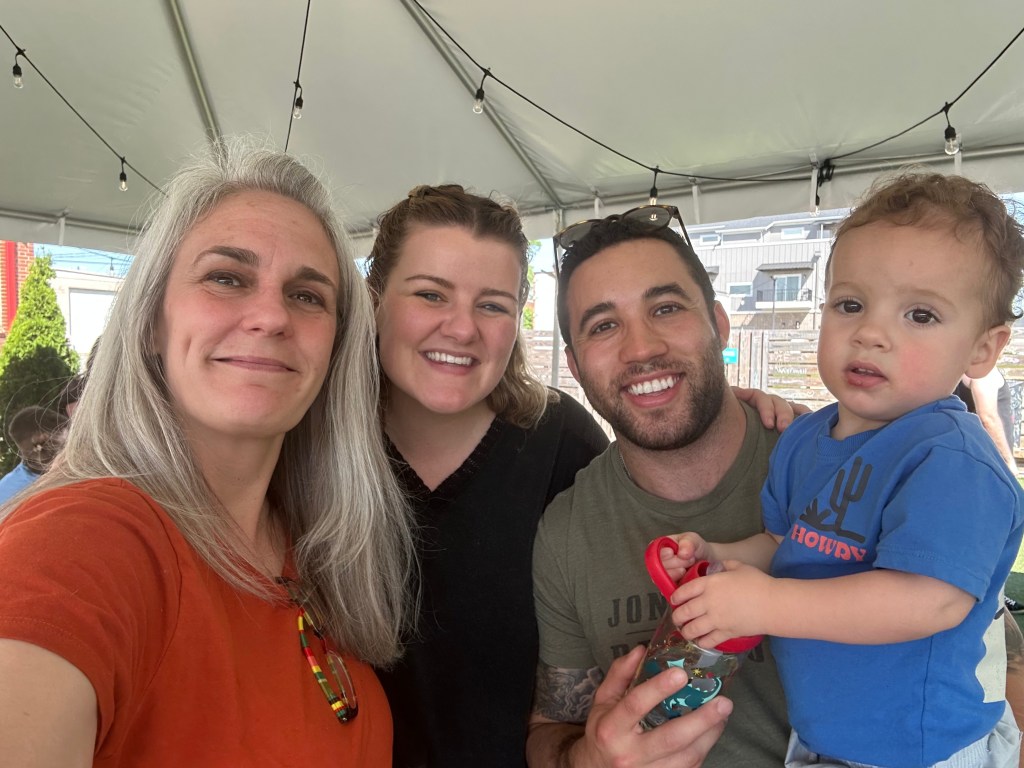
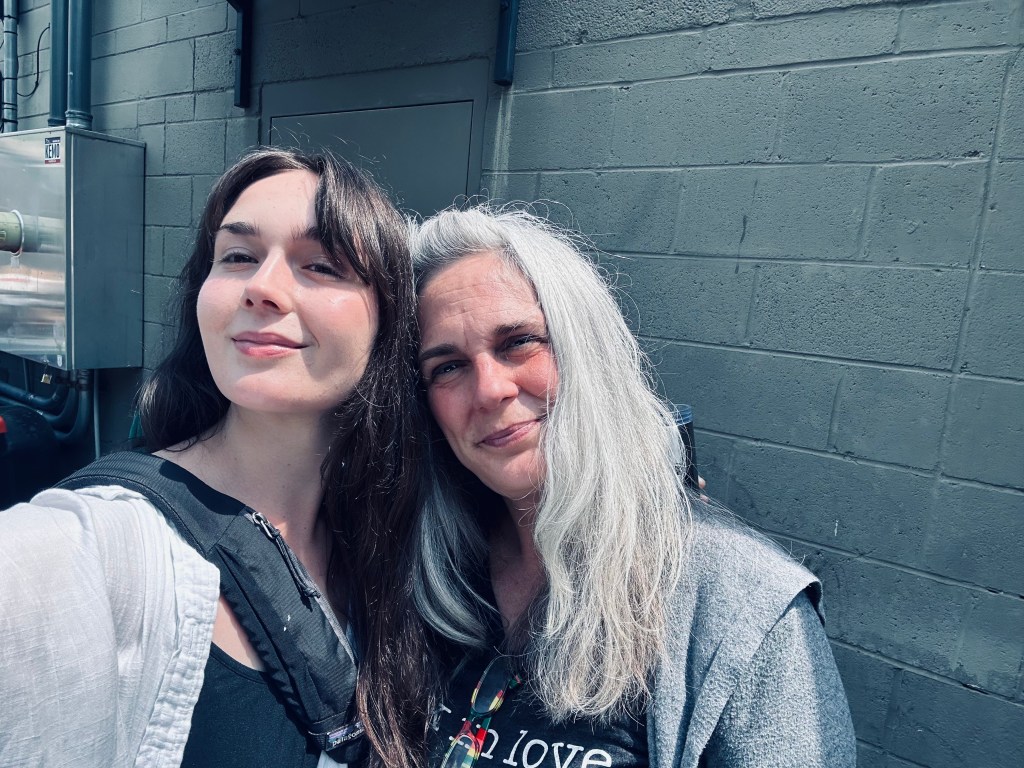



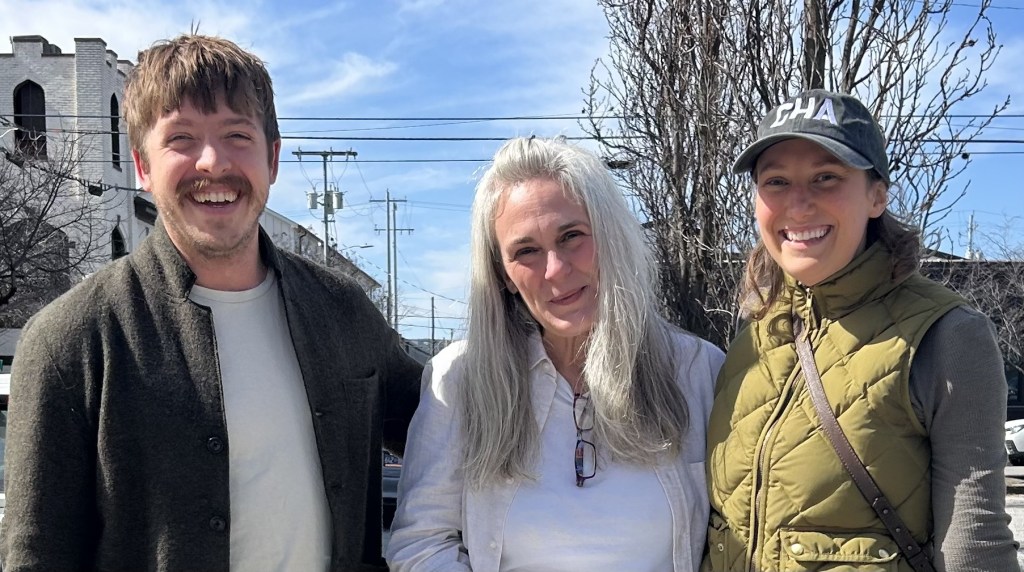

 Searching for Jesus in A̶m̶e̶r̶i̶c̶a̶ Chattanooga