
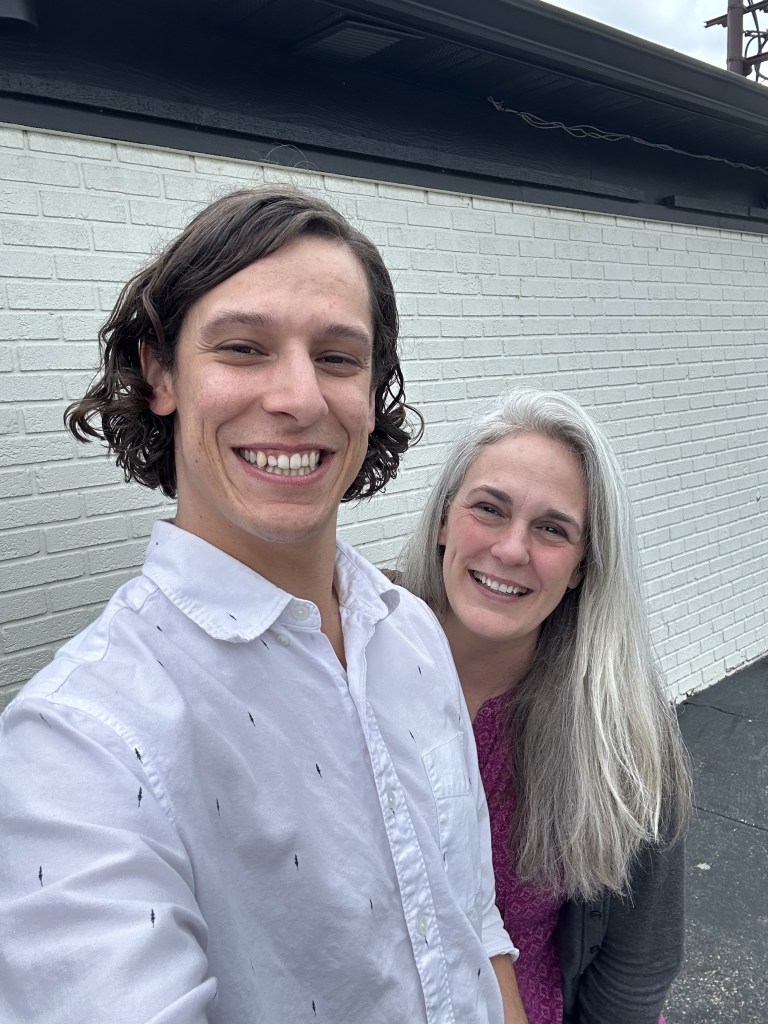
Who: Stefan
Church: Restoration Southside (Presbyterian)
Lunch: La Delicia
Topics: Community, Belonging, and Communion
One month into this little project and there is one thing I’m pretty certain of: I’ll run into someone I know at every church I visit this year. Sure, Chattanooga holds the title of the most churched community per capita in the country, so the odds are in my favor—but it goes deeper than that.
These aren’t just people we know. They’re our partners in the community… artists, business owners, non-profit employees. And, this is WHY, in part, I wanted to start this little project of mine. Our family often talks about how “uncommon” it feels to be surrounded by people who resist casual Christianity. Some of these people have stepped away from the institutional church altogether, while others remain deeply rooted in their local congregations.
And I think both types of people bear a common thread.
Sydney and I were in Burlaep a few weeks ago and ran into Stefan, a local realtor who used to work at Chattanooga Sports Ministries. Knowing that he attended a church regularly, I asked if I could tag along one week and then grab lunch after to talk about all the things. I never quite know how people will react to this because “southern hospitality” is typically offered, not requested. But he was game, and I’m really glad he was.
Restoration Southside is a church with whom I have a little familiarity. It’s a go-to spot for larger ecumenical church/community functions, but I wasn’t sure what to expect… except that I would see some familiar faces. And I saw several. There were also a few things that immediately stood out: Worship was bilingual… and they incorporated a banjo. (I don’t want to be biased, but the banjo will forever have my heart.) They also led a corporate prayer for those struggling with infertility, or pregnancy loss, and underscored their commitment to this community. This is an area I’ve seen many churches unintentionally overlook, especially when so much emphasis is placed on families. Their level of intentionality was inspiring.
One of the things I also found interesting was their communion series for younger students. A class traditionally seen in Catholic catechism, this type of lengthy instruction isn’t typically embraced in Protestant denominations. Whenever I see a serious dedication to the spiritual growth of younger generations, and not a mere commitment to gimmicks that make church cool and hip slay and lit, I’m encouraged.
The sermon was solid, but what impacted me the most was the community, which is what Stefan and I talked about the most over lunch. (I also want to take a moment to say that La Delicia is the absolute best AUTHENTIC Mexican food I’ve had since living in Mexico. If you’re local to Chatt and love Mexican food, I can’t suggest this place enough.)
Over lunch, I asked Stefan why his family chose Restoration Southside, and his answer was simple: community. If you’ve ever worked in ministry, you know this can be a sensitive topic. In Western cultures especially, many people choose a church based on personal preferences—worship style, building aesthetics, charismatic pastors, service length, or youth programs. In all honesty, I haven’t had many people tell me they’ve chosen their church home because of the community itself. Stefan also mentioned the strong emphasis on serving at Restoration, which stood out to me. After spending over a decade in children’s ministry, I know firsthand how challenging it can be to find willing volunteers. And as a parent, I’ve been on the other side too, longing for a season where I’m not guilted or pressured into “serving” when all I really needed was 30 minutes to sit still and absorb an encouraging word.
But at Restoration, they highlight the deeper human connection that comes from serving—particularly the friendships that form among those who serve together. Stefan shared how this has shaped his own experience. He also spoke about the inter-generational aspect of the church, which closely mirrors the early Christian communities where people of all ages lived, worshiped, and served side by side, fostering relationships that transcend age and stage of life.
But, probably the most impactful thing about that Sunday was taking communion. Besides the Christmas Eve service last year, I haven’t taken communion in almost a year and a half. (That’s a blog post for another time.) But the short of it is simple: I haven’t felt compelled to take communion, ESPECIALLY at a church where I wasn’t a part of their community. On a personal level, communion calls for self-examination, reconciliation, and the pursuit of holiness. But, corporately, at the Communion table, it holds that all believers are equal. There’s no hierarchy—whether rich or poor, old or young, everyone comes with the same need for grace. This fosters a spirit of humility, inclusion, and shared dependency on God. Communion provides an opportunity for the church to reflect on its own spiritual health. And over the past couple of years, I’ve been wrestling through this. I’m still wrestling through this.
And, for the record, our family hasn’t regularly attended a church for about a year and a half. But, even before we stopped, communion has felt more about a personal reflection and call for repentance… not a corporate one. But on this day, it just felt different.
CHALLENGE: Reflect on what SERVING has meant to you in the past and what feelings come to the service. Have you experienced serving as an opportunity to build community? If not, how might you approach it differently to foster deeper connections?
 Searching for Jesus in A̶m̶e̶r̶i̶c̶a̶ Chattanooga